The Quiet Revolution: Cultivating Deep Self-Trust in a Noisy World
There’s a subtle hum beneath the surface of our days, isn’t there? A whisper that questions our choices, second-guesses our instincts, and paints doubt on every decision we make. It’s the sound of external voices – well-meaning advice, societal expectations, the endless scroll of others’ curated successes
all vying for our attention, often drowning out the quieter, more authentic voice within. For years, I’ve sat with people in quiet rooms, not so different from this moment
and I’ve heard this same struggle echo. It’s not about a lack of capability, or intelligence, or even desire. It’s about the eroding foundation of self-trust. We’re conditioned to look outside ourselves for validation, for direction, for permission, that when it comes to relying on our own inner compass, many of us find ourselves adrift. This isn’t about grand pronouncements or overnight transformations. It’s about the steady, often unseen work of rebuilding a relationship with yourself. It’s about recognizing that the loudest opinions aren’t always the truest, and that the most profound wisdom often resides in the quiet spaces we’ve learned to fill with noise.
This journey of cultivating deep self-trust is a quiet revolution, a personal rebellion against the external pressures that chip away at our inner knowing. It’s about becoming your own most reliable ally, your own wisest counsel. And I’ve seen, time and time again, that this is where real, lasting change begins.
Why Does Trusting Ourselves Feel So Damn Hard?
Let’s be honest, for a lot of us, especially in today’s fast-paced world of 2025 and beyond, feeling a deep, unwavering trust in ourselves is a monumental task. It feels harder than it should. We’re bombarded with information, with success stories that look effortless from the outside, and with conflicting advice on what we
should be doing, thinking, or feeling. This constant influx creates a psychological fog. Our brains are wired to seek patterns and social cues, and when those cues are a chaotic mix of external pressures, it’s natural to feel uncertain.
Think about our upbringing. How often were we praised for conforming, for getting the right answers, for fitting the mold? While valuable in its place, this can inadvertently teach us that external validation is the primary measure of worth. When we make a mistake, the internal narrative can quickly
become harsh, echoing those early lessons. “See, you can’t even get this right.” This isn’t about blaming parents or society; it’s about acknowledging the landscape we’ve navigated. We’ve been trained to be good students, good employees, good children, often at the expense of being good listeners to ourselves.
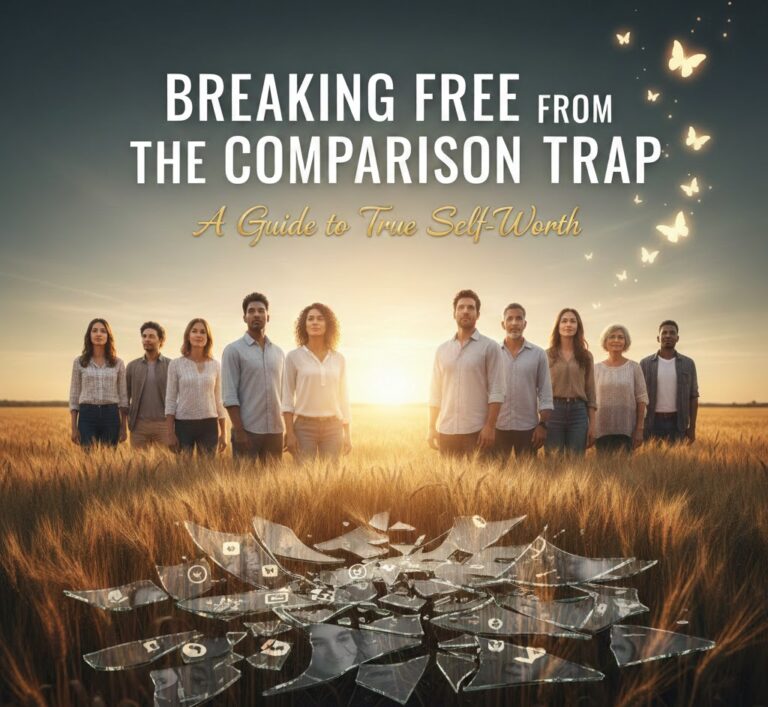
The rise of social media has only amplified this. It’s a constant, curated highlight reel of other people’s lives, making our own messy realities feel inadequate. We compare our behind-the-scenes struggles to their polished front-stage performances. This comparison trap is a thief of self-trust. It whispers
“If they can do it so effortlessly, what’s wrong with me?” It’s a powerful, insidious force that makes us question our own capabilities and choices, leading us to seek external benchmarks instead of internal ones. You can read more about breaking free from this cycle in my article, Breaking Free: How to Escape the Comparison Trap and Reclaim Your Inner Peace.
Furthermore, the modern work environment, with its emphasis on agility and continuous learning, can also sow seeds of doubt. We’re told to be adaptable, to embrace change, to constantly upskill. While true, this can also lead to imposter syndrome. “Am I ever really good enough, or just perpetually ‘learning’?” This pressure to always be evolving can make us feel like we’re never quite arriving, never fully mastering anything, which erodes our confidence in our current abilities and inherent worth.
The Realistic Path to Building Inner Certainty
So, if external validation and societal pressures are the usual suspects in our trust deficit, where do we even begin to build that inner certainty? It’s not by trying harder to be louder or more assertive on the outside. It’s through quiet, consistent inner work. The path isn’t about achieving perfection; it’s about embracing imperfection and learning to trust yourself *through* it.
Let’s break this down into practical steps, the kind that feel less like a lecture and more like a conversation over chai.
1. The Power of Small, Consistent Decisions
This is where most people feel stuck. They wait for a grand moment, a sign from the universe, to make a big decision. But self-trust is built in the trenches, in the accumulation of small wins. It’s about the decisions you make when no one is watching. Did you choose the healthy meal when you craved junk?
Did you get up for that early morning walk even when your bed felt like a warm hug? Did you choose to respond calmly to a frustrating email instead of lashing out? Each of these small choices, consistently made, is a data point for your brain. It’s proof that you can rely on yourself to do what you say you will do, even when it’s inconvenient or slightly uncomfortable.
The key here is consistency. It’s not about being perfect; it’s about showing up for yourself repeatedly. This builds a subtle but powerful internal narrative: “I can count on me.” This is the bedrock of self-trust. It’s far more impactful than waiting for a huge motivational surge. Motivation is fleeting; discipline, built through small, consistent actions, is the reliable engine.
2. Listening to Your Gut (Even When It’s Quiet)
We all have intuition, that gut feeling, that quiet nudge. But in our overstimulated lives, it’s often drowned out by analysis, by fear, by what others might think. Cultivating self-trust means learning to tune into this inner voice. Start small. Before a minor decision – what to watch, what to eat, what route to take
pause for a moment. Ask yourself, “What do I *feel* like doing?” Not what’s most efficient, not what’s expected, but what genuinely appeals to your inner self.
Practice making decisions based on this feeling, even if it seems irrational. If your gut says to take a different route to work, take it. If it says to avoid a certain social interaction, honor it. Initially,
you might second-guess yourself. That’s okay. The practice is in the *listening* and the *acting*, not in the immediate validation of the outcome. Over time, you’ll notice patterns. Your intuition often guides you towards what’s truly right for you, even if you can’t articulate why.
3. Honoring Your Feelings, Not Just Your Thoughts
Many of us have been taught to suppress uncomfortable emotions. Anger, sadness, fear – these are often seen as weaknesses to be overcome or ignored. But our emotions are valuable data.
They signal our needs, our boundaries, our values. Self-trust involves acknowledging and processing your feelings, rather than pushing them away or letting them dictate impulsive actions. This is where emotional strength comes into play, a crucial aspect of personal growth.
Instead of thinking, “I shouldn’t be feeling this way,” try asking, “What is this feeling trying to tell me?” If you feel anxious about a new project, it might not be a sign you’re incapable, but a sign that you need more information, more preparation, or that you need to set realistic expectations.
If you feel resentful in a relationship, it might be a signal that your boundaries are being crossed. Learning to sit with discomfort, to explore its roots without judgment, is a profound act of self-trust. It’s saying, “I can handle my inner experience, whatever it may be.”
4. Embracing Imperfection as a Sign of Life
The myth of overnight success or the idea that personal growth means becoming a flawless version of ourselves is incredibly damaging. Growth isn’t about eradicating flaws; it’s about understanding them, integrating them, and continuing to move forward anyway. When you embrace your imperfections
your tendency to overthink, your occasional procrastination, your moments of self-doubt – you remove the pressure to be perfect. This frees up enormous energy.
Recognize that mistakes are not indictments of your character; they are simply feedback. They are opportunities to learn, to adjust, and to deepen your understanding of yourself and the world.
When you can look at a mistake and say, “Okay, that didn’t work as planned. What can I learn from this?” instead of berating yourself, you are actively strengthening your self-trust. You’re proving that you can learn, adapt, and recover, which is the essence of resilience.
Common Pitfalls on the Path to Self-Trust
As I’ve mentored people, I’ve seen the same patterns of stumbling. It’s not a sign of failure, but a natural part of the learning curve. Awareness is the first step to navigating these more effectively.
- The ‘All or Nothing’ Trap: This is when we decide that if we can’t do something perfectly, we won’t do it at all. Or if we slip up once, we abandon the entire effort. Remember, progress, not perfection. One off day doesn’t erase weeks of effort.
- Seeking External Benchmarks Constantly: Always looking at what others are doing, how they’re achieving, and using that as your sole measure of success. This keeps you tethered to external opinions and erodes your ability to recognize your own unique journey and progress.
- Ignoring Your Own Progress: We are often our own harshest critics. We overlook how far we’ve come, focusing only on what’s left undone or what could have been better. Keeping a journal of small wins, challenges overcome, and lessons learned can be a powerful antidote.
- Confusing External Success with Inner Worth: Believing that your value as a person is tied to your achievements, your job title, or your material possessions. This creates a fragile sense of self that crumbles when external circumstances shift. True self-trust is independent of these external factors.
- Letting Past Mistakes Define You: Dwelling on past failures and allowing them to dictate your future actions and beliefs about yourself. This is a form of self-sabotage that prevents you from stepping into your potential.
Busting Self-Improvement Myths for Real Growth
The world of personal development is rife with myths that can set us up for disappointment. Let’s clear a few things up, from my perspective of seeing how this actually plays out in real lives.
Myth 1: Overnight Success is Real
This is perhaps the biggest lie peddled. We see the highlight reels – the entrepreneur who ‘suddenly’ made it, the artist whose work went viral. What we don’t see are the years of quiet work, the countless rejections, the persistent effort in the face of doubt. Real change is incremental. It’s the sum of many small, often unglamorous steps. Self-trust is built through this consistent, patient effort, not by waiting for a magic wand.
Myth 2: Motivation is the Key Driver
If you’re waiting to *feel* motivated before you act, you’ll be waiting a long time. Motivation is a fickle friend; it comes and goes. True, sustainable progress comes from discipline – from doing the thing even when you don’t feel like it. This is where self-trust is forged. It’s the quiet knowledge that you can act with intention, regardless of your emotional state. The action itself often *generates* motivation.
Myth 3: Hustle Culture is the Only Way
The idea that you must constantly be busy, always grinding, working yourself to the bone, is not only unsustainable but often counterproductive. While dedication is important, true growth also requires rest, reflection, and strategic focus. Burning yourself out is a sign of poor self-management, not of dedication. Learning to rest effectively, to work smarter not just harder, is a critical skill that builds resilience and deeper self-trust.
The Long-Term Ripple Effect: Confidence, Relationships, and Life Choices
When you start to build genuine self-trust, the changes ripple outwards in profound ways. It’s not just about feeling better; it’s about living differently.
Confidence: This isn’t about arrogance or being loud. It’s a quiet assurance that you can handle what life throws at you. You become less dependent on external praise and less crushed by external criticism. Your self-worth becomes internal, stable, and resilient. This authentic confidence allows you to take on new challenges, to speak your truth, and to pursue your goals with a steady resolve.
Relationships: When you trust yourself, you become more discerning about who you let into your life. You’re less likely to tolerate unhealthy dynamics or settle for less than you deserve, because you have an internal standard. You can show up more authentically in relationships, not seeking validation, but offering genuine connection. This leads to deeper, more meaningful bonds with friends, family, and partners.
Life Choices: With a strong inner compass, your decisions become more aligned with your core values and aspirations. You’re less swayed by trends or the opinions of others. Whether it’s choosing a career path, making financial decisions, or setting personal boundaries, you make choices from a place of inner knowing, leading to a life that feels more authentic and fulfilling. This is the essence of living with purpose.
Navigating the 2025-2026 Landscape: Emotional Intelligence and Adaptability
The world continues to evolve at a dizzying pace. In the current environment of 2025-2026, with its rapid technological shifts and increasing global interconnectedness, emotional intelligence and adaptability are no longer soft skills – they are essential survival tools. And guess what underpins both of these? Self-trust.
Emotional Intelligence (EI): Understanding and managing your own emotions, and empathizing with others, requires a foundational level of self-awareness and self-acceptance. You can’t effectively understand or manage emotions you’re constantly denying or judging within yourself. When you trust your capacity to feel and process emotions, you’re better equipped to navigate complex interpersonal dynamics, manage stress, and lead with empathy.
Adaptability: The ability to pivot, to learn new skills, and to thrive amidst change is paramount. This requires a willingness to step into the unknown, to experiment, and to learn from setbacks. If you don’t trust your ability to learn, to adapt, and to recover from mistakes, you’ll likely resist change, becoming stagnant. Self-trust fuels the courage needed to embrace new challenges and to believe in your capacity to figure things out, even when the path isn’t clear.
The future belongs to those who can navigate complexity with inner certainty. It’s about building a robust inner world that can weather any external storm. It’s about being your own anchor in a sea of change.
Frequently Asked Questions about Cultivating Self-Trust
Q1: How can I start building self-trust if I feel like I’ve never trusted myself?
Start with incredibly small, consistent actions. Choose one tiny thing each day – drinking a glass of water first thing, taking five deep breaths – and commit to doing it. Each time you follow through, you’re reinforcing your reliability to yourself. It’s about building tiny pebbles of evidence that you can count on you.
Q2: What if my gut feeling leads me to a bad outcome?
This is where the learning happens. A bad outcome doesn’t mean your intuition is wrong; it means the situation was complex, or you lacked other information. The key is to reflect: What did I learn? How can I use this information next time? Trust isn’t about always being right; it’s about trusting your capacity to learn and adapt from *all* outcomes.
Q3: How do I deal with self-doubt when it pops up?
Acknowledge it without judgment. Self-doubt is a normal human experience, often a signal that you’re stepping outside your comfort zone or facing something significant. Instead of fighting it, ask yourself: “What is this doubt trying to protect me from?” or “What would it look like to take a step forward *despite* this doubt?”.
Q4: Is self-trust the same as being stubborn or arrogant?
Not at all. Stubbornness often comes from a rigid place, resisting new information or perspectives. Arrogance can be a mask for insecurity. True self-trust is grounded, humble, and open. It allows you to stand firm in your values and decisions while remaining open to learning and feedback. It’s about inner confidence, not external bravado.
Q5: How can I stop comparing myself to others on social media?
Be intentional with your consumption. Unfollow accounts that trigger comparison. Set time limits for social media use. More importantly, consciously shift your focus back to your own journey. Remind yourself that social media is a highlight reel, not reality. Practice gratitude for what *you* have and what *you* are doing. Perhaps consider exploring resources on setting healthy boundaries online, like those found on Complifest.
Q6: How does self-trust impact my decision-making ability?
When you trust yourself, decision-making becomes less agonizing. You can weigh options, consider advice, but ultimately rely on your own judgment. You’re less paralyzed by fear of making the “wrong” choice, knowing you can handle the consequences and learn from them. This leads to more decisive and aligned choices.
Q7: How much time does it take to build real self-trust?
There’s no set timeline, as everyone’s starting point and journey are different. It’s not a destination but an ongoing practice. Like building any strong relationship, it requires consistent effort over time. Some people feel shifts within weeks, while for others, it’s a journey of years. The key is to keep practicing, celebrating small victories, and being patient with yourself.