
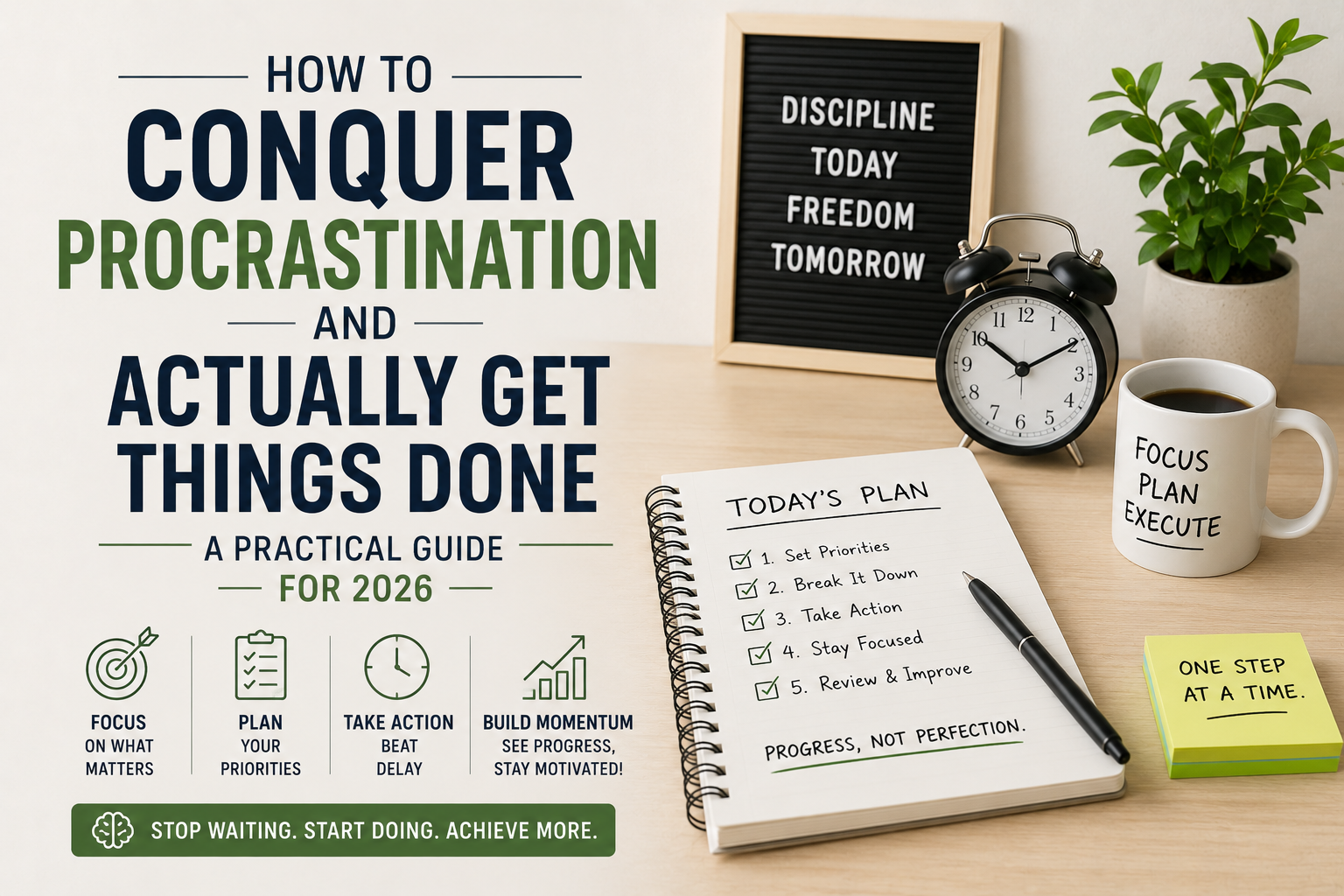
How to Conquer Procrastination and Actually Get Things Done: A Practical Guide for 2026
Ever feel like you’re constantly behind, even when you’re busy? Do you find yourself scrolling endlessly, “researching” things for hours, or just generally avoiding the task at hand? If so, you’re not alone. Procrastination is a sneaky beast, and it plagues even the most organized and motivated among us. But the good news is, it’s a battle you can win. This guide is designed to help you understand why you procrastinate and, more importantly, how to stop doing it. I’ll share practical, tested methods, and real-life examples to help you finally conquer the urge to delay and start achieving your goals.
The Procrastination Problem: It’s More Than Just Laziness
Let’s get one thing straight: procrastination isn’t just about being lazy. While it might feel that way, there’s usually a deeper root cause at play. Understanding these underlying reasons is the first step towards breaking free from the cycle.
I’ve personally struggled with procrastination for years, and through trial and error (and a whole lot of self-reflection), I’ve identified the key culprits. Here are some of the most common reasons people put things off:
- Fear of Failure: This is a big one. The thought of not succeeding can be paralyzing, leading you to avoid starting something altogether. It’s easier to avoid the possibility of failure by not trying at all, right? Wrong.
- Perfectionism: Wanting everything to be perfect can be a major roadblock. You might get stuck in the planning phase, tweaking and refining things endlessly, never actually launching or completing the task. I’ve been there – creating the “perfect” plan only to realize I spent hours without taking action.
- Overwhelm: A task that seems too big or complex can feel daunting, leading you to put it off until the last minute. The thought of where to start can be scary.
- Lack of Interest or Motivation: If you’re not genuinely interested in the task, it’s naturally harder to get started. Sometimes, a project just feels like a chore, and you’d rather do anything else.
- Poor Time Management: Not having a clear understanding of how long tasks take, or how to schedule them, can lead to procrastination. This is a crucial area.
- Distractions: The modern world is a distraction machine. Notifications, social media, and endless entertainment options can easily derail your focus.
Recognizing your own personal triggers for procrastination is key. What situations or feelings tend to set you off? Once you know your triggers, you can start to develop strategies to counteract them.
Step 1: Self-Assessment – Understanding Your Procrastination Style
Before you can fix the problem, you need to understand *how* you procrastinate. What does it look like in your daily life? Do you put off work, exercise, or both? Are you a “last-minute” person, or do you procrastinate over long periods? Here’s a little self-assessment exercise to get you started:
- Identify Your Common Procrastination Triggers: What are the specific situations or feelings that lead you to put things off? Write them down. Be honest. Is it fear of a difficult task, lack of interest, or something else entirely?
- Analyze Your Behaviors: What do you *do* when you’re procrastinating? Do you clean, scroll social media, or watch TV? Note down the behaviors that signal you are avoiding a task.
- Assess Your Perfectionism: On a scale of 1 to 10 (1 being “not at all” and 10 being “extremely”), how much does perfectionism influence your actions? Is this a major factor in your procrastination?
- Rate Your Time Management Skills: Do you feel you manage your time effectively? Are you good at estimating how long tasks take? Be honest again.
- Identify Your Biggest Time Wasters: What are the things that eat up your time the most? Social media? Endless meetings? Make a list.
This self-assessment is like a personal audit of your procrastination habits. Once you have a clear picture, you can create a personalized plan to combat it. This is not about feeling guilty, it’s about awareness.
Step 2: Time Management Techniques: Building a Foundation for Action
Effective time management is the bedrock of productivity. Without it, procrastination thrives. Here are some proven techniques to help you manage your time better and prevent the urge to procrastinate:
- The Pomodoro Technique: This is one of the simplest yet most effective methods. Set a timer for 25 minutes of focused work, followed by a 5-minute break. After every four “pomodoros,” take a longer break (20-30 minutes). This method helps you stay focused and avoids burnout.
- Time Blocking: Schedule specific blocks of time in your calendar for certain tasks. Treat these blocks like appointments you can’t miss. For example, “9:00 AM – 11:00 AM: Write blog post.” This gives structure and accountability.
- The Eisenhower Matrix (Urgent/Important): This is a classic decision-making tool. Categorize your tasks based on urgency and importance:
- Urgent & Important: Do these immediately.
- Important, but Not Urgent: Schedule these.
- Urgent, but Not Important: Delegate these.
- Neither Urgent nor Important: Eliminate these.
This helps prioritize and avoid getting bogged down in low-value tasks.
- Batching Similar Tasks: Group similar tasks together to minimize context-switching. For example, answer all emails at once or make all your phone calls at a specific time. This saves mental energy.
Real-Life Example: I once had a big writing project, and the sheer volume of work was overwhelming. I used the Pomodoro Technique to break it down. I would commit to writing for 25 minutes, then take a short break. Before I knew it, I had a significant amount of content completed.
Mistake to Avoid: Over-scheduling. Don’t try to cram too much into your day. Leave buffer time for unexpected delays or tasks that take longer than anticipated. It’s better to under-promise and over-deliver.
Step 3: Task Decomposition: Making Big Tasks Manageable
One of the biggest reasons people procrastinate is that tasks feel too large and daunting. The solution? Break them down! Task decomposition is the process of breaking a large, complex task into smaller, more manageable steps. This makes the overall project less intimidating and gives you a sense of accomplishment as you complete each sub-task.
How to Decompose a Task:
- Define the Overall Goal: What do you want to achieve? Be specific.
- List the Major Steps: Break the task into its primary components. What needs to be done to achieve the goal?
- Break Down Each Step Further: For each major step, break it down into even smaller, actionable steps. Make these steps so small that they seem easy to complete.
- Prioritize: Decide the order of the steps. What needs to happen first?
- Schedule: Integrate the small steps into your calendar or time-blocking system.
Example: Let’s say your goal is to “Write a blog post.” Here’s how you could break it down:
- Overall Goal: Publish a well-written blog post on “Conquering Procrastination.”
- Major Steps:
- Research the topic
- Outline the post
- Write the first draft
- Edit the post
- Format the post
- Find relevant images
- Publish the post
- Break Down Further (Example: “Research the topic”):
- Brainstorm key topics and subtopics (15 minutes)
- Search Google for relevant articles (30 minutes)
- Read top 3-5 articles (60 minutes)
- Take notes on key points (30 minutes)
- Prioritize: Start with brainstorming and researching.
- Schedule: Allocate time blocks for each of these sub-tasks in your calendar.
Mistake to Avoid: Over-complicating the breakdown. Start simple. You can always adjust and refine the steps as you go.
Step 4: Overcoming Perfectionism and Fear of Failure
Perfectionism and the fear of failure are common culprits behind procrastination. The good news is, you can tackle these with specific strategies.
- Embrace the “80/20 Rule”: Aim for “good enough” rather than perfect. Often, 80% of the results come from 20% of the effort. Don’t get stuck in the last 20% that provides diminishing returns.
- Focus on Progress, Not Perfection: Celebrate small wins. Acknowledge the progress you make, no matter how small.
- Reframe Failure: View failure as a learning opportunity, not a personal indictment. Ask yourself, “What can I learn from this?” rather than dwelling on the negative.
- Set Realistic Expectations: Understand that things won’t always go as planned. Allow room for mistakes and adjustments.
- Challenge Your Negative Thoughts: When you catch yourself thinking, “This has to be perfect,” challenge that thought. Is it *really* true? What’s the worst that could happen if it’s not perfect?
Real-Life Example: I was working on a presentation, and I wanted it to be perfect. I spent days tweaking the slides. Then, I realized that the content was what truly mattered. I decided to focus on the core message, and my audience loved it. This made me understand the power of progress over perfection.
Step 5: Combatting Distractions and Maintaining Focus
The modern world is a minefield of distractions. To conquer procrastination, you need to minimize these distractions and create an environment that supports focus.
- Identify Your Biggest Distractions: What pulls you away from your work? Is it social media, email, or noisy environments?
- Use Website and App Blockers: Tools like Freedom or Cold Turkey can block distracting websites and apps.
- Turn Off Notifications: Disable notifications on your phone, computer, and other devices.
- Create a Dedicated Workspace: Ideally, have a designated space for work that is free from clutter and distractions. If you have to work in a shared space, consider using noise-canceling headphones.
- Use the “Do Not Disturb” Feature: Activate this feature on your phone and computer when you need to focus.
- Practice Mindfulness: Even a few minutes of mindfulness or meditation can help improve your focus and reduce the urge to reach for distractions.
Modern Relevance: The rise of AI assistants is also creating new kinds of distractions. Be wary of spending hours experimenting with prompts. The goal is always *output*, not playing around. This is something that I have experienced myself. The novelty of new tools can take up a lot of time.
Step 6: Cultivating Motivation and Building Momentum
Sometimes, the hardest part is getting started. Building momentum is key to overcoming that initial hurdle.
- Start with the Easiest Task: Choose the simplest task first. This builds momentum and gives you a quick win.
- Set Realistic Goals: Don’t aim to achieve too much in one sitting. Small, achievable goals are more effective than overwhelming ones.
- Reward Yourself: Give yourself small rewards for completing tasks. A short break, a cup of coffee, or listening to your favorite song can all be effective.
- Visualize Success: Imagine yourself successfully completing the task. This can boost your motivation.
- Find an Accountability Partner: Tell someone about your goals and deadlines. This can help you stay on track.
- Review Your Progress: Regularly look back at what you’ve accomplished. This reinforces your positive behavior and shows how far you have come.
Real-Life Example: When I’m struggling to start a writing project, I often begin by writing just one paragraph. Once I’ve written that, it’s easier to keep going. This is the power of momentum. Small steps, but big impact.
Step 7: Understanding the Psychology of Procrastination
Beyond the practical steps, understanding the psychology behind procrastination can give you a deeper advantage. Here are a few key concepts:
- Emotional Regulation: Procrastination is often linked to the desire to avoid negative emotions like boredom, anxiety, or frustration.
- Impulse Control: The ability to resist immediate gratification in favor of long-term goals is crucial.
- Self-Compassion: Be kind to yourself. Everyone procrastinates sometimes. Don’t beat yourself up over it. Recognize your mistakes, learn from them, and move on.
- Self-Efficacy: Believe in your ability to succeed. The more you believe you can achieve something, the more likely you are to actually do it.
Resource Recommendation: For more on this, I recommend checking out resources like Complifest, and searching for articles on productivity and self-improvement from trusted sources. Reading can help you understand the core issues.
Common Mistakes to Avoid
Here are some common mistakes people make when trying to overcome procrastination:
- Trying to Change Everything at Once: Don’t try to implement all the techniques at the same time. Start with one or two strategies and gradually incorporate others.
- Being Too Hard on Yourself: Perfectionism will undermine any efforts to change. Be kind and patient with yourself.
- Ignoring Underlying Issues: If your procrastination is related to a deeper issue like anxiety or depression, seek professional help.
- Not Tracking Your Progress: If you’re not tracking what you’re doing, you will not be able to adjust your strategies.
- Not Adjusting Strategies: What works for one person may not work for you. Be prepared to adapt and experiment.
Frequently Asked Questions (FAQs)
Here are some frequently asked questions about conquering procrastination, with practical answers:
- What’s the best way to get started when I’m feeling overwhelmed?Break the task down into the smallest possible steps. Start with something very easy and build momentum. Even writing a single sentence can get you moving.
- How do I deal with the urge to check social media when I should be working?Use website and app blockers. Turn off notifications. Put your phone in another room or turn it off completely. Out of sight, out of mind, as they say!
- Is it okay to procrastinate sometimes?Yes. Taking breaks and allowing yourself downtime is important. The problem is when procrastination becomes a habit that prevents you from achieving your goals. Learn to balance.
- What if I’m afraid I’ll fail?Reframe failure as a learning opportunity. Focus on progress, not perfection. Ask yourself what you can learn, and remember, success is rarely a straight line.
- How can I make boring tasks more interesting?Try gamifying the tasks. Set a timer, and see how much you can accomplish within a certain timeframe. Listen to music or podcasts while you work (if they don’t distract you). Find a way to create an association of enjoyment.
- I tried the Pomodoro Technique, but it didn’t work. What else can I try?Experiment with other time management techniques, such as time-blocking. Adjust the Pomodoro Technique to fit your needs (e.g., longer work intervals). Find what fits your specific rhythm and your lifestyle.
- How long does it take to stop procrastinating?It depends on your habits and how consistently you practice the strategies. Be patient. Don’t expect overnight results, but consistent effort pays off.
- Should I use a to-do list?Yes, but use it effectively. Make sure your to-do list includes actionable steps, not just vague ideas. Prioritize the most important tasks. Make sure your to-do lists serve you.
Conclusion
Conquering procrastination is a journey, not a destination. It requires self-awareness, the right tools, and, most importantly, consistent effort. By understanding the underlying causes of your procrastination, employing effective time management techniques
breaking down tasks, and embracing progress over perfection, you can regain control of your time and start achieving your goals. Remember to be patient with yourself, celebrate your successes, and continuously refine your strategies. You’ve got this.