Beyond the Degree: Cultivating Lifelong Learners in a Changing World
Remember that feeling? The one where you’re staring at a textbook, the words blurring into an indecipherable mess? Or maybe it’s the pressure of an exam, the fear of not measuring up?
We’ve all been there. As someone who has spent over two decades immersed in the world of education, I’ve seen countless students grapple with these challenges.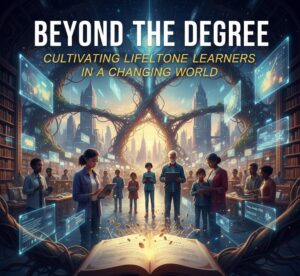 I’ve also witnessed the joy of discovery, the “aha!” moments, and the profound impact of true learning. The education system, as it stands, is a mixed bag. It can be a powerful engine for growth
but it can also be a source of frustration and disillusionment. My goal is to guide you, the learner, the parent, and the educator, in navigating this complex landscape. We’ll move beyond the superficial and dive into the heart of what it means to be a lifelong learner in a world that is constantly evolving.
The Illusion of the “Perfect” Education
Let’s be honest, the idea of a perfect education is a myth. There is no one-size-fits-all approach. What works for one student might not work for another. I’ve seen this time and again in my career. Some students thrive in structured environments, while others blossom when given more freedom and autonomy.
The truth is, education is a journey, not a destination. And like any journey, it’s filled with twists, turns, and unexpected detours. The problem is that many of us, including parents and even educators, often get fixated on the wrong things. We chase grades, degrees, and accolades, forgetting that the real goal is to cultivate a love for learning and a genuine desire to grow.
This is where the traditional education system often struggles. It tends to focus on rote memorization and standardized testing, which can stifle creativity and critical thinking. The pressure to perform can be immense, leading to stress, anxiety, and a feeling of disconnect from the learning process.
I’ve seen bright, curious students lose their enthusiasm for learning because they felt trapped in a system that didn’t value their unique talents and interests. These young minds are like budding flowers that are not provided with the appropriate resources to fully bloom.
Parents often focus on marks and miss the forest for the trees. I remember a conversation with a parent who was devastated that their child didn’t get into the “best” college. I asked them, “What does your child *love* to do? What are they *passionate* about?”
The parent paused, then admitted they didn’t know. That, my friends, is the tragedy. We need to shift our focus from achieving external markers of success to nurturing our children’s innate curiosity and fostering a lifelong love of learning. We should be trying to create a generation of learners who want to develop a love for acquiring knowledge.
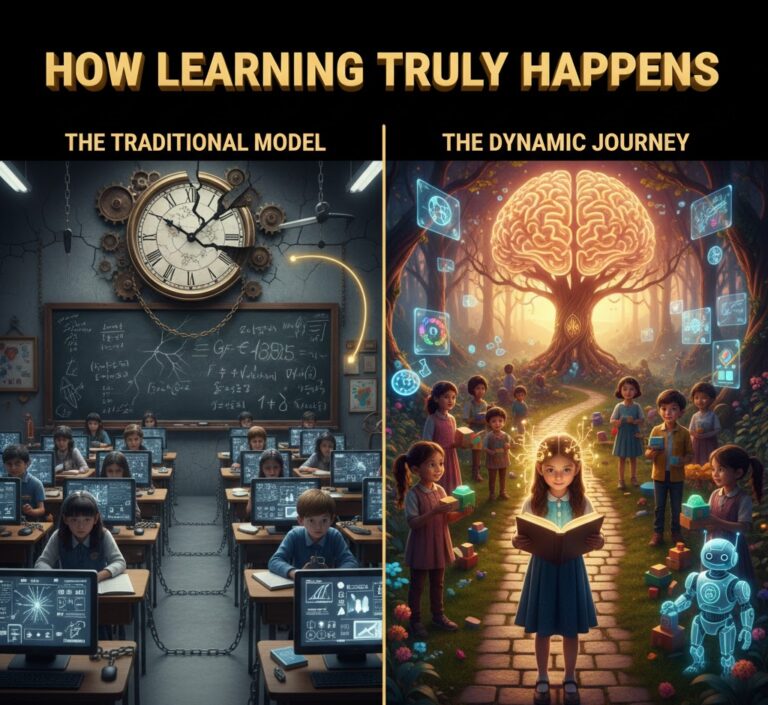
How Learning Actually Happens: Beyond the Textbook
So, how does learning actually happen? It’s not just about passively absorbing information. It’s an active process that involves a complex interplay of factors, including:
- Curiosity: This is the engine that drives all learning. When we’re curious, we’re motivated to explore, ask questions, and seek answers.
- Engagement: Learning is most effective when we’re actively involved in the process. This means participating in discussions, solving problems, and applying what we’re learning to real-world situations.
- Connection: We learn best when we can connect new information to what we already know. This involves making links between concepts, identifying patterns, and seeing the bigger picture.
- Reflection: Taking time to reflect on what we’ve learned is crucial for solidifying knowledge and identifying areas for improvement. This involves asking ourselves questions like, “What did I learn? What challenges did I face? How can I apply this in the future?”
Think about the last time you truly learned something. Maybe you learned a new skill, like cooking a complex dish, or perhaps you finally understood a difficult concept, like a new programming language. What was the process like? Chances are, it involved a combination of curiosity, engagement, connection, and reflection. As an educator, one of my main goals has always been to create learning environments that foster these elements. I want students to be not just consumers of information, but active participants in their own learning journeys. I strive to teach them how to learn.
Common Mistakes: Students, Parents, and Institutions
Unfortunately, the path to becoming a lifelong learner is often littered with obstacles. Here are some of the most common mistakes I’ve observed over the years:
Students:
- Passive Learning: Sitting in class and simply taking notes without actively engaging with the material.
- Procrastination: Putting off studying until the last minute, leading to stress and shallow understanding.
- Fear of Failure: Avoiding challenges and new experiences for fear of making mistakes.
- Lack of Self-Awareness: Not understanding their own learning styles, strengths, and weaknesses. (This is where self-assessment becomes critical.)
Parents:
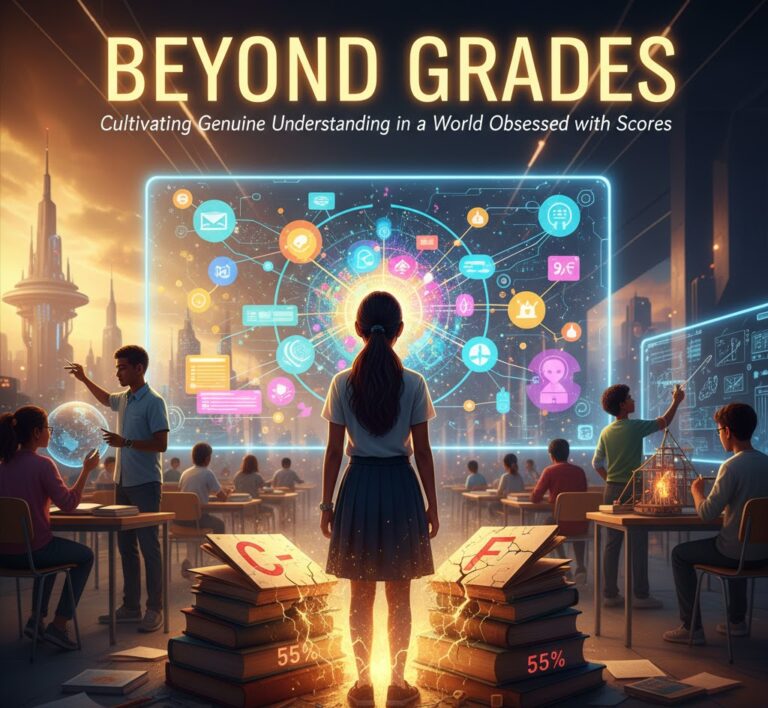
- Overemphasis on Grades: Focusing on academic performance at the expense of other important aspects of development.
- Lack of Support: Not providing the resources and encouragement their children need to succeed.
- Unrealistic Expectations: Pushing their children to pursue careers or educational paths that don’t align with their interests or abilities.
- Micromanaging: Hovering over their children’s studies, which can stifle independence and self-reliance.
Institutions:
- Over-reliance on Standardized Testing: Prioritizing test scores over a well-rounded education.
- Lack of Innovation: Failing to adapt to new technologies and learning methods.
- Ignoring Individual Needs: Treating all students the same, without considering their diverse backgrounds, interests, and learning styles.
- Disconnect from the Real World: Not preparing students for the challenges and opportunities of the modern workforce.
Most learners realize this only much later in life, and it can sometimes become a harsh reality. These mistakes, however, can be overcome. They can be remedied by the simple act of developing a new method of approaching learning, or by adapting a new, healthier mindset.
Busting Education Myths
There are countless myths about education that can mislead both students and parents. Let’s debunk a few of the most prevalent ones:
- Myth: Good grades guarantee success.
- Reality: While good grades can open doors, they’re not the only factor that determines success. Skills, experiences, and a growth mindset are equally important.
- Myth: A degree is essential for a good career.
- Reality: In today’s job market, skills and experience often trump degrees. There’s a growing demand for skilled workers in fields like technology, trades, and entrepreneurship.
- Myth: Memorization equals learning.
- Reality: True learning involves understanding concepts, applying knowledge, and being able to think critically.
- Myth: More study time equals better results.
- Reality: The quality of studying is more important than the quantity. Effective study habits involve active engagement, spaced repetition, and seeking understanding.
Long-Term Impact: Careers, Mindset, and Personal Growth
The benefits of cultivating lifelong learning extend far beyond the classroom and the workplace. It has a profound impact on our careers, our mindsets, and our overall personal growth. When we embrace lifelong learning, we:
- Adapt to Change: We become more resilient and adaptable to the ever-changing demands of the modern world.
- Enhance Our Skills: We acquire new skills and knowledge that make us more valuable in the workplace and in life.
- Boost Our Confidence: We develop a sense of competence and self-efficacy, which can lead to greater confidence and self-esteem.
- Foster Creativity: We become more creative and innovative, as we’re constantly exposed to new ideas and perspectives.
- Improve Our Relationships: We become better communicators and collaborators, as we learn to appreciate different viewpoints and perspectives.
Lifelong learning is not just about accumulating knowledge; it’s about transforming ourselves into the best versions of ourselves. It’s about developing a growth mindset, embracing challenges, and never losing our sense of curiosity and wonder.
Modern Relevance: Education in 2025–2026
The educational landscape is constantly evolving. In 2025–2026, we’re seeing some key trends that are shaping the future of learning:
- Personalized Learning: Tailoring education to meet the individual needs and interests of each student.
- Technology Integration: Leveraging technology to enhance learning experiences, such as through online courses, virtual reality, and artificial intelligence.
- Focus on Skills: Emphasizing the development of essential skills like critical thinking, problem-solving, and communication.
- Flexible Learning Environments: Offering a variety of learning options, including online, blended, and experiential learning.
- Emphasis on Mental Health: Recognizing the importance of student well-being and providing resources to support mental health.
These trends highlight the need for a more dynamic and responsive education system. The old model of rote memorization and standardized testing is no longer sufficient. We need to prepare students for a world where change is the only constant. Education has begun to transform, and will continue to do so, for the better.
Future Outlook: How Learning and Education Will Evolve
Looking ahead, we can expect to see even more significant changes in the world of learning and education:
- Artificial Intelligence (AI): AI will play an increasingly important role in personalized learning, providing customized feedback and support to students.
- Virtual and Augmented Reality (VR/AR): VR and AR will create immersive learning experiences, allowing students to explore complex concepts in a more engaging and interactive way.
- Micro-credentials: The rise of micro-credentials, such as online badges and certifications, will provide alternative pathways to demonstrate skills and knowledge.
- Lifelong Learning Platforms: Online platforms will continue to expand, offering a vast array of learning resources and opportunities for people of all ages.
- Emphasis on Social-Emotional Learning (SEL): Schools will increasingly focus on developing students’ social and emotional skills, such as empathy, self-awareness, and relationship-building.
The future of learning is bright. It’s a future where education is more personalized, engaging, and accessible than ever before. It’s a future where we celebrate the joy of learning and the power of human potential. The transformation of education is at our doorstep.
FAQ: Your Burning Questions Answered
Here are some of the most frequently asked questions I receive from students and parents, along with my insights:
- How can I motivate my child to learn?Focus on their interests. Connect learning to real-world applications. Create a supportive and encouraging environment where mistakes are seen as opportunities for growth.
- What are the most important skills for the future?Critical thinking, problem-solving, creativity, communication, and collaboration are essential. Also, being able to learn and adapt to change.
- How can I help my child manage stress related to school?Encourage them to prioritize sleep, exercise, and healthy eating. Teach them relaxation techniques. Help them develop effective study habits. Seek professional help if needed.
- Is a degree necessary to succeed?Not always. While a degree can open doors, skills, experience, and a strong work ethic are equally important. Consider alternative pathways like vocational training, apprenticeships, or online courses.
- What is the role of technology in education?Technology can be a powerful tool for enhancing learning experiences, providing access to information, and fostering collaboration. However, it should be used thoughtfully and strategically, not as a replacement for human interaction.
- How can I foster a growth mindset in my child?Praise effort and perseverance, not just intelligence. Encourage them to embrace challenges, learn from mistakes, and see failures as opportunities for growth.
- What should I do if my child is struggling in school?Communicate with their teachers, identify the root causes of the challenges, and work together to develop a plan of action. Consider seeking tutoring or other support services.
- How important is it to balance academics with other activities?Extremely important. Extracurricular activities, hobbies, and social interactions contribute to a well-rounded education and help students develop important life skills.
I hope this article has provided you with valuable insights and guidance. Remember, the journey of learning is a lifelong adventure. Embrace it, enjoy it, and never stop growing. Complifest can provide you with more guidance and support as you continue on your journey.