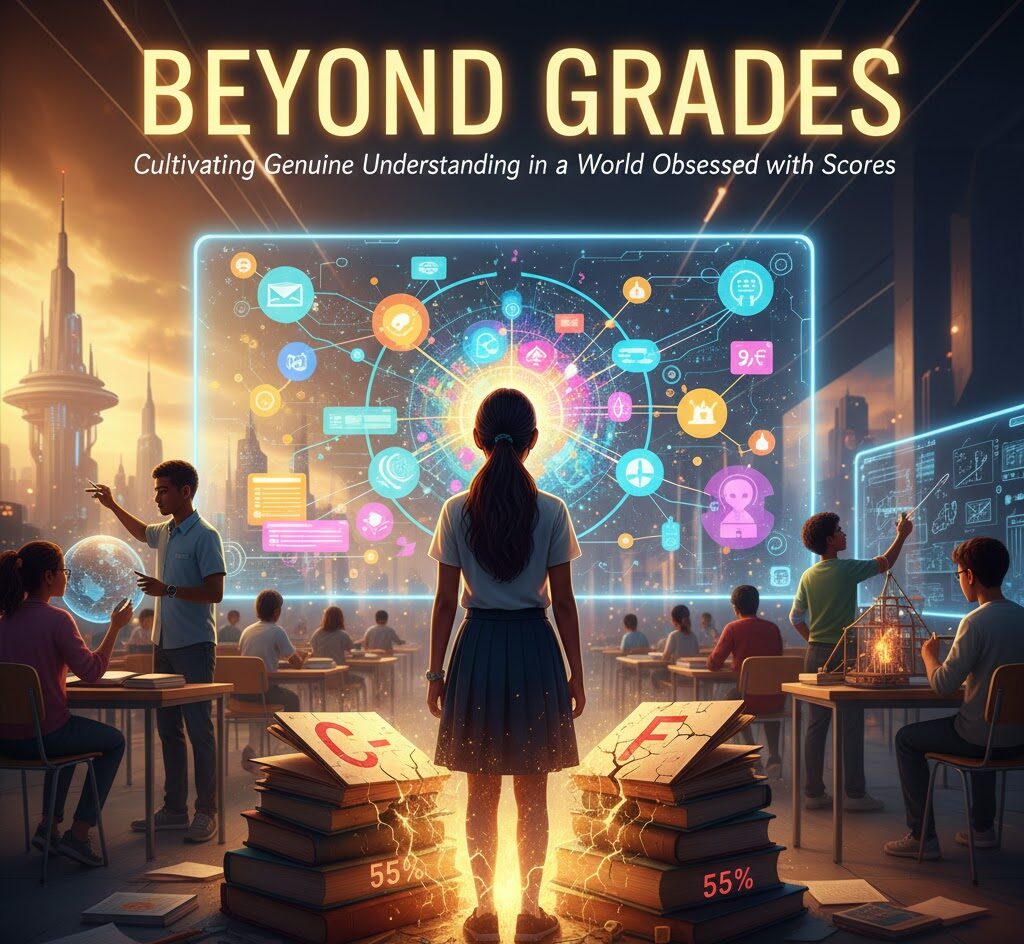
Cultivating Genuine Understanding in a World Obsessed with Scores
I remember this one student, let’s call him Rohan. Brilliant kid, always acing his exams. Top of the class. Parents were beaming, teachers were impressed. But Rohan, deep down, was struggling. He could recite facts, solve complex equations, and write eloquent essays, all for a perfect score.
Yet, he couldn’t truly apply his knowledge. He couldn’t connect the dots, ask the ‘why’ questions, or see how his learning mattered beyond the next test. This isn’t a unique story. It’s a symptom of a much larger problem in our education system: an overemphasis on grades at the expense of genuine understanding.
The Illusion of Excellence
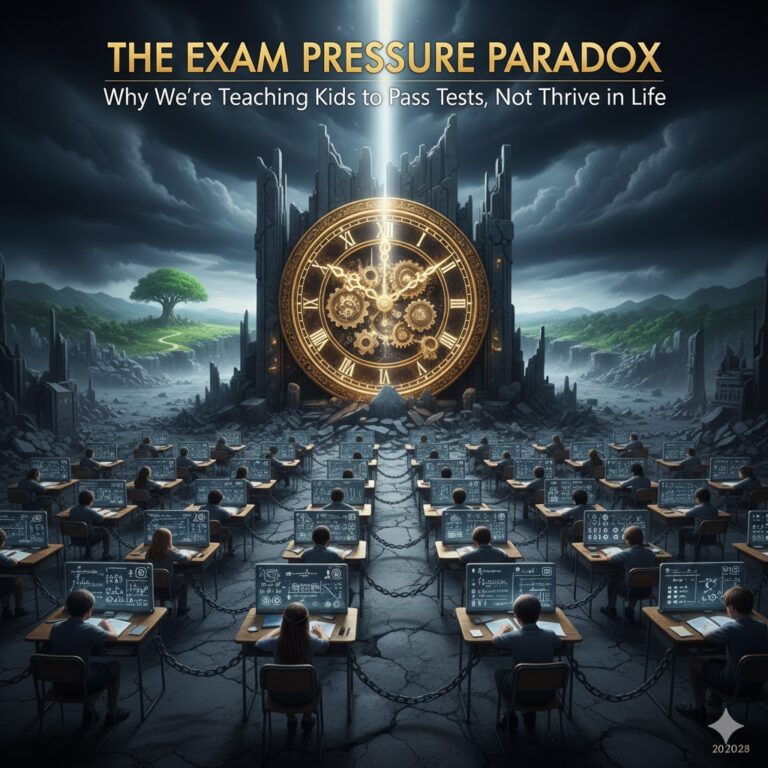
We’ve built an education system that often prioritizes the measurable over the meaningful. Marks, grades, and rankings have become the primary indicators of success, creating a culture of performance anxiety.
Students are pushed to memorize information, often without grasping its underlying principles or real-world relevance. This approach, while seemingly effective in the short term, can create an illusion of excellence.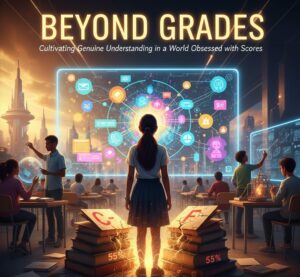 Consider the typical science class. Students might memorize the periodic table, learn the laws of thermodynamics, and dissect a frog. But how many can explain how these concepts impact their daily lives?
How many can critically evaluate scientific claims or appreciate the beauty and complexity of the natural world? The answer, sadly, is often not enough. We’re teaching students what to know, but not how to think.
Parents often contribute to this problem unintentionally. The pressure to get good grades, secure a place in a prestigious university, and land a high-paying job is immense.
This leads to a laser focus on academic performance, sometimes neglecting other crucial aspects of a child’s development, like creativity, critical thinking, emotional intelligence, and a genuine love for learning. This relentless pursuit of high scores can backfire. Students might resort to rote memorization, cheating, or simply losing interest in the subject matter altogether. It’s a classic case of the means becoming the ends.
The Pitfalls of Traditional Education
Traditional education, with its emphasis on standardized testing and teacher-centered instruction, is riddled with pitfalls. One of the biggest is its failure to cater to individual learning styles and paces.
Every child learns differently. Some are visual learners, others are auditory, and still others are kinesthetic. But the one-size-fits-all approach of many classrooms often leaves students behind, disengaged, or struggling to keep up.
Another major flaw is the lack of real-world application. Students often struggle to see the relevance of what they’re learning to their lives and future careers. This disconnect can lead to boredom, apathy, and a sense that education is disconnected from the “real world.” In the rapidly evolving landscape of 2026,
this disconnect is even more dangerous. The skills and knowledge that were once considered valuable are becoming obsolete at an alarming rate.
Furthermore, traditional education often undervalues creativity, critical thinking, and problem-solving skills. These are the skills that are increasingly in demand in the modern workforce.
We need to move beyond simply regurgitating information and start teaching students how to think critically, solve complex problems, and innovate. The focus should be on how to learn, not just what to learn.
Common Mistakes: Students, Parents, and Institutions
Let’s be honest; everyone makes mistakes. In the world of education, these mistakes can have lasting consequences.
- Students: The Trap of Passive Learning: Students often fall into the trap of passively absorbing information instead of actively engaging with it. They might sit in class, take notes, and memorize facts, but they don’t question, explore, or connect the dots. The mistake is treating education as a passive process, not an active one.
- Parents: The Pressure Cooker Effect: Many parents place undue pressure on their children to achieve high grades and pursue specific career paths. This pressure can stifle a child’s natural curiosity and passion, leading to stress, anxiety, and a diminished love for learning. The mistake is equating academic success with overall happiness and fulfillment.
- Institutions: The Curriculum Crisis: Schools and universities can fall into the trap of sticking to outdated curricula and teaching methods. They might prioritize standardized testing over genuine understanding and fail to adapt to the changing needs of the modern world. The mistake is clinging to tradition at the expense of innovation and relevance.
These mistakes often lead to a disconnect between education and the real world. Students graduate without the skills and knowledge they need to succeed in their careers and lives. Parents feel frustrated by their children’s lack of engagement and motivation. And institutions struggle to keep up with the rapid pace of change. It’s time for a different approach.
Busting Education Myths
There are several deeply ingrained myths about education that we need to address.
- Myth 1: Good Grades = Success: This is perhaps the most pervasive myth. While good grades can open doors to higher education and certain career paths, they are not a guarantee of success. Success in life depends on a much broader range of skills and qualities, including critical thinking, creativity, communication, and emotional intelligence.
- Myth 2: Degrees = Skills: A degree is a valuable credential, but it doesn’t automatically equate to possessing the skills needed to succeed in the workplace. Many employers are now prioritizing skills and experience over degrees, especially in fields like technology and entrepreneurship.
- Myth 3: Memorization = Understanding: Memorizing facts and figures is a necessary part of learning, but it’s not the same as understanding. True understanding involves grasping the underlying principles, making connections, and being able to apply knowledge to new situations.
- Myth 4: Standardized Tests = Intelligence: Standardized tests are useful for measuring certain skills and knowledge, but they are not a comprehensive measure of intelligence. They often fail to capture a student’s creativity, problem-solving skills, and other important abilities.
These myths can lead to a distorted view of education and success, causing students, parents, and institutions to make poor choices and miss out on valuable opportunities.
The Long-Term Impact: Careers, Mindset, and Growth
The way we approach education has a profound impact on our long-term careers, mindset, and personal growth. An education that emphasizes genuine understanding, critical thinking, and real-world application can have transformative effects.
Careers: Students who develop a strong foundation of knowledge and skills, coupled with the ability to think critically and solve problems, are better prepared for the challenges of the modern workplace. They are more adaptable, innovative, and resilient. They can navigate the changing demands of the job market and build successful, fulfilling careers. Building a future-proof career in 2026 requires more than just a degree; it requires a mindset of lifelong learning and adaptability.
Mindset: An education that fosters a growth mindset, where students believe they can improve their abilities through effort and learning, is essential for long-term success. Students with a growth mindset are more resilient in the face of challenges, more willing to take risks, and more likely to embrace lifelong learning. They see mistakes as opportunities to learn and grow, rather than as failures.
Personal Growth: Education is not just about acquiring knowledge and skills; it’s also about personal growth. It’s about developing self-awareness, building relationships, and cultivating a sense of purpose. A well-rounded education can help students discover their passions, develop their values, and become well-rounded individuals. This, in turn, can lead to greater happiness, fulfillment, and a more meaningful life.
Education in 2026: A Look Ahead
The educational landscape of 2026 is evolving rapidly, driven by technological advancements, globalization, and changing societal needs. Here are some key trends to watch:
- Personalized Learning: Technology is enabling educators to tailor learning experiences to individual student needs and preferences. This includes using data analytics to track student progress, providing personalized feedback, and offering customized learning pathways.
- Blended Learning: The integration of online and offline learning experiences is becoming increasingly common. This allows for greater flexibility, access to a wider range of resources, and opportunities for collaboration and interaction.
- Skills-Based Education: There’s a growing emphasis on teaching skills that are in high demand in the modern workforce, such as critical thinking, problem-solving, creativity, and communication. This involves incorporating more project-based learning, internships, and apprenticeships into the curriculum.
- Lifelong Learning: With the rapid pace of change, lifelong learning is no longer a luxury but a necessity. People need to constantly update their skills and knowledge to stay relevant and competitive in the job market. This includes taking online courses, attending workshops, and engaging in self-directed learning.
These trends point to a future where education is more personalized, flexible, and relevant to the needs of the individual learner. The focus will be on fostering a love for learning, developing essential skills, and preparing students for a lifetime of growth and discovery.
Embracing a New Approach
So, how do we move beyond grades and cultivate genuine understanding? Here are some practical steps we can take:
- Focus on Skills, Not Just Scores: Emphasize critical thinking, problem-solving, creativity, and communication skills. These are the skills that will be in demand in the future.
- Encourage Curiosity: Foster a love for learning by encouraging students to ask questions, explore their interests, and pursue their passions.
- Promote Active Learning: Use active learning techniques such as discussions, debates, group projects, and hands-on activities.
- Provide Real-World Context: Connect learning to real-world applications by incorporating case studies, simulations, and internships into the curriculum.
- Embrace Personalized Learning: Tailor learning experiences to individual student needs and preferences.
- Foster a Growth Mindset: Encourage students to believe they can improve their abilities through effort and learning.
- Partner with Parents: Involve parents in the learning process and provide them with the resources and support they need to help their children succeed.
By implementing these strategies, we can create a more engaging, relevant, and effective education system that prepares students for success in the 21st century. It’s about more than just getting good grades. It’s about cultivating a lifelong love for learning and empowering students to reach their full potential. As a senior educator, I’ve seen firsthand the power of this approach. It’s not always easy, but the results—seeing a student’s eyes light up with understanding, watching them apply their knowledge with confidence—are worth every effort.
FAQ: Your Burning Questions Answered
Here are some of the most common questions about education, answered with the wisdom of experience.
- How can I help my child develop a love for learning?Encourage curiosity by asking open-ended questions, exploring their interests, and providing access to a variety of learning resources. Create a home environment that values learning and celebrates effort, not just achievement.
- Are good grades really that important?Good grades are important for opening doors to higher education and certain career paths, but they are not the only factor. Focus on developing a broad range of skills and qualities, including critical thinking, creativity, and communication. Remember, Complifest helps guide you.
- What’s the best way to deal with a child who is struggling in school?Talk to the teacher, assess the root cause of the struggles, and provide support. This might include tutoring, extra help, or adapting the learning environment to better suit the child’s needs. Patience and understanding are key.
- How can I help my child manage stress and anxiety related to school?Create a supportive home environment, encourage open communication, and teach them healthy coping mechanisms. Help them prioritize their well-being and find a balance between schoolwork and other activities.
- What are the most important skills for the future?Critical thinking, problem-solving, creativity, communication, collaboration, and adaptability are all essential skills. Lifelong learning is also critical. The ability to learn and unlearn is more important than memorizing facts.
- How can I choose the right school for my child?Consider your child’s learning style, interests, and needs. Research different schools, visit them, and talk to current parents and students. Look for a school that aligns with your values and provides a supportive learning environment.
- Is it better to focus on a specific career path early on?Not necessarily. Encourage exploration and allow your child to discover their passions. Provide opportunities for them to try different things and develop a broad range of skills. Flexibility and adaptability are essential in today’s changing job market.