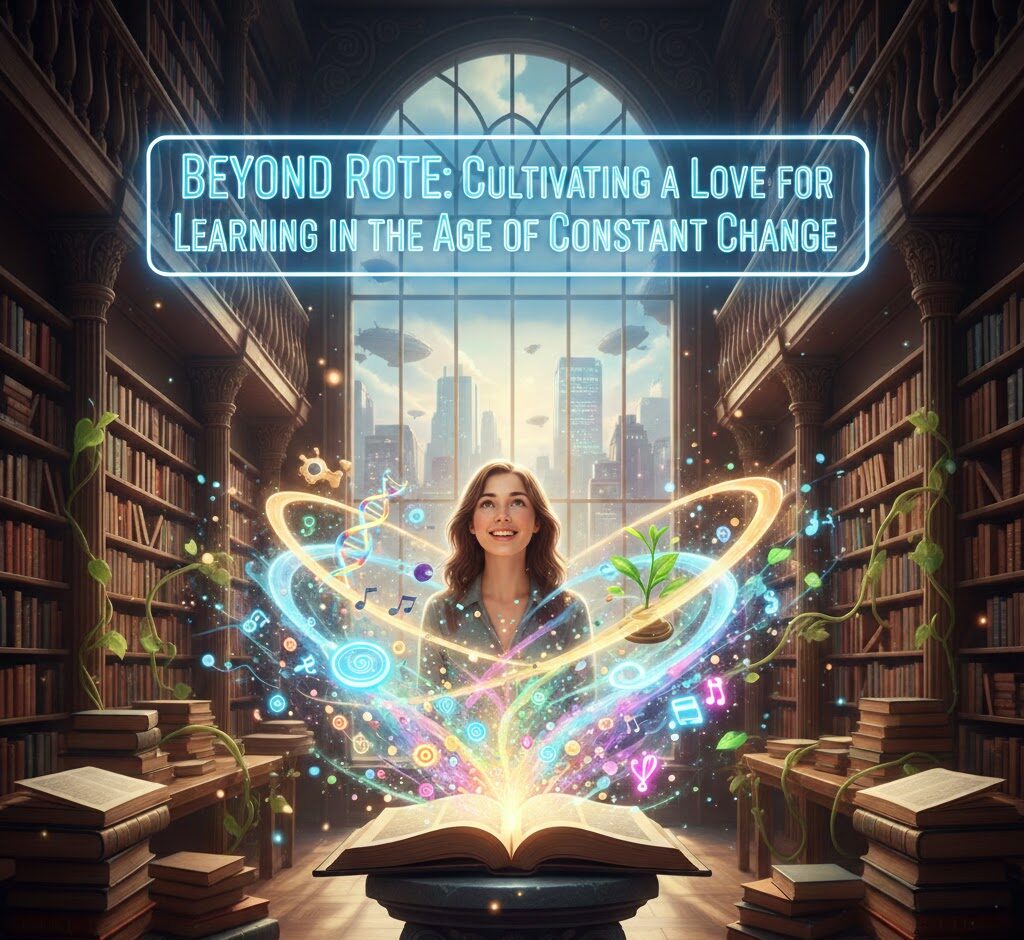
Beyond Rote: Cultivating a Love for Learning in the Age of Constant Change
I remember a student, let’s call him Rohan. Brilliant kid, top of the class, always acing exams. But ask him something outside the syllabus, something that sparked his curiosity, and you’d often get a blank stare. It wasn’t that he was incapable; it was that he was trained to absorb, not to explore.
This, my friends, is a fundamental challenge we face in education today: how to move beyond rote learning and cultivate a genuine, lifelong love for learning. The problem isn’t new. For generations, education has been structured around the idea of delivering information, often in a highly structured and exam-focused environment. We measure success by marks, grades, and the ability to regurgitate facts. But what happens when the facts change? What happens when the world demands critical thinking, problem-solving, and adaptability? That’s where the cracks in the traditional system begin to show.
How Learning Actually Happens: More Than Just Memorization
Think about how *you* learn. Remember that time you finally understood a complex concept? It probably wasn’t from just reading about it. It might have been through a personal experience, a conversation, a moment of “aha!” that connected the dots. That’s because learning isn’t just about absorbing information; it’s about making connections, building understanding, and applying knowledge in meaningful ways.
Here’s a simple breakdown of the learning process:
- Curiosity: It all starts with a question, a spark of interest. “Why does this work?” “How can I do this?”
- Exploration: Seeking answers, experimenting, and trying different approaches.
- Connection: Linking new information to what you already know, building a framework of understanding.
- Application: Using the knowledge in a real-world situation, testing your understanding and refining your skills.
- Reflection: Thinking about what you’ve learned, what worked, and what didn’t. This helps solidify knowledge and identify areas for further exploration.
Rote learning skips many of these vital steps. It focuses solely on the “absorb” stage, leaving little room for the crucial elements of exploration, connection, and application. It is no wonder so many students feel disconnected and disengaged from their education.
The Strengths and Weaknesses of Current Education Approaches
Traditional education isn’t all bad, of course. It provides a foundational structure, a common set of knowledge, and a framework for understanding the world. The discipline of studying, the ability to work under pressure, and the development of basic literacy and numeracy skills are all valuable outcomes.
However, the flaws are increasingly evident. Here’s where traditional education struggles:
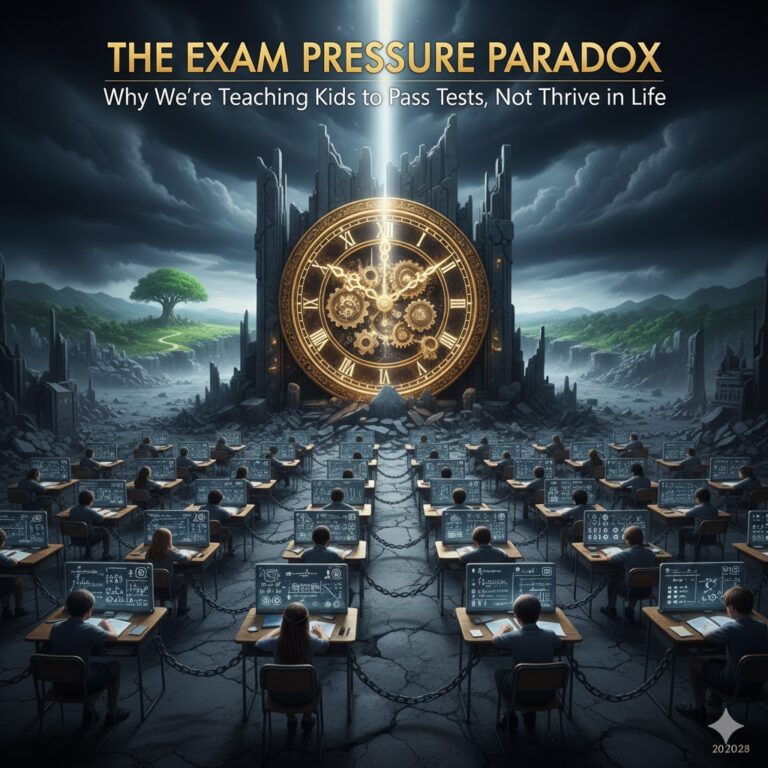
- Overemphasis on exams: This leads to a focus on memorization and test-taking strategies, often at the expense of genuine understanding.
- Passive learning: Students are often expected to sit and listen, rather than actively participate in their learning.
- Lack of real-world application: The disconnect between what is taught in the classroom and what is needed in the real world can be vast, leaving students unprepared for the challenges of careers and life.
- Standardized curriculum: A “one-size-fits-all” approach that fails to recognize individual learning styles, interests, and paces.
- Teacher burnout and overwork: This is becoming a critical issue globally. High teaching loads, intense pressure to raise test scores, and inadequate resources make it hard for educators to be creative and engaging.
More progressive approaches, such as project-based learning, inquiry-based learning, and personalized learning, attempt to address these weaknesses. These methods emphasize active learning, real-world application, and student choice. While promising, they often require significant resources, teacher training, and a willingness to step outside the traditional comfort zone. But the shift is happening. Slowly, but surely.
Common Mistakes by Students, Parents, and Institutions
Let’s be real: we all make mistakes. Here are some of the most common ones that hinder the learning process:
- Students:
- Passive approach: Waiting to be told what to do instead of taking initiative.
- Fear of failure: Avoiding challenges and sticking to what they already know.
- Lack of self-reflection: Not thinking about *how* they learn, what works for them, and where they struggle.
- Parents:
- Overemphasis on marks: Putting pressure on children to achieve high grades, even at the expense of their well-being and genuine learning.
- Lack of involvement: Not taking an active interest in their child’s learning and providing support and encouragement.
- Comparing children to others: Every child is different, but parents often use others as a yardstick.
- Institutions:
- Rigid curriculum: Failing to adapt to the changing needs of students and the world.
- Under-resourced classrooms: Lack of funding for technology, teaching resources, and teacher development.
- Resistance to change: A reluctance to embrace new teaching methods and technologies.
Most learners realize this only much later in life, and in some cases, never at all.
Busting Popular Education Myths
The education world is full of myths. Here are a few common ones:
- Myth: “High marks equal intelligence.”Reality: Marks are a measure of performance on specific assessments, not necessarily a reflection of overall intelligence, creativity, or problem-solving skills.
- Myth: “A degree guarantees a good job.”Reality: A degree can open doors, but it is not a guarantee of employment. Skills, experience, and adaptability are becoming increasingly important.
- Myth: “You’re either good at math or you’re not.”Reality: Math skills can be developed with practice, patience, and the right teaching approach.
- Myth: “Learning stops after you graduate.”Reality: Lifelong learning is crucial in today’s rapidly changing world. Skills and knowledge need constant updating.
Long-Term Impact on Careers, Mindset, and Personal Growth
The impact of a love for learning goes far beyond the classroom. It shapes your career, your mindset, and your overall personal growth.
- Career:Someone who enjoys learning is more adaptable to changing job markets and technologies. They are constantly updating their skills and knowledge, making them more valuable employees and more likely to succeed in their chosen fields. A growth mindset, a key ingredient for embracing new challenges, is fueled by a love for learning.
- Mindset:A love for learning fosters a growth mindset, the belief that abilities can be developed through dedication and hard work. People with a growth mindset embrace challenges, persist in the face of setbacks, and see effort as the path to mastery. This can be hugely beneficial.
- Personal Growth:Learning enriches your life. It expands your horizons, opens you up to new ideas and experiences, and helps you understand the world around you. This, in turn, boosts confidence, creativity, and overall well-being.
Modern Relevance: The 2026 Education Environment
The education landscape is constantly evolving. As of 2026, here are some key trends:
- Technology Integration: Online learning platforms, AI-powered tutoring, and virtual reality experiences are becoming more common. However, the focus is shifting from simply using technology to leveraging it to personalize learning, provide feedback, and create immersive learning experiences.
- Skills-Based Learning: There is an increasing emphasis on teaching practical skills that are relevant to the job market. This includes digital literacy, data analysis, critical thinking, problem-solving, and communication skills.
- Personalized Learning: The focus is moving away from a “one-size-fits-all” approach to education. Personalized learning means that students are able to learn at their own pace, and the curriculum is adapted to their individual needs and interests.
- Lifelong Learning: The need for continuous learning is more important than ever. Educational institutions are promoting the idea that learning is a lifelong journey, and providing resources for ongoing professional development.
- Focus on Well-being: Educators are starting to recognize the importance of student well-being. Schools are working to create supportive environments where students feel safe, valued, and able to thrive.
Future Outlook on Learning and Education
So, where is education headed? Here are some predictions:
- AI-Powered Learning: AI will play a bigger role in personalizing learning, providing feedback, and automating administrative tasks.
- The Rise of Micro-credentials: Short, focused courses and certifications will become increasingly popular, allowing learners to acquire specific skills and knowledge quickly.
- The Blurring of Boundaries: The lines between formal and informal learning will continue to blur. Learning will happen in more diverse settings, including online platforms, workplaces, and community centers.
- Increased Emphasis on Soft Skills: Skills like communication, collaboration, and critical thinking will be more highly valued.
- A Focus on Sustainability: Education will address global challenges, such as climate change and social inequality.
FAQ Section
Here are some frequently asked questions about cultivating a love for learning:
- How can I help my child develop a love for learning?Encourage their curiosity. Ask questions, provide opportunities for exploration, and celebrate their successes. Focus on the process of learning rather than just the outcome.
- Is it possible to learn new skills later in life?Absolutely! The brain is capable of learning throughout life. Embrace new challenges and be patient with yourself.
- How can I make learning more enjoyable?Find topics that genuinely interest you. Connect learning to real-world applications. Experiment with different learning methods.
- What are the best ways to memorize information?Active recall (testing yourself), spaced repetition (reviewing information over time), and connecting new information to what you already know are all effective strategies.
- Are online courses as effective as traditional classroom learning?It depends on the individual and the course. Online courses can be highly effective, especially when they are well-designed and interactive. Blended learning (a mix of online and in-person instruction) can be particularly effective.
- What are the most important skills for the future?Critical thinking, problem-solving, creativity, communication, and adaptability will be highly valuable.
- How do I deal with parental pressure about grades?Talk to your parents and explain that while grades are important, they are not the only measure of success. Focus on developing your skills and interests.
- What are some good resources for lifelong learning?Explore online learning platforms (Coursera, edX, Khan Academy), read books and articles, join clubs or groups related to your interests, and attend workshops or conferences.
Cultivating a love for learning is not just about academic success; it’s about fostering curiosity, critical thinking, and a lifelong passion for knowledge. It’s about empowering individuals to embrace change, adapt to new challenges, and live fulfilling lives. That is the kind of education we should all strive for. If you would like to know about how to negotiate your salary after you finish this journey, check out this great resource: The Unspoken Truths of Salary Negotiation: How to Get Paid What You’re Really Worth. And, if you want to find more articles about thriving in the modern world, check out Complifest.