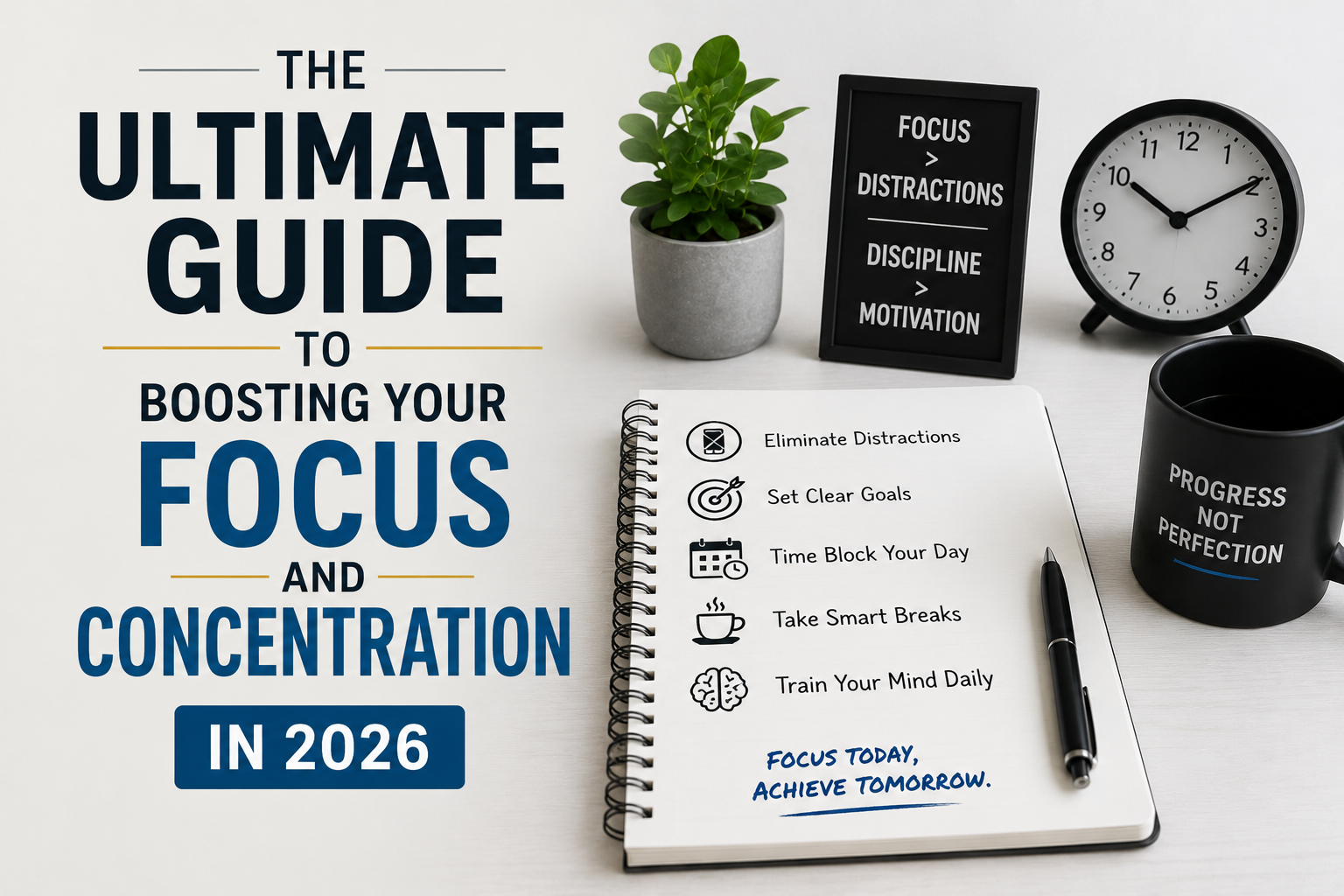
The Ultimate Guide to Boosting Your Focus and Concentration in 2026
Ever feel like your brain is a runaway train, constantly veering off the tracks? You’re not alone. In today’s hyper-connected world, distractions are everywhere, making it harder than ever to concentrate.
But don’t worry, you can take control. I’m going to share some proven strategies, and a few “ninja” tricks I’ve learned over the years, to sharpen your focus and concentration. This isn’t just about surviving; it’s about thriving.
Let’s be real, the modern world is designed to steal your attention. We’re bombarded with notifications, endless feeds, and a constant stream of information. This constant stimulation rewires our brains, making it difficult to sustain focus on a single task for extended periods. This is usually where people get confused. They think they’re simply “bad” at concentrating. But the truth is, you’re not defective; you’re just up against some serious forces.
Here’s the thing: you can’t just will yourself to concentrate. It’s a skill, a habit, and a practice. Like any skill, it needs to be honed. And that’s exactly what we’re going to do.
Step 1: Taming the Chaos – Creating Your Ideal Focus Environment
One step people often rush through is setting up their environment. Before you can even think about focusing, you need to minimize distractions. This means taking control of your physical and digital spaces.
Physical Space
- Declutter: A messy workspace equals a messy mind. Clear your desk of anything that isn’t essential for the task at hand. Put things away.
- Ergonomics: Ensure your chair, desk, and monitor are set up to promote good posture. This helps prevent physical discomfort, which can be a major distraction.
- Lighting: Make sure you have adequate lighting. It’s essential to keep your attention focused on what you are studying. Indirect lights are better, so your eyes don’t tire.
Digital Space
- Notifications: Turn off all non-essential notifications on your phone, computer, and any other devices. Seriously, turn them OFF.
- Website Blocking: Use website-blocking apps or browser extensions to limit access to distracting websites (social media, news sites, etc.).
- Dedicated Work Mode: If you use your phone for work, consider using a mode that limits distracting apps and only allows essential notifications.
Step 2: Time Management – Working Smarter, Not Harder
Now that your environment is ready, let’s talk about how you manage your time. Working in blocks can help with focus. Instead of slogging away for hours, aim for focused bursts of work followed by breaks. I’ve found a few methods to be particularly helpful.
The Pomodoro Technique
This is a simple but powerful technique. Set a timer for 25 minutes of focused work, followed by a 5-minute break. After every four “pomodoros,” take a longer break (15-20 minutes). This method has been scientifically proven to boost productivity and reduce mental fatigue.
Time Blocking
Time blocking involves scheduling specific blocks of time for specific tasks in your calendar. This helps you allocate dedicated time for focused work and prevents tasks from bleeding into each other. Be realistic. Give yourself more time than you think you need. It’s better to finish early than to constantly be stressed about running behind.
Step 3: Sharpening Your Mental Edge – Exercises and Habits
Creating the right environment and managing your time are crucial, but they’re only half the battle. You also need to train your brain to focus. Here are a few exercises and habits that I swear by.
Mindfulness Meditation
Mindfulness is about focusing attention on the present moment. Even 5-10 minutes of daily mindfulness meditation can significantly improve your focus. There are tons of free guided meditations available online. Just close your eyes, focus on your breath, and gently bring your attention back whenever your mind wanders.
Brain Training Games
Playing certain types of games can help you get better at concentrating. Sudoku, crosswords, and memory games are great options. These games challenge your brain and improve your ability to focus.
Regular Exercise
Aerobic exercise is not only good for your body, but also for your mind. Physical exercise boosts your circulation and allows more oxygen to reach your brain, increasing your ability to concentrate. Aim for at least 150 minutes of moderate-intensity aerobic exercise per week.
The Power of Breaks
Remember that the human brain can only focus for a certain amount of time. You need to take breaks. During your breaks, get up, move around, stretch, or do something completely unrelated to your work. Step away from your desk. Go outside. This will help you reset and return to your work refreshed.
Step 4: Fuelling Your Brain – Nutrition and Sleep
If you do this incorrectly, it creates problems later. Your brain is a hungry organ, and it needs the right fuel to function at its best. Diet and sleep are critical for optimal focus and concentration.
Brain-Boosting Foods
Eat a diet rich in fruits, vegetables, and high-fiber foods. Foods high in omega-3 fatty acids (like salmon) and antioxidants (like berries) are particularly beneficial for brain health. Avoid simple sugars. Limit processed foods. Think of food as fuel, and prioritize quality over quantity.
Prioritize Sleep
Aim for seven to nine hours of sleep nightly. A well-rested brain is crucial to all your cognitive functions, including your ability to concentrate. Create a relaxing bedtime routine to help you wind down. If you have trouble sleeping, consult a doctor. Insomnia is a common problem, but there are solutions.
Step 5: Avoiding Common Mistakes
Throughout my journey, I’ve seen countless people stumble on these common pitfalls:
- Multitasking: Our brains aren’t wired for multitasking. It actually makes you less efficient and more prone to errors. Focus on one task at a time.
- Procrastination: Putting things off creates anxiety and stress, which make it harder to concentrate. Break down large tasks into smaller, more manageable steps.
- Neglecting Breaks: As I mentioned earlier, breaks are essential. Don’t try to power through without them.
- Ignoring Physical Needs: Hunger, thirst, and physical discomfort will kill your focus. Pay attention to your body’s needs.
Step 6: Real-World Tools and Resources
Here are some tools and resources I’ve found invaluable:
- Focus Apps: Apps like Forest or Freedom can block distracting websites and apps.
- Noise-Canceling Headphones: These can be a lifesaver for creating a peaceful work environment.
- Mindfulness Apps: Headspace and Calm offer guided meditations and other mindfulness resources.
The Long Game: Staying Focused for the Future
This is where I tell you how to future-proof your focus. Because, trust me, the distractions will only get more sophisticated.
Continuous Improvement
Focus is a skill that you can improve over time. Regularly evaluate your strategies and make adjustments as needed. If something isn’t working, don’t be afraid to try something new. Experiment with different techniques until you find what works best for you. The key is to be consistent.
Adaptability
The world is constantly changing. New technologies, new distractions, and new challenges will inevitably arise. Be adaptable. Be willing to learn new strategies and adapt to the changing environment.
Frequently Asked Questions
Here are some of the most common questions I get about focus and concentration:
-
- How long can I realistically focus on one task?
The average attention span is about 20-30 minutes for most people, but this varies. With practice and the right strategies, you can gradually increase your focus time.
-
- What if I can’t concentrate, even after trying these methods?
Sometimes, underlying issues like anxiety, depression, or ADHD can impact focus. Consider talking to a doctor or therapist if you’re struggling.
-
- Are there any supplements that can help with focus?
Some supplements, such as omega-3 fatty acids and L-theanine, may help. Always consult with a doctor before taking any supplements.
-
- Can background music help me focus?
It depends on the individual. Some people find that instrumental music or white noise helps them concentrate, while others find it distracting. Experiment to see what works best for you.
-
- How can I improve my focus while studying?
Break up your study sessions into smaller chunks, take regular breaks, and actively engage with the material. Turn headings into questions. Make sure you are in an appropriate study environment.
-
- How does exercise improve focus?
Exercise increases blood flow to the brain, which improves cognitive function and attention. It also reduces stress and improves mood, making it easier to concentrate.
-
- What should I do if my mind wanders?
It’s normal for your mind to wander. When you realize it, gently redirect your focus back to the task at hand. Don’t get discouraged. This is where mindfulness can help.
-
- Is there a “magic bullet” for focus?
Unfortunately, no. Improving focus is a process that requires consistent effort and a combination of strategies. There’s no quick fix, but the results are worth it.
Improving your focus and concentration is a journey, not a destination. It’s a skill that requires practice, patience, and the right strategies. By implementing these techniques, you’ll be well on your way to becoming more focused, productive, and successful. Remember, overworking doesn’t equal career success, focus does.