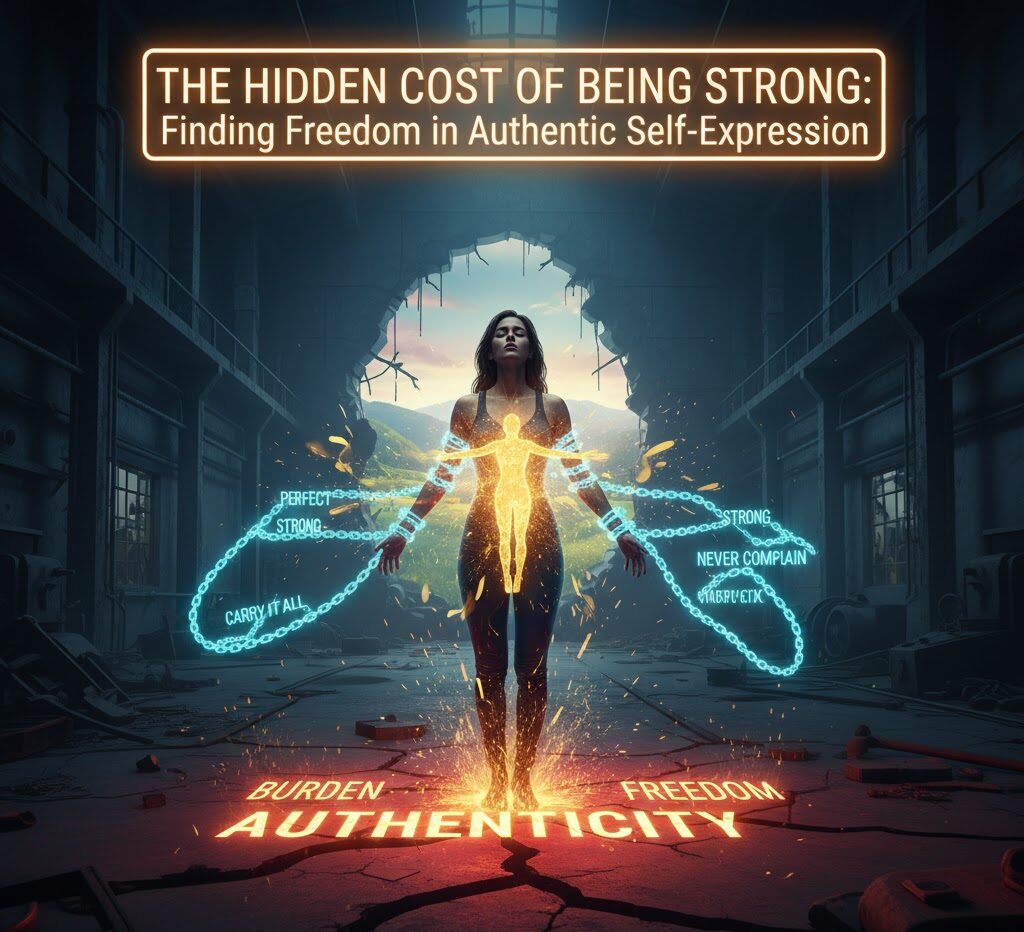
The Hidden Cost of Being Strong: Finding Freedom in Authentic Self-Expression
I’ve seen it a thousand times: the person who seems to have it all together, the one everyone looks up to for their strength. They’re the rock
the fixer, the one who never cracks. On the surface, it’s admirable, even enviable. But behind the facade, there’s often a hidden struggle, a quiet loneliness, and a deep, unspoken exhaustion. This is the story of the “strong” person – and the price they pay.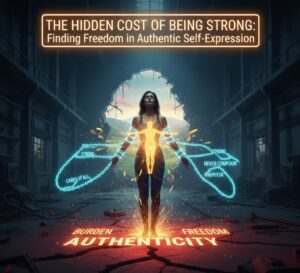 For years, I was that person. I prided myself on my ability to handle anything, to be the steady hand in any storm. I didn’t want to burden anyone with my problems. Showing vulnerability felt like a weakness, something to be avoided at all costs. I built walls, brick by brick, around my emotions, convinced that strength meant never needing help, never showing fear, never faltering.
The problem? These walls didn’t just keep the bad things out; they locked me in. They stifled my ability to connect authentically with others. I became isolated, trapped in a performance of strength that was emotionally draining and ultimately, unsustainable. I was surviving, but I wasn’t truly living. Sound familiar?
The Paradox of Strength
We live in a culture that glorifies strength. We celebrate resilience, grit, and the ability to “push through” anything. And those are valuable qualities, no doubt. But the definition of strength has become warped. It’s often equated with stoicism, with the suppression of emotions, and the relentless pursuit of achievement, no matter the cost. We end up equating our worth with our ability to “handle” things.
This is where things get tricky. Suppressing your emotions doesn’t make them disappear. It just pushes them underground, where they fester and grow. Unexpressed emotions manifest in all sorts of ways: anxiety, depression, physical ailments, relationship problems. You might feel a constant low-level hum of stress, a feeling that something’s not quite right, but you can’t put your finger on it. You can’t truly find your inner strength without addressing the silent struggle within.
Here’s the paradox: true strength isn’t about avoiding vulnerability; it’s about embracing it. It’s about acknowledging your feelings, even the uncomfortable ones. It’s about daring to be human.
The Social Pressure to Perform
Let’s be honest: society doesn’t always make it easy to be vulnerable. From a young age, we’re taught to be “tough,” to “suck it up,” to not show weakness. Boys are told “boys don’t cry.” Girls are told to be perfect, always smiling, always in control.
There’s so much pressure to be “successful,” and we’re constantly bombarded with images of curated perfection on social media. We’re expected to be resilient, always positive, always winning. This pressure is even more intense in the modern workplace, where long hours, high stress, and constant performance reviews are the norm.
This pressure is compounded by the fear of judgment. No one wants to be seen as a failure, a burden, or someone who can’t cope. So we build our walls, we put on our masks, and we keep up the facade of strength. We worry about what others will think, so we hide our true selves. We fear being perceived as weak, so we overcompensate, working harder, achieving more, and projecting an image of invincibility.
In the digital age, this pressure is amplified. We live in a world of constant comparison, where everyone seems to be living a more exciting, successful, and perfect life than you are. This creates a relentless cycle of self-doubt, anxiety, and the constant feeling that you’re not good enough.
The Psychological Toll of “Being Strong”
The cost of constantly performing strength is immense. It impacts your mental health, your relationships, and your overall well-being. Think about these consequences:
- Increased Stress and Anxiety: Suppressing emotions puts your nervous system on high alert. You’re constantly scanning for threats, bracing yourself for the next potential crisis. This leads to chronic stress, which can manifest in anxiety, panic attacks, and other mental health challenges.
- Emotional Exhaustion: Maintaining a facade of strength is incredibly tiring. It requires constant vigilance, effort, and energy to control your emotions and project a certain image. This can lead to burnout, fatigue, and a general sense of being emotionally drained.
- Relationship Difficulties: Authentic connection requires vulnerability. When you hide your true self, you create a barrier between you and others. Your relationships become superficial, lacking depth and intimacy. You may find it difficult to trust others or to allow yourself to be truly seen and known.
- Self-Sabotage: When you’re constantly putting on a show of strength, you can start to believe the lie. You might become afraid to take risks, to pursue your dreams, or to step outside your comfort zone. You might self-sabotage your efforts, afraid of failure and the vulnerability of trying.
- Difficulty with Self-Compassion: Those who are “strong” often beat themselves up when they struggle. There’s a harsh inner critic that never lets them rest, and self-compassion is nearly impossible.
Breaking Down the Walls: Steps Towards Authentic Self-Expression
The good news is that you can break free from the prison of “being strong.” It’s not an overnight transformation, but a journey of self-discovery, self-compassion, and the courage to be authentic. Here are some practical steps to get you started:
1. Acknowledge Your Feelings
This is the first, and often the hardest, step. It means allowing yourself to feel your emotions, even the negative ones. Don’t judge them, don’t suppress them, just acknowledge them.
Give them space. Ask yourself, “What am I feeling right now?” and allow the answer to come. It might be sadness, fear, anger, or even joy. It doesn’t matter; it’s all valid. Journaling, meditation, or simply taking a few moments to check in with yourself can be helpful.
2. Challenge Your Beliefs
Where did your ideas about strength come from? What messages did you internalize about vulnerability and weakness? Start questioning these beliefs.
Are they truly serving you? Are they helping you live a happy and fulfilling life? Or are they holding you back? Recognize that many of these ideas are societal constructs, not immutable truths. Questioning these beliefs is a powerful step towards dismantling the walls you’ve built.
3. Practice Self-Compassion
Treat yourself with the same kindness, understanding, and compassion you would offer a friend who is struggling. Recognize that everyone experiences challenges, setbacks, and difficult emotions. You are not alone. When you mess up, or feel vulnerable, tell yourself “This is hard. I’m doing my best. I’m human.” Self-compassion is the antidote to the harsh inner critic.
4. Set Healthy Boundaries
Learn to say no, to prioritize your needs, and to protect your energy. You don’t have to be everything to everyone. You have the right to your own emotions, your own time, and your own space. Setting boundaries is an act of self-respect, and it allows you to conserve your energy and avoid burnout.
5. Cultivate Authentic Connections
Start small. Share your feelings with someone you trust, someone who will listen without judgment. It could be a friend, a family member, a therapist, or a support group. Allow yourself to be seen, to be known. This is where real connection happens. It doesn’t mean you have to spill your guts to everyone, but sharing your true self with a few trusted people can make a world of difference.
6. Seek Professional Help
If you’re struggling to break free from the cycle of “being strong,” don’t hesitate to seek professional help. A therapist or counselor can provide a safe space to explore your emotions, challenge your beliefs, and develop healthier coping mechanisms. Therapy can be a powerful tool for self-discovery and personal growth.
7. Embrace Imperfection
Perfection is a myth. No one is perfect. Mistakes, vulnerabilities, and imperfections are part of the human experience. Embrace them. They are opportunities for growth, learning, and connection. Allow yourself to be imperfect. It’s in our imperfections that we find our true selves.
8. Practice Mindful Self-Awareness
Regularly practice mindful self-awareness. This means paying attention to your thoughts, feelings, and bodily sensations without judgment. This practice helps you become more aware of your emotional triggers and patterns. The more aware you are of your inner world, the easier it will be to respond to challenges with compassion and wisdom. Through practices such as meditation and journaling, you can develop a deeper understanding of your inner landscape.
The Long-Term Impact of Authentic Expression
The journey towards authentic self-expression is not always easy, but the rewards are immeasurable. It can transform your life in profound ways:
- Increased Confidence: When you allow yourself to be vulnerable, you build self-trust. You realize that you can handle difficult emotions, that you are resilient, and that you are worthy of love and acceptance, flaws and all.
- Stronger Relationships: Authenticity is the foundation of genuine connection. By sharing your true self with others, you create deeper, more meaningful relationships built on trust, empathy, and mutual respect.
- Greater Emotional Resilience: When you’re used to facing your emotions head-on, you build emotional muscles. You become more resilient to stress, setbacks, and challenges. You develop the ability to navigate difficult situations with greater ease and grace.
- Enhanced Decision-Making: When you’re in touch with your emotions, you can make better decisions that are aligned with your values and your authentic self. You’re less likely to be swayed by external pressures or the need to please others.
- Increased Life Satisfaction: Living authentically is the key to a fulfilling life. When you are true to yourself, you experience a greater sense of purpose, meaning, and joy. You stop living to please others and start living a life that feels right for you.
Modern Relevance: Navigating the 2026 Landscape
In 2026, the pressures of modern life are even more intense. The rise of AI and automation is reshaping the workplace, creating new anxieties about job security and the need to constantly upskill.
The lines between work and personal life continue to blur, making it even harder to switch off and prioritize our well-being. The constant barrage of information and the ever-present demands of social media can lead to information overload, anxiety, and a feeling of being constantly “on.”
In this challenging environment, the ability to practice authentic self-expression is more important than ever. It’s a key skill for navigating the complexities of the modern world, for building resilience, and for creating a life that feels meaningful and fulfilling. It’s what you need to thrive, not just survive.
Emotional intelligence and adaptability are no longer just buzzwords; they are essential survival skills. In a world of rapid change and uncertainty, the ability to understand and manage your emotions, to connect with others on a deeper level, and to adapt to new situations is crucial for success and well-being. Authentic self-expression is the foundation upon which these skills are built.
FAQ: Your Questions Answered
Here are some frequently asked questions, answered honestly and practically:
- I’m afraid of being vulnerable. What if people judge me?It’s natural to fear judgment. Start small. Share your feelings with people you trust, one at a time. Pay attention to how they respond. You’ll likely find that most people are more understanding and supportive than you expect. Remember, the people who judge you are likely dealing with their own struggles. Their opinions shouldn’t dictate how you live.
- How do I stop overthinking my emotions?Become more aware of your thoughts. When you notice yourself overthinking, gently redirect your attention to your body or your surroundings. Practice mindfulness techniques like deep breathing or meditation. It can help you find distance and perspective.
- I don’t know where to start. How do I even begin to be more vulnerable?Start with small steps. Journaling can be a great place to start. Write down your feelings, even if they seem messy or insignificant. Share something small with a trusted friend. The more you practice, the easier it will become.
- What if I’ve been “strong” for so long that I don’t know how to express my emotions?It’s okay. It’s a skill that can be learned. Consider working with a therapist or counselor. They can help you identify your emotions, develop healthy coping mechanisms, and build self-compassion. This is a common situation, and support is available.
- I’m afraid of being a burden on others. How do I ask for help?Recognize that asking for help is a sign of strength, not weakness. Frame your request in a way that is clear and specific. Offer to reciprocate the favor in the future. Remember, people often feel good when they can help someone they care about. You’re not a burden; you’re human.
- Is it okay to still be “strong” sometimes?Absolutely. There are times when you need to be resilient, to push through challenges, and to maintain a sense of composure. The key is to find a healthy balance. Allow yourself to be vulnerable when you need to, and don’t let the performance of strength become your default mode of operation.
- How can I stay consistent with practicing authenticity?Consistency comes from small, daily habits. Start with journaling for 5-10 minutes each day. Practice mindful self-reflection by asking yourself how you are feeling in the moment. Regularly check in with your needs and set realistic boundaries to protect your energy. Over time, these small actions become ingrained, and authenticity becomes a natural way of being.
Authentic self-expression is not a sign of weakness; it’s a source of profound strength. It is the key to a more fulfilling life, meaningful relationships, and a deeper sense of self-worth. It is the foundation upon which you can truly thrive. It’s a journey, not a destination. Embrace the process, be patient with yourself, and remember that you are worthy of being seen, heard, and loved for exactly who you are. This is your journey towards Complifest.