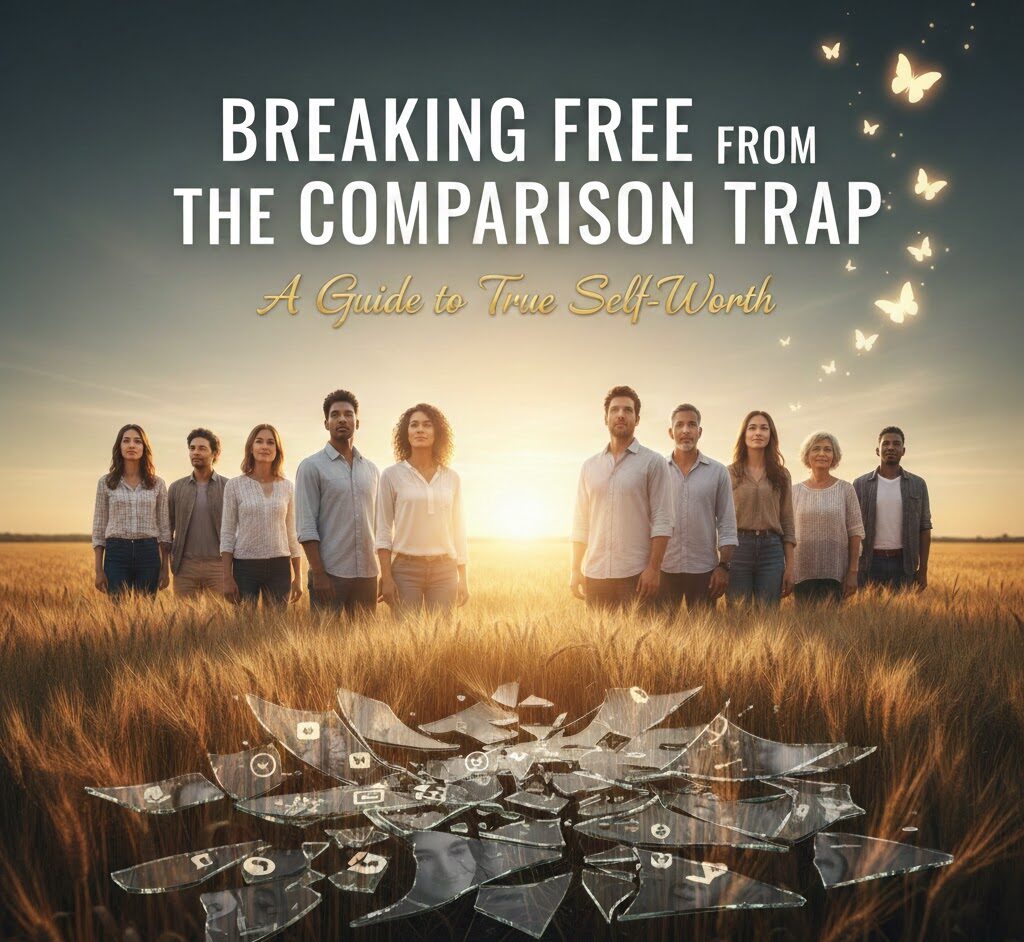
Breaking Free from the Comparison Trap: A Guide to True Self-Worth
You know the feeling, right? That little pang of something. Maybe it’s a flash of envy, a whisper of inadequacy, or a full-blown wave of self-doubt. It creeps in when you’re scrolling through social media
catching up with friends, or even just sitting at your desk, lost in thought. Suddenly, you’re not measuring up. Someone else’s life, their achievements, their appearance – it all seem better. This is the comparison trap, and it’s something I’ve wrestled with for years. And guess what? You’re not alone. We all do it. We size ourselves up against others. It’s woven into the fabric of being human. Back in the day, it was about survival: who was the strongest, who could find the best food. Nowadays, the game has shifted to careers, relationships, and the curated highlight reels we see online.
But the underlying mechanism is the same: we try to figure out where we stand. We determine our worth by measuring ourselves against an external standard. This comparison can be a motivational tool but often brings about feelings of inadequacy.
Why Does Personal Growth Feel So Hard?
Let’s be real: personal growth is a messy, unpredictable journey. It’s not a straight line from point A to point B. It’s more like a tangled ball of yarn, full of knots, detours, and frustrating dead ends. One of the biggest reasons it feels so hard? We’re constantly bombarded with the “perfect” versions of other people’s lives.
Social media, with its carefully crafted images and highlight reels, is a major culprit. You see someone’s promotion at work, their picture-perfect family vacation, or their flawless physique, and you start to question your own progress. You might think, “Why haven’t I achieved that yet?” or
“Why don’t I look like that?” This type of upward comparison can be a trigger for lower self-esteem. The truth is, you’re only seeing a sliver of their reality. You don’t see the long hours, the struggles, the sacrifices, or the failures that likely came before that “perfect” moment. They are showing a “false life” for the sake of followers.
Then there’s the pressure. The world, especially in 2026, is shouting at us to “hustle,” to “grind,” to constantly improve. We’re told we need to be productive, successful, and happy *all the time*. This relentless pressure can leave us feeling exhausted and inadequate. It fosters a fear of missing out (FOMO) and an incessant need to keep up, leading to more comparison and more self-criticism.
Finally, we have our own internal saboteurs: our inner critics. That voice that tells us we’re not good enough, smart enough, or worthy enough. This inner critic thrives on comparison. It uses other people’s successes to amplify our own perceived shortcomings. The lower our self-esteem, the more we tend to compare ourselves upwards.
Small Steps, Big Impact: Realistic Changes You Can Make
So, how do we break free? It’s not about overnight transformations or massive life overhauls. It’s about taking small, consistent steps that shift your mindset and your behaviors. Here are some strategies that have worked wonders for me and for many others:
- Name Your Inner Critic: Give that critical voice a name. This simple act of naming it can take away its power. When “Ciara” (or whatever name you choose) starts berating you, you can recognize it and begin to challenge those negative thoughts.
- Practice Gratitude: Start each day by listing three things you are grateful for. It’s a simple way to shift your focus from what you lack to what you have. You can also end your day by listing three things that happened during the day that you are grateful for.
- Limit Social Media: Be mindful of the time you spend scrolling and the content you consume. Ask yourself if it is helping or hurting you. Consider unfollowing accounts that trigger negative feelings. Social media algorithms can make this habit harder to break.
- Compare Yourself to Yourself: Focus on your own journey. Track your progress, celebrate your achievements, and acknowledge how far you’ve come. Look at your past versus present self is much healthier motivation. “Am I getting closer to where I want to be?” instead of “Why aren’t I where they are?”.
- Cultivate Self-Compassion: Treat yourself with the same kindness and understanding you would offer a friend. When you make mistakes or face setbacks, be gentle with yourself.
- Seek Connection, Not Comparison: Social media can be used to connect rather than to compare. Send someone you know a private message and form a genuine connection.
Common Mistakes to Avoid
Self-improvement is not about finding the *perfect* hack or the magic bullet. It’s about consistent effort and a willingness to learn. Here are some of the biggest traps people fall into:
- Expecting Overnight Change: Real growth takes time. Be patient with yourself. Embrace the process, not just the outcome.
- Relying on Motivation Alone: Motivation is fleeting. Build habits and systems that support your goals, even when you don’t feel motivated.
- Ignoring Your Inner World: True change starts from within. Many people work hard but avoid this inner step. Take time for self-reflection, introspection, and emotional processing.
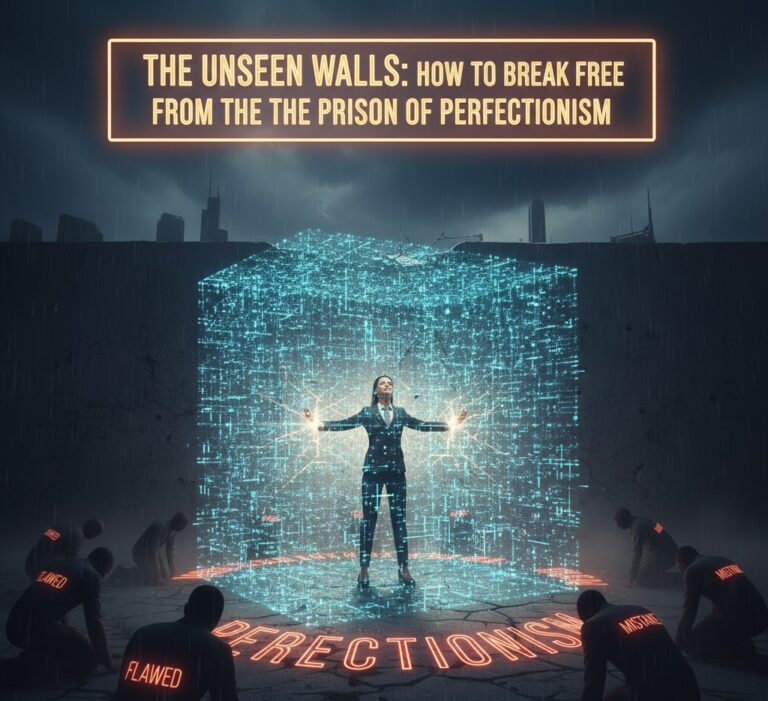
- Chasing Perfection: Striving for perfection is a recipe for disappointment. Focus on progress, not perfection. Embrace your imperfections.
Long-Term Impact: Building Confidence and Making Better Choices
Breaking free from the comparison trap isn’t just about feeling better in the moment. It has a profound impact on your overall well-being and life choices. Here’s what you can expect:
- Increased Confidence: When you stop comparing yourself to others and start focusing on your own strengths and accomplishments, your confidence will soar.
- Healthier Relationships: You’ll be less likely to judge others or feel threatened by their successes. Instead, you can celebrate their achievements and build more meaningful connections.
- Better Decision-Making: You’ll be less influenced by external pressures and more aligned with your own values and desires. This leads to more authentic choices.
- Greater Resilience: You’ll develop the ability to bounce back from setbacks and challenges. You’ll know that your worth isn’t dependent on external validation.
Modern Relevance: Thriving in the 2026 Landscape
In 2026, the digital world is more immersive and influential than ever. Social media has expanded its reach, and the lines between our online and offline lives have blurred.
This increased connectivity can exacerbate the comparison trap, but it also offers opportunities for growth. In the digital age, personal development is not just limited to professional knowledge but also requires a range of other soft skills. You must be able to adapt and succeed in modern work and life environments.
Here’s how to navigate this landscape:
- Cultivate Digital Wellness: Be intentional about your technology use. Set boundaries, take breaks, and prioritize real-world connections.
- Embrace Lifelong Learning: The pace of change is accelerating. Continuously seek new knowledge and skills to stay relevant and adaptable.
- Focus on Meaningful Connections: Limit surface-level interactions. Nurture deep, authentic relationships.
- Practice Mindfulness: In a world of constant distractions, mindfulness helps you stay present, calm, and focused.
Future Outlook: Emotional Intelligence and Adaptability
Looking ahead, emotional intelligence and adaptability will be critical. The ability to understand and manage your emotions, build strong relationships, and navigate change will be essential for success and well-being. By focusing on personal development, individuals can enhance their skills and stay relevant in an increasingly competitive world.
The journey of personal development is ongoing, but the rewards are immense. The digital age offers both challenges and opportunities.
Here’s what to focus on:
- Develop Self-Awareness: Understand your strengths, weaknesses, values, and triggers. This is a great place to start your self-assessment journey.
- Build Emotional Resilience: Learn to cope with stress, setbacks, and difficult emotions.
- Embrace Change: Be open to new experiences and willing to adapt to evolving circumstances.
FAQ Section
Here are some frequently asked questions about breaking free from the comparison trap:
- How do I stop comparing myself to others on social media?Limit your time on social media. Unfollow accounts that make you feel bad. Focus on the positive aspects of your life and your own accomplishments.
- Why do I compare myself to others?It’s human nature! We compare ourselves to others to assess our place in the world. It can also be to motivate us.
- Is it bad to compare myself to others all the time?Yes, because it often leads to negative feelings, low self-esteem, and can be a waste of time and energy.
- What are some practical things I can do to feel better?Practice gratitude, limit social media, focus on your own progress, and treat yourself with kindness.
- How can I build my self-esteem?Focus on your strengths, celebrate your accomplishments, and practice self-compassion.
- Can social media ever be a good thing?Yes, as long as you’re using it to connect with others in a meaningful way. Social media can be used to connect rather than to compare.
- How do I deal with feelings of envy?Acknowledge your feelings, identify what you are longing for, and focus on what you can cultivate in your own life.
- What is the most important thing to remember?You are unique, and your worth is not dependent on anyone else’s accomplishments. Internal assurance quiets the noise that comparison feeds on.
The journey to break free from the comparison trap isn’t always easy. There will be bumps in the road, moments of insecurity, and doubt. But by maintaining the practices that work for you, you can improve your self-esteem. You have the power to create a life that’s true to you, a life you can be proud of. And that, my friend, is a life worth living. For more information, visit Complifest.