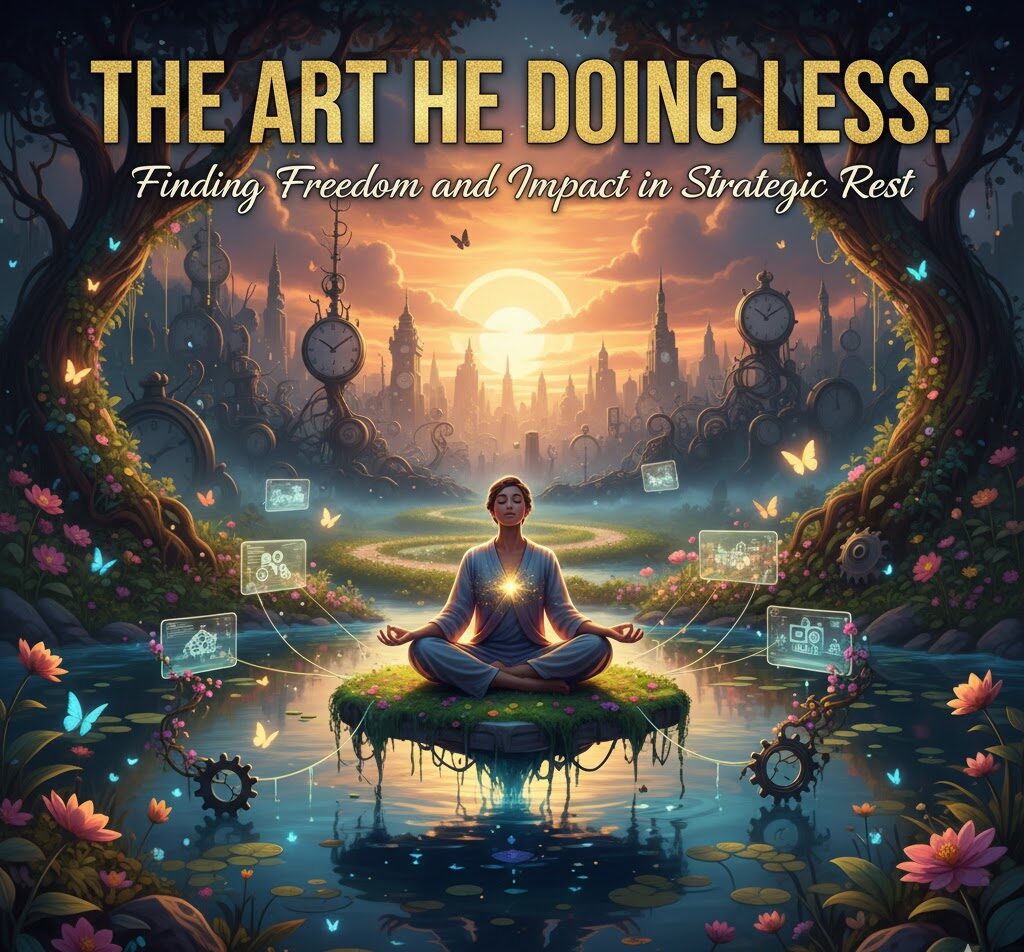
The Art of Doing Less: Finding Freedom and Impact in Strategic Rest
I know what you’re thinking. “Doing less? In a world that glorifies hustle, productivity hacks, and being ‘always on’?” Trust me, I get it. For years, I was right there with you, believing that the more I crammed into my day, the more successful I’d become. I thought if I wasn’t constantly striving, constantly
I was somehow failing. The result? Burnout, anxiety, and a deep-seated feeling that I was perpetually behind, no matter how much I achieved. This isn’t about laziness. It’s not about shirking responsibilities. It’s about a fundamental shift in how we approach life, work, and personal growth. It’s about recognizing the hidden power of strategic rest – the kind of rest that allows you to recharge, reflect, and ultimately, achieve more with less wasted effort. It’s about optimizing *output* instead of just *input*.
The Trap of Constant Doing
The problem is, our culture is addicted to “doing.” We’re bombarded with messages that equate busyness with importance. We wear our exhaustion like a badge of honor. This is where most people feel stuck: trapped in a cycle of activity, feeling overwhelmed, yet somehow still unproductive. We mistake motion for progress. We fill every waking moment with tasks, appointments, and distractions, leaving little space for genuine reflection or rejuvenation. The cycle goes something like this:
- Overwhelm: Too many commitments, too much information, too little time.
- Anxiety: Worrying about all the things you *should* be doing.
- Procrastination: Avoiding the most important tasks because they feel too daunting.
- Inefficiency: Working harder, but not necessarily smarter. Making mistakes, and having to redo things.
- Burnout: Physical and emotional exhaustion, leading to decreased motivation and productivity.
This is a losing game. It’s a hamster wheel of activity that leaves you feeling drained, disconnected, and ultimately, less effective. It’s easy to fall into this trap, and it’s even easier to stay there. You might find yourself reaching for one more task, one more email, one more project, thinking “If I just finish this one thing…” – but then there’s always *another* thing. It’s a never-ending cycle.
The truth is, sustained high performance requires periods of active *recovery*. Just like an athlete needs rest days to build muscle, we need rest days, or at least periods of less intensive activity, to recharge our mental and emotional batteries. Without it, we become depleted, making poor decisions, lacking creativity, and ultimately, less capable of achieving our goals. This is a critical area of life skills.
Why We Resist Doing Less
If the benefits of strategic rest are so clear, why do we resist it so fiercely? The reasons are complex and deeply ingrained in our psychology and culture. Here are a few of the main culprits:
- Fear of Missing Out (FOMO): We’re afraid that if we’re not constantly “in the game,” we’ll miss out on opportunities, connections, or experiences. This fear keeps us tethered to our devices and constantly checking notifications.
- The Illusion of Control: We believe that by being busy, we’re somehow in control of our lives. We fill our schedules to feel like we’re proactively managing our time and resources, even if those activities don’t align with our priorities.
- The Validation Trap: We equate productivity with self-worth. We believe that our value is determined by how much we accomplish, leading us to constantly strive for more, even when it’s detrimental to our well-being.
- Unrealistic Expectations: We try to squeeze too much into each day. This can be the consequence of a lack of self-awareness. We overestimate how much we can get done, and underestimate the time required for tasks, leading to perpetual feelings of falling behind.
- Social Pressure: Society rewards busyness. We are constantly reminded that in order to be a success, we must always be working. Quiet moments of contemplation, or resting, can be seen as weakness.
Overcoming these ingrained patterns requires conscious effort, self-awareness, and a willingness to challenge the status quo. It’s about retraining your brain, re-evaluating your priorities, and fundamentally changing your relationship with time and productivity.
The Power of Strategic Rest: A New Approach
Strategic rest isn’t about doing *nothing*. It’s about intentionally creating space for different types of activities that contribute to your overall well-being and effectiveness. It’s about making space for inner work to be done. It’s about building a better relationship with yourself and your time. It’s about identifying what is genuinely important to you and building your life around your values.
Here are some of the key components of strategic rest:
- Mindful Breaks: Short, regular breaks throughout the day to disengage from work and recharge. This could involve going for a short walk, meditating, listening to music, or simply closing your eyes and taking a few deep breaths.
- Scheduled Downtime: Dedicated time each week or month for activities that bring you joy and relaxation. This might include hobbies, spending time with loved ones, or simply enjoying the quiet of your own company.
- Prioritization and Delegation: Identify your most important tasks and focus your energy on those. Delegate or eliminate tasks that are less critical or that can be handled by others.
- Embracing Boredom: Allowing yourself to be bored. In a world of constant stimulation, boredom can be a catalyst for creativity, introspection, and problem-solving.
- Learning to Say No: Protect your time and energy by declining commitments that don’t align with your priorities or that will overextend you.
- Self-Compassion: Treating yourself with kindness and understanding. Recognize that you are human, and that you will inevitably experience setbacks and moments of overwhelm.
- Reflection: Regularly take time to reflect on your goals, values, and progress. This can help you identify areas where you need to adjust your approach or re-evaluate your priorities.
Growth often looks boring before it looks successful. It’s often when we think we’re doing nothing that the biggest breakthroughs happen.
Common Mistakes to Avoid
Even with the best intentions, it’s easy to fall into traps that undermine your efforts to embrace strategic rest. Here are some common mistakes to avoid:
- Treating rest as a reward, not a necessity: Don’t wait until you’re completely burned out to take a break. Make rest a non-negotiable part of your routine.
- Filling rest time with “busy work”: Avoid using your downtime to catch up on emails or other work-related tasks. This defeats the purpose of rest.
- Comparing yourself to others: Don’t judge your approach to rest based on what others are doing. Find what works best for you and your unique needs.
- Being inflexible: Life is unpredictable. Be prepared to adjust your approach to rest as needed. Don’t get discouraged if your plans are disrupted.
- Underestimating the power of small changes: You don’t have to overhaul your entire life overnight. Start small, and gradually integrate more strategic rest into your routine.
The Long-Term Impact: Beyond Productivity
The benefits of strategic rest extend far beyond increased productivity. They impact all areas of your life.
- Improved Mental and Emotional Well-being: Reduced stress, anxiety, and burnout, leading to greater happiness and emotional resilience.
- Enhanced Creativity and Innovation: Increased capacity for creative thinking and problem-solving.
- Stronger Relationships: More time and energy to invest in meaningful relationships.
- Greater Self-Awareness: Increased time for self-reflection and personal growth.
- Better Decision-Making: Improved clarity and focus, leading to better decisions.
- Increased Physical Health: Improved sleep, reduced risk of chronic diseases, and a stronger immune system.
- Greater Life Satisfaction: A deeper sense of purpose and fulfillment.
By embracing strategic rest, you’re not just optimizing your output; you’re creating a more balanced, fulfilling, and sustainable life. You’re building inner strength. You’re finding your true north. You’re building the life you truly want, not just the one you think you *should* want.
Modern Relevance: Thriving in 2026
In the fast-paced, digitally driven world of 2026, the ability to rest strategically is more critical than ever. We are bombarded with information, demands, and distractions. The lines between work and personal life are increasingly blurred. The rise of artificial intelligence and automation is changing the nature of work, requiring us to adapt and reskill at an unprecedented pace.
The ability to manage stress, maintain focus, and adapt to change will be essential for success. Strategic rest provides the foundation for building these skills. It allows us to:
- Process Information Overload: By creating space for reflection, we can better filter out the noise and identify the most important information.
- Navigate Constant Change: By building resilience and emotional intelligence, we can adapt more effectively to the ever-changing demands of the modern world.
- Foster Creativity and Innovation: By embracing boredom and making time for activities that bring us joy, we can unlock our creative potential and generate new ideas.
- Protect Our Well-being: By prioritizing rest and self-care, we can safeguard our mental and physical health in the face of increasing pressures.
In the future, the ability to do less, to rest strategically, will not be a sign of weakness, but a hallmark of strength and resilience. It is an area that allows us to find and use our life skills to their best. It is a key element of building true academic confidence.
Future Outlook: Emotional Intelligence and Adaptability
The future of personal development is inextricably linked to emotional intelligence and adaptability. As technology continues to evolve, the ability to understand and manage our emotions, build strong relationships, and navigate change will be more valuable than ever. Strategic rest is a fundamental tool for cultivating these essential skills. It provides the space for us to:
- Develop Self-Awareness: Through reflection and introspection, we can gain a deeper understanding of our own thoughts, feelings, and behaviors.
- Build Emotional Regulation: By learning to manage stress and cultivate inner calm, we can become more resilient in the face of challenges.
- Strengthen Relationships: By prioritizing our relationships and making time for meaningful connections, we can build a strong support network and enhance our sense of belonging.
- Embrace Change: By developing adaptability and a growth mindset, we can navigate the inevitable changes of life with greater ease and confidence.
In the coming years, those who embrace strategic rest and prioritize their emotional and mental well-being will be best equipped to thrive in an increasingly complex and demanding world. It’s not about doing more; it’s about being more – present, focused, resilient, and connected to what truly matters.
Frequently Asked Questions
- How do I start incorporating strategic rest into my routine? Start small. Identify one area where you can carve out more time for rest, such as your lunch break or your weekends. Experiment with different types of activities, such as meditation, reading, or spending time in nature, and see what feels most restorative for you.
- I feel guilty when I take a break. How can I overcome this feeling? Challenge the belief that you must always be productive. Remind yourself that rest is essential for your well-being and effectiveness. Reframe rest as an investment in your long-term success, not a sign of laziness.
- How do I say “no” to commitments without feeling bad? Practice. Start by declining small requests. Be honest about your capacity and priorities. You can simply say, “I’m not able to take that on right now,” or “I’m already committed to other projects.”
- I’m struggling with burnout. What can I do? Seek professional help. Talk to a therapist or counselor. Prioritize rest, relaxation, and self-care. Set healthy boundaries, and reduce your workload if possible. Consider taking a vacation or a sabbatical to recharge.
- How can I make time for rest when I have a busy schedule? Prioritize. Schedule rest into your calendar just like you would any other appointment. Break down your tasks into smaller, more manageable chunks, and build in short breaks between them. Delegate tasks where possible.
- How can I avoid distractions during my rest time? Turn off notifications on your phone and computer. Create a dedicated space for rest that is free from distractions. Let others know that you need uninterrupted time.
- What if I’m not sure what I enjoy? Experiment! Try different activities until you find ones that you genuinely enjoy and that help you to relax and recharge. Don’t be afraid to try new things.
- Is strategic rest the same as being lazy? Absolutely not! Strategic rest is about being intentional and mindful about how you use your time and energy. It’s about optimizing your output, not avoiding work. It’s about working smarter, not harder.
Embracing the art of doing less isn’t a shortcut; it’s a journey of self-discovery, resilience, and true fulfillment. Take the first step today. It might seem counter-intuitive, but sometimes, the greatest achievements come from the quiet moments of stillness. Take control of your time, embrace the power of strategic rest, and watch as your life transforms.