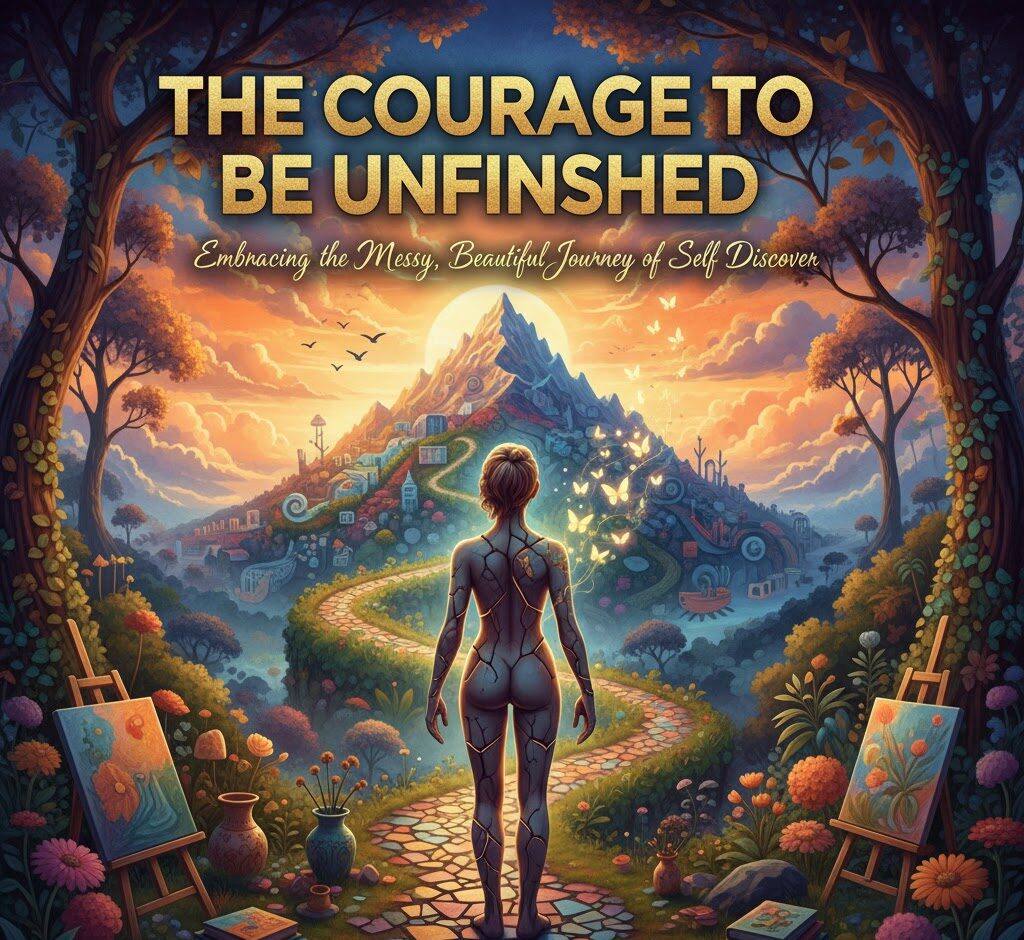
Embracing the Messy, Beautiful Journey of Self-Discovery
I get it. We all do. That feeling of wanting to arrive. To finally, *finally*, get to a place where everything feels sorted. Where you’re confident, decisive, and you just… know.
That’s the promise of personal development, right? The promise of a polished, perfected self. But the truth is, the more I’ve worked with people, the more I see that the real power, the real joy, comes not from some imagined destination, but from the willingness to stay unfinished. It’s about having the courage to embrace the mess, the stumbles, the doubts. It’s about knowing that growth isn’t a straight line; it’s a winding path, and sometimes, you’re going to feel completely lost. And that’s okay. In fact, it’s essential. This whole “becoming” thing? It’s a lifelong project, and the beauty is in the *becoming*, not the… well, the being done.
The Trap of the “Finished Self”
Here’s where most people feel stuck: the illusion of the “finished self.” We get bombarded with images of success, perfection, and effortless confidence. Social media is a highlight reel, right? We see the perfectly curated lives, the perfectly toned bodies, the perfectly happy relationships. And we start to think, “If I could just *be* like *them*… then I’d be happy.”
That’s a trap. A beautiful, shiny, social-media-approved trap. Because the truth is, the people who appear “finished” are often the ones who are the most disconnected from their authentic selves.
They’re playing a role, trying to fit a mold. And underneath the surface, there’s often a deep well of insecurity, a fear of being “found out.”
This pursuit of the finished self is fueled by several things:
- Fear of judgment: We’re terrified of looking weak, incompetent, or flawed. So we hide our struggles.
- Comparison: We constantly compare ourselves to others, feeling inadequate when we inevitably come up short.
- Societal pressure: We live in a culture that values achievement, productivity, and outward success. Vulnerability is often seen as a weakness.
This pressure is amplified by the way the world works right now. In 2026, we’re living in a hyper-connected, hyper-competitive world. The speed of change is relentless.
We’re bombarded with information, with options, with demands on our time and attention. It’s easy to feel overwhelmed, to lose sight of who we are and what truly matters. It makes the quest for the “finished self” even more tempting because it promises a sense of control in a world that feels increasingly out of control.
Why Growth Feels So Hard (And What to Do About It)
So, why does personal growth feel so damn difficult? It’s not just the external pressures. It’s also the internal resistance. Our brains are wired for survival, and change can feel… well, dangerous. The familiar feels safe, even if it’s not serving us anymore. Here’s what’s really going on:
- The Comfort Zone: Our brains like patterns. Stepping outside the comfort zone activates the amygdala – the fear center. The brain will do everything to drag you back to what is familiar.
- Emotional Inertia: Negative emotions can create a kind of inertia. Feeling anxious, sad, or overwhelmed makes it harder to take action. It’s like trying to run through mud.
- Self-Sabotage: We have a tendency to unconsciously sabotage our own efforts. Fear of success, fear of failure, or a deep-seated belief that we’re not worthy can all lead us to undermine our own progress.
But the good news is, these challenges aren’t insurmountable. It’s not about being “perfect” it is about developing strategies to navigate these roadblocks.
Here’s the thing: personal growth isn’t about becoming someone else. It’s about becoming *more* of yourself. It’s about peeling away the layers of conditioning, the masks we wear, and getting back in touch with our core values, our desires, our authentic selves.
The 3 Keys to Embracing the Unfinished
So, how do we do it? How do we cultivate the courage to stay unfinished? Here’s where the real work begins. It involves a shift in mindset and consistent, practical action.
1. Cultivate Self-Compassion
This is the bedrock of all meaningful growth. Self-compassion means treating yourself with the same kindness, understanding, and care you would offer a dear friend. It means:
- Recognizing your common humanity: Knowing that everyone struggles. You’re not alone.
- Being kind to yourself: When you fail, when you mess up, when you feel inadequate. Speak to yourself the way you’d speak to someone you love.
- Practicing mindfulness: Paying attention to your thoughts and feelings without judgment. This helps you become aware of your inner critic and soften its harshness.
Self-compassion isn’t about letting yourself off the hook. It’s about creating a safe space for growth, a space where you can be honest with yourself about your weaknesses and challenges without spiraling into self-criticism. It’s about understanding that you are imperfect, and that’s okay. In fact, it’s what makes you human. It’s okay to be “not okay”.
2. Focus on Process, Not Perfection
This is where most people get tripped up. We’re so focused on the *outcome* – the perfect body, the dream job, the flawless relationship – that we forget to enjoy the *process*. We beat ourselves up for not being “there” yet. And we miss the joy of the journey.
Instead of fixating on perfection, shift your focus to the process. Ask yourself: What am I learning? What am I experiencing? What am I gaining from this, even if it’s uncomfortable? This involves:
- Setting realistic goals: Break down big goals into smaller, manageable steps.
- Celebrating small wins: Acknowledge your progress, no matter how small.
- Learning from setbacks: View failures as opportunities for growth, not as signs of inadequacy. Ask, “What did I learn from this? How can I do better next time?”
Growth often looks boring before it looks successful. It’s the consistency, the small steps, the willingness to show up every day, even when you don’t feel like it, that creates lasting change. It is not always glamorous.
3. Build a Support System
No one grows in a vacuum. We all need support, encouragement, and accountability. This means building a support system of people who:
- Believe in you: Surround yourself with people who see your potential, even when you don’t see it yourself.
- Challenge you: Seek out people who will push you to grow, who will call you out on your BS, and who will hold you accountable.
- Offer empathy: Find people who can listen without judgment, who can offer a shoulder to cry on, and who can help you navigate the inevitable ups and downs of life.
This could be a therapist, a coach, a trusted friend, or a family member. It could also be a community of like-minded individuals who share your values and your aspirations. The key is to find people who lift you up, who inspire you, and who help you become the best version of yourself.
Common Mistakes (And How to Avoid Them)
We all make mistakes. It’s part of being human. But there are some common pitfalls in the realm of personal development that can derail even the most well-intentioned efforts.
- Expecting overnight change: This is the biggest one. Growth takes time, patience, and consistency. It’s not a sprint; it’s a marathon.
- Relying on motivation: Motivation is fleeting. Discipline and habits are what create lasting change.
- Ignoring the inner work: Many people work hard but avoid this inner step. They focus on external changes – getting a new job, losing weight – without addressing the underlying issues that are holding them back.
- Comparing yourself to others: This is a surefire way to kill your motivation and undermine your self-esteem. Focus on your own journey.
- Giving up too soon: Growth is uncomfortable. There will be setbacks. Don’t let them discourage you. Keep going.
The Long-Term Impact: Beyond the Surface
The impact of embracing the unfinished extends far beyond the surface level of confidence and achievement. It ripples outwards, affecting every aspect of your life.
- Increased confidence: When you stop striving for perfection, you free yourself to take risks, to try new things, and to embrace your imperfections. This leads to a deep sense of self-acceptance and confidence.
- Improved relationships: When you’re comfortable with your own imperfections, you’re more likely to be authentic and vulnerable with others. This fosters deeper connections and more meaningful relationships.
- Greater resilience: When you embrace the journey, you develop the ability to bounce back from setbacks, to learn from your mistakes, and to keep going, even when things get tough.
- Enhanced decision-making: When you’re not afraid to be wrong, you can make more informed decisions, free from the fear of judgment. You learn to trust your intuition.
- Increased fulfillment: When you’re focused on the process of growth, rather than the destination, you experience a deeper sense of joy and meaning in your life. You realize that you are enough, right now, exactly as you are.
Modern Relevance: Thriving in 2026
The skills needed to navigate the world in 2026 are evolving, and the ability to embrace the unfinished is more critical than ever.
The rise of AI and automation is changing the job market. To thrive, you’ll need adaptability and a growth mindset. The ability to learn new skills, to pivot, and to embrace change will be essential.
Emotional intelligence is also paramount. In a world of increasing complexity and uncertainty, the ability to manage your emotions, to build strong relationships, and to navigate conflict will be highly valued. Companies, and society in general, are seeking people who can handle the pressure, and can also collaborate and communicate effectively.
That means being able to accept your flaws and to keep going. The world is changing rapidly, and we’re all constantly learning. You’re in good company. This is a place where you can find and hone those skills, and learn to thrive in this new environment. Complifest, is a perfect space to take a deeper dive.
Future Outlook: Adaptability and Beyond
Looking ahead, the emphasis on lifelong learning and adaptability will only intensify. The ability to embrace the unfinished won’t just be a nice-to-have; it will be a necessity. We are going to have to:
- Embrace continuous learning: The skills that are relevant today might not be relevant tomorrow. Be willing to constantly learn and adapt. (Perhaps check out this article on rethinking education.)
- Develop emotional resilience: Learn to manage stress, bounce back from setbacks, and cultivate a sense of inner peace.
- Cultivate self-awareness: Understand your strengths, weaknesses, values, and goals. This will help you navigate the complexities of life with greater clarity and purpose.
FAQ Section
Here are some frequently asked questions about the journey of self-discovery, with answers grounded in practicality and experience:
- How do I stop comparing myself to others? Focus on your own journey. Celebrate your progress. Unfollow social media accounts that make you feel bad.
- I feel like I’m constantly failing. How do I stay motivated? Focus on the process, not the outcome. Break down your goals into smaller steps. Celebrate your small wins.
- I’m afraid of being judged. How do I overcome this fear? Recognize that everyone is flawed. Focus on your own values and goals. Seek out supportive people who accept you as you are.
- How do I know if I’m on the right track? If you’re learning, growing, and feeling more aligned with your authentic self, you’re on the right track.
- What if I don’t know what my “purpose” is? Don’t worry about finding your “purpose.” Focus on exploring your interests, trying new things, and discovering what brings you joy. Your purpose will emerge.
- How do I deal with self-doubt? Acknowledge your self-doubt, but don’t let it control you. Challenge your negative thoughts. Focus on your strengths.
- How can I build my self-esteem? Practice self-compassion. Set realistic goals. Celebrate your successes. Surround yourself with supportive people.
- I keep sabotaging myself. Why? Explore your underlying beliefs and fears. Identify the patterns of self-sabotage. Challenge the negative thoughts that drive them. Seek professional help if needed.
The journey of self-discovery is not about becoming a finished product. It’s about the courage to embrace the mess, the stumbles, and the constant evolution of becoming.
It’s about realizing that the most beautiful masterpiece is the one that’s always in progress. It’s about being brave enough to be unfinished, and to love yourself, unconditionally, every step of the way.