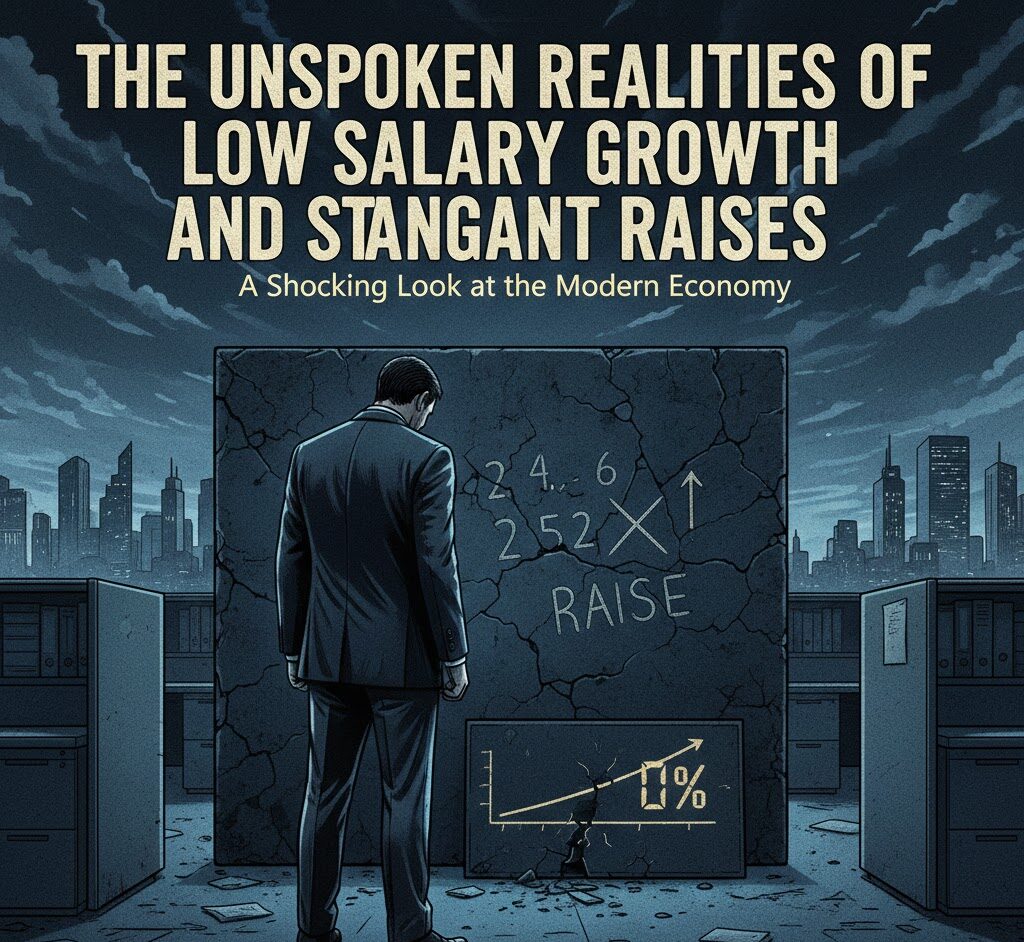
The Unspoken Realities of Low Salary Growth and Stagnant Raises
Let’s be real. You’re working hard. You’re showing up, putting in the hours, and maybe even going above and beyond. But when you look at your bank account, are you seeing the kind of growth that matches your effort? If not, you’re not alone.
 Many professionals are stuck in a cycle of low salary growth and disappointing raises, even when they’re performing well. It’s a frustrating situation, and often, it’s not about how hard you work; it’s about understanding the unspoken rules of the game.
The Illusion of Meritocracy: Why Hard Work Isn’t Always Enough
We’re told that if we work hard, we’ll be rewarded. That promotions and raises will come naturally. The truth is more complex. While hard work is essential, it’s just the entry fee. It’s the minimum requirement, not a guarantee of success. Several factors beyond your performance determine how fast your salary grows:
- Company Performance: If the company isn’t doing well, there’s less money to go around, and salary growth slows down or even freezes. This is the reality, whether we like it or not.
- Industry Trends: Some industries are booming, while others are struggling. Being in a growth industry significantly increases your chances of higher raises and better opportunities.
- Your Negotiating Skills: Believe it or not, your ability to negotiate your salary plays a huge role. Many people leave money on the table because they’re uncomfortable negotiating, or they don’t know how to do it effectively.
- Office Politics: Yes, it’s a thing. Sometimes, promotions and raises are influenced by relationships, visibility, and who you know, as much as (or even more than) what you do.
- The “Loyalty” Trap: Staying in the same role for too long, even if you’re doing great work, can actually hurt your earning potential. Companies often undervalue internal employees compared to new hires, especially when it comes to salary.
This is where most professionals get stuck. They believe the myth of pure meritocracy. They work hard, expect rewards, and feel betrayed when they don’t materialize. This often leads to frustration, resentment, and eventually, burnout.
Decoding the Unspoken Rules: What Nobody Tells You Early In Your Career
There are unspoken rules to navigating the world of salary and career advancement. These aren’t secrets; they’re just things nobody tells you upfront. Here’s a cheat sheet:
- Understand Your Market Value: What are people with your skills and experience earning in your industry and location? This is crucial for salary negotiations. Use websites like Glassdoor, Salary.com, and LinkedIn Salary to get a realistic picture.
- Become a Master Negotiator: Negotiation isn’t about being aggressive; it’s about being prepared. Know your worth, have data to back it up, and practice your pitch. Don’t be afraid to ask for more – the worst they can say is “no.”
- Build Your Personal Brand: In today’s work environment, your reputation is everything. This is about more than just your skills; it’s about how you’re perceived by others. Build your network, seek out mentors, and actively manage your online presence.
- Don’t Be Afraid to Job Hop (Strategically): Staying at the same company for too long can limit your salary growth. Sometimes, the best way to get a significant raise is to move to a new company. But do your research and make sure the move aligns with your long-term goals.
- Focus on Skills That Pay: Identify the skills that are in demand in your industry and invest in developing them. Continuous learning is essential in the modern workplace. Look for certifications, courses, and opportunities to upskill and reskill.
- Cultivate Your Network: Your network is your net worth. Build relationships with people in your industry, both inside and outside your company. Networking can open doors to new opportunities and provide valuable insights.
- Learn the Language of Business: Understand how your work contributes to the bottom line. Learn about your company’s financials, key performance indicators (KPIs), and business strategy. This will help you communicate your value and make a stronger case for a raise or promotion.
The Long-Term Impact: Income, Reputation, and Career Security
The choices you make early in your career have a profound impact on your long-term income, reputation, and career security.
Income: Small salary increases early on can compound over time, leading to significant differences in your lifetime earnings. Conversely, if you consistently accept low raises or fail to negotiate, you’ll be playing catch-up for years.
Reputation: How you handle yourself in the workplace, how you communicate, and how you treat others all contribute to your reputation. A positive reputation opens doors, while a negative one can close them. Your reputation follows you, so build it wisely.
Career Security: In an ever-changing job market, career security comes from adaptability, valuable skills, and a strong network. Don’t put all your eggs in one basket. Continuously develop your skills and network so that you’re always marketable, regardless of what happens at your current job.
Modern Relevance: The 2026 Job Market and Beyond
The job market in 2026 is dynamic. The rise of AI, remote work, and the gig economy are reshaping the landscape. Here’s how you can stay ahead:
- Embrace AI: AI isn’t taking all the jobs; it’s changing them. Learn how to use AI tools relevant to your field. Become proficient at using these tools to increase your productivity and be seen as an innovator.
- Master Remote Work: Remote work is here to stay. Develop the skills and discipline needed to thrive in a remote environment, including effective communication, time management, and self-motivation.
- Build Multiple Income Streams: The gig economy offers opportunities to diversify your income. Consider freelancing, side hustles, or investing to create multiple sources of revenue.
- Focus on Soft Skills: Technical skills are essential, but soft skills like communication, critical thinking, and emotional intelligence are increasingly valuable. These are the skills that AI can’t replicate.
- Stay Agile: Be prepared to adapt to change. The skills that are in demand today might not be in demand tomorrow. Embrace lifelong learning and be open to new opportunities.
Common Career Mistakes That Sabotage Salary Growth
Many professionals unknowingly make mistakes that hold them back. Avoiding these common pitfalls can significantly boost your earning potential and career trajectory:
- Failing to Negotiate: Leaving money on the table by not negotiating your salary is a classic mistake. Always negotiate, even if it’s just a small increase.
- Accepting the First Offer: Don’t immediately accept the first offer, especially for a new job. It’s almost always possible to negotiate, even if it’s just for benefits.
- Being Afraid to Ask: Don’t be afraid to ask for what you want, whether it’s a raise, a promotion, or a new opportunity. The worst that can happen is they say no.
- Not Tracking Your Accomplishments: Keep a record of your achievements, projects, and contributions. This will be invaluable when it comes time to ask for a raise or promotion.
- Staying Loyal to a Fault: While loyalty is important, don’t let it blind you to better opportunities. If you’re not growing, consider making a move.
- Neglecting Your Network: Failing to nurture your professional relationships limits your opportunities. Make an effort to connect with people in your industry and build your network.
- Failing to Upskill: Resting on your laurels. Skills become outdated quickly. Make sure you are learning and developing new skills.
Busting Career Myths: The Truth About Success
There are many myths about career success. Here’s a reality check:
- Myth: Hard work alone guarantees success. Reality: Hard work is necessary, but it’s not sufficient. You also need to build relationships, understand the market, and negotiate.
- Myth: Loyalty guarantees raises and promotions. Reality: Companies aren’t always loyal to their employees. Your value is determined by the market, not your years of service.
- Myth: Your manager is responsible for your career growth. Reality: You are ultimately responsible for your career. Your manager can provide guidance, but you need to take initiative.
- Myth: A high salary means you’re successful. Reality: Success is multifaceted. Consider your work-life balance, job satisfaction, and long-term career goals.
- Myth: A college degree is the only path to success. Reality: While a degree can be beneficial, it’s not the only path. Consider trade schools, certifications, and other alternative routes to achieve your goals.
The Future Outlook: Careers, Skills, and the Evolving Workplace
The world of work is constantly evolving. Here’s what you need to know to prepare for the future:
- The Rise of the Hybrid Workplace: Expect a blend of in-office and remote work. Companies will continue to experiment with different models. Develop skills to thrive in both environments.
- The Importance of Digital Literacy: Digital skills will be essential. This includes proficiency in various software, data analysis, and online collaboration tools.
- The Demand for Soft Skills: Skills like communication, problem-solving, and adaptability will be highly valued. These skills are harder to automate.
- The Gig Economy Expansion: Freelancing and contract work will become more prevalent. Prepare for the possibility of working on a project basis.
- Focus on Specialized Skills: Demand for specialized skills will continue to grow. Identify your niche and become an expert in that area.
The secret to long-term career success isn’t about following a pre-defined path; it’s about being adaptable, resilient, and proactive. It is about taking control of your career and making informed choices that align with your goals and values.
For more insights on navigating the professional landscape, visit Complifest.
FAQ
Here are some frequently asked questions about salary growth and career advancement:
Q: How often should I ask for a raise?
A: The ideal time frame will vary based on your company’s policies, your performance, and the market. Typically, once a year is a reasonable timeframe, and if you have exceeded expectations you may be able to ask sooner.
Q: How do I know if I’m being underpaid?
A: Research your market value using resources like Glassdoor, Salary.com, and LinkedIn Salary. Factor in your experience, skills, location, and industry to get a realistic view.
Q: What should I do if my boss won’t give me a raise?
A: First, understand why. Ask for specific feedback. If the reasons are valid, focus on improving your performance. If the reasons are not valid, consider looking for opportunities elsewhere.
Q: How can I negotiate a higher salary?
A: Do your research, know your worth, and practice your negotiation skills. Be prepared to explain why you deserve a raise, and provide data to back up your claims.
Q: When is the best time to ask for a raise?
A: Usually, after you’ve completed a major project, reached a performance milestone, or received positive feedback. You should time it strategically.
Q: How can I build a strong network?
A: Attend industry events, connect with people on LinkedIn, and nurture your existing relationships. Offer help and support to others. Become a valuable resource.
Q: Is it okay to job hop for a higher salary?
A: Yes, strategically. It can be an effective way to increase your earning potential. However, don’t job hop too frequently, and make sure each move aligns with your long-term goals.
Q: How can I handle office politics?
A: Understand the informal power structures in your workplace. Build positive relationships with key stakeholders. Avoid gossip and stay focused on your work. This is when an article like this might come in handy: Conquering Information Overload: A Practical Guide to Inbox Zero and Digital Organization in 2026.