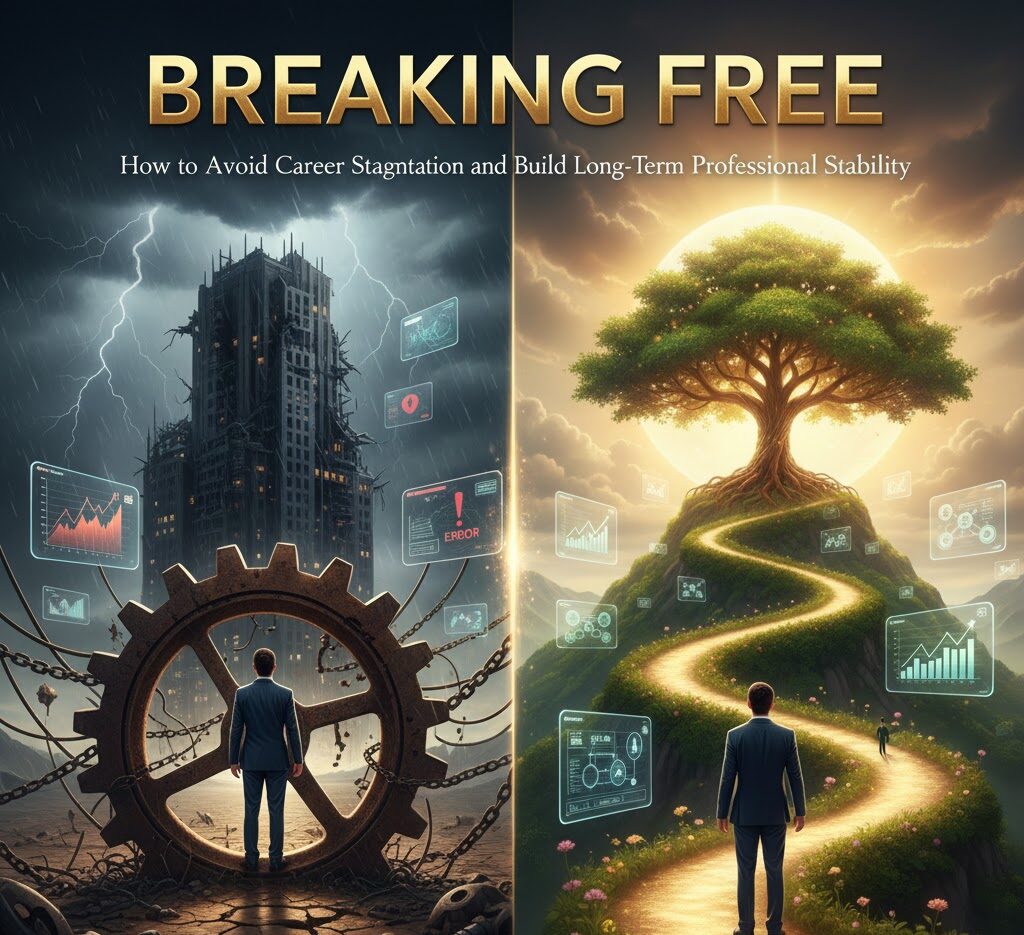
How to Avoid Career Stagnation and Build Long-Term Professional Stability
Let’s be real: most professionals, at some point, feel stuck. You look around, and it seems like everyone else is getting promoted, getting raises, and generally “winning.” Meanwhile,
you’re… well, you’re still doing the same thing. Maybe you’ve even been doing the same thing for years. This isn’t about being ungrateful. It’s about a very real, very common problem: career stagnation. This is where most professionals get stuck. They assume that if they just keep their heads down, do good work, and be “loyal,” everything will magically work out. Newsflash: it doesn’t always. In fact, more often than not, it doesn’t. You need a strategy. You need to understand how careers actually grow, not how you *think* they grow.
The Truth About Career Growth (That Nobody Tells You)
What nobody tells you early in your career is that growth isn’t a straight line. It’s not a ladder. It’s a jungle gym, a maze, a series of choices, setbacks, and calculated risks. Here’s what you need to know:
- Hard Work Isn’t Enough: You can be the hardest worker in the office, but if you’re not also building relationships, advocating for yourself, and acquiring valuable skills, you’ll be spinning your wheels.
- Loyalty Doesn’t Guarantee Advancement: Companies may *say* they value loyalty, but they value results more. If you’re loyal but stagnant, you’re not providing the company with what it needs.
- Skills Get Outdated: The job market evolves faster than ever. Your skills that got you where you are today might not be enough tomorrow. Continuous learning is non-negotiable.
- Networking is Crucial: Building a network isn’t just about exchanging business cards. It’s about forming genuine relationships that can provide mentorship, open doors to opportunities, and offer support when you need it.
At some point, every professional realizes the above. Now, how do you actually *do* something about it?
Practical Strategies for Long-Term Professional Stability
Here’s how to build a career that doesn’t just survive but thrives:
1. Define Your Career Goals (Seriously)
Vague goals lead to vague results. You need a clear vision of what you want to achieve. Where do you see yourself in 5, 10, or even 20 years? What skills will you need? What kind of impact do you want to make? Write it down. Review it regularly. And don’t be afraid to adjust as your interests and the market evolve.
2. Invest in Your Skills (Constantly)
Identify your skills gaps. What are the in-demand skills in your industry? Take online courses, attend workshops, get certifications. This isn’t just about ticking boxes; it’s about becoming more valuable. This investment has a high return, but requires consistent effort to keep your skills current.
3. Build Your Network (Actively)
Networking isn’t about collecting contacts; it’s about building relationships. Attend industry events, join professional organizations, connect with people on LinkedIn, and nurture those connections. Offer value: share your knowledge, offer help, and be genuinely interested in others. This builds your reputation and opens doors.
4. Advocate for Yourself (Confidently)
This is where many people struggle. You need to be able to articulate your value to your manager, your team, and the company. Highlight your accomplishments, quantify your results, and explain how you contribute to the bottom line. Don’t be afraid to ask for what you deserve – whether that’s a raise, a promotion, or new responsibilities. If you get a promotion, research and quantify your value to negotiate your salary successfully.
5. Seek Feedback (Regularly)
Don’t wait for your annual review. Ask for feedback regularly from your manager, your peers, and even your subordinates. Be open to criticism, and use it as an opportunity to improve. This will show you are engaged and invested in your growth.
6. Manage Your Expectations (Realistically)
Career growth takes time. Don’t expect instant results. Celebrate small wins, learn from setbacks, and stay focused on the long game. Career stagnation can be caused by having high timeline expectations.
Common Career Mistakes to Avoid
These are the traps that can lead to stagnation – or worse:
- The “Wait and See” Approach: Hoping someone will magically notice your hard work. You have to be proactive.
- Failing to Adapt: Refusing to learn new skills or embrace new technologies. The market moves fast, and you must move with it.
- Neglecting Your Network: Treating networking as an afterthought, rather than a crucial part of your career strategy.
- Staying in a Toxic Environment: Loyalty to a toxic workplace is a losing game. Know when to cut your losses and move on.
- Ignoring Your Health: Burnout is a real thing. Prioritize your well-being, both physically and mentally. This helps you maintain energy and focus for your career.
Busting Popular Career Myths
Let’s debunk some common misconceptions:
- Myth: Hard work alone guarantees success.
- Reality: Hard work is necessary, but it’s not sufficient. You also need skills, a network, and the ability to advocate for yourself.
- Myth: Loyalty to a company guarantees career growth.
- Reality: Loyalty is appreciated, but companies are more concerned with results. If your value plateaus, so will your career.
- Myth: Your boss is responsible for your career.
- Reality: Your boss can help, but ultimately, your career is *your* responsibility.
Long-Term Impact: Income, Reputation, and Career Security
Investing in the strategies above has a direct impact on your income, your reputation, and your overall career security. As your skills, network, and influence grow, so does your earning potential. You become known as a valuable professional, which creates more opportunities and protects you from job loss. These investments also give you more control over your career path. You are not just reacting to circumstances; you’re actively shaping your future.
Think about salary increases: Knowing how to negotiate a raise when you get a promotion is a key skill. It not only increases your income but also signals that you are someone who understands their value. Moreover, building a strong network often results in a good reputation and creates better job opportunities.
Modern Relevance: The 2025-2026 Job & Work Environment
The world of work is constantly evolving. Here’s what you need to know about the current job market:
- Remote Work is Here to Stay: Embrace the flexibility of remote work, but also recognize the importance of staying connected and visible.
- The Skills Gap is Widening: Companies are struggling to find qualified candidates, so upskilling and reskilling are more important than ever.
- AI is Transforming Industries: Automation is changing the nature of many jobs. You need to understand how AI impacts your field and adapt accordingly.
- The Gig Economy is Expanding: Consider freelancing or contract work as a way to gain new skills and experience, and potentially increase your income.
Future Outlook: Careers, Skills, and Workplace Evolution
What does the future of work look like? Here are some predictions:
- Lifelong Learning: Continuous learning will become even more critical, and you may need to retool multiple times throughout your career.
- The Rise of the “Portfolio Career”: Professionals will likely have multiple income streams and work on various projects simultaneously.
- Emphasis on Soft Skills: Skills like communication, creativity, and emotional intelligence will be increasingly valuable as automation takes over more routine tasks.
- Focus on Purpose and Meaning: Employees will place a greater emphasis on finding work that aligns with their values and contributes to a larger purpose.
FAQ Section
Here are some common questions working professionals have:
- How do I know if I’m experiencing career stagnation?
- If you feel stuck, unmotivated, and see no clear path for advancement, you’re likely experiencing it. Other signs include a lack of new challenges, boredom with your current role, and a feeling of being undervalued.
- What are the main causes of career stagnation?
- Lack of clear goals, outdated skills, a weak network, limited opportunities in your current role, and a negative mindset are all major contributors.
- How can I identify my skill gaps?
- Research industry trends, analyze job postings for roles you aspire to, and seek feedback from your manager, mentors, and colleagues.
- How important is networking for career advancement?
- It’s critical. Networking opens doors to new opportunities, provides mentorship, and helps you stay informed about industry trends.
- How do I negotiate a salary increase?
- Research industry standards, gather data on your accomplishments, and confidently articulate your value to your manager. Be prepared to back up your case with numbers and data.
- What if I’m in a toxic work environment?
- Prioritize your well-being. Start looking for a new job, and don’t be afraid to leave a toxic situation. Your mental and physical health is more important.
- How can I stay motivated when I’m feeling stuck?
- Set small, achievable goals, celebrate your successes, and focus on the long-term vision for your career. Consider seeking out a mentor or career coach.
- Are there career options for someone looking to change industries?
- Absolutely. This is a common and important aspect of career evolution. Building a network and making connections within the new industry is crucial. You could start by taking online courses and getting the necessary certifications.
Career stagnation doesn’t have to be your destiny. By taking proactive steps, building key skills, and focusing on long-term professional stability, you can break free from the rut and build a thriving career that you love. Visit Complifest for more career insights.