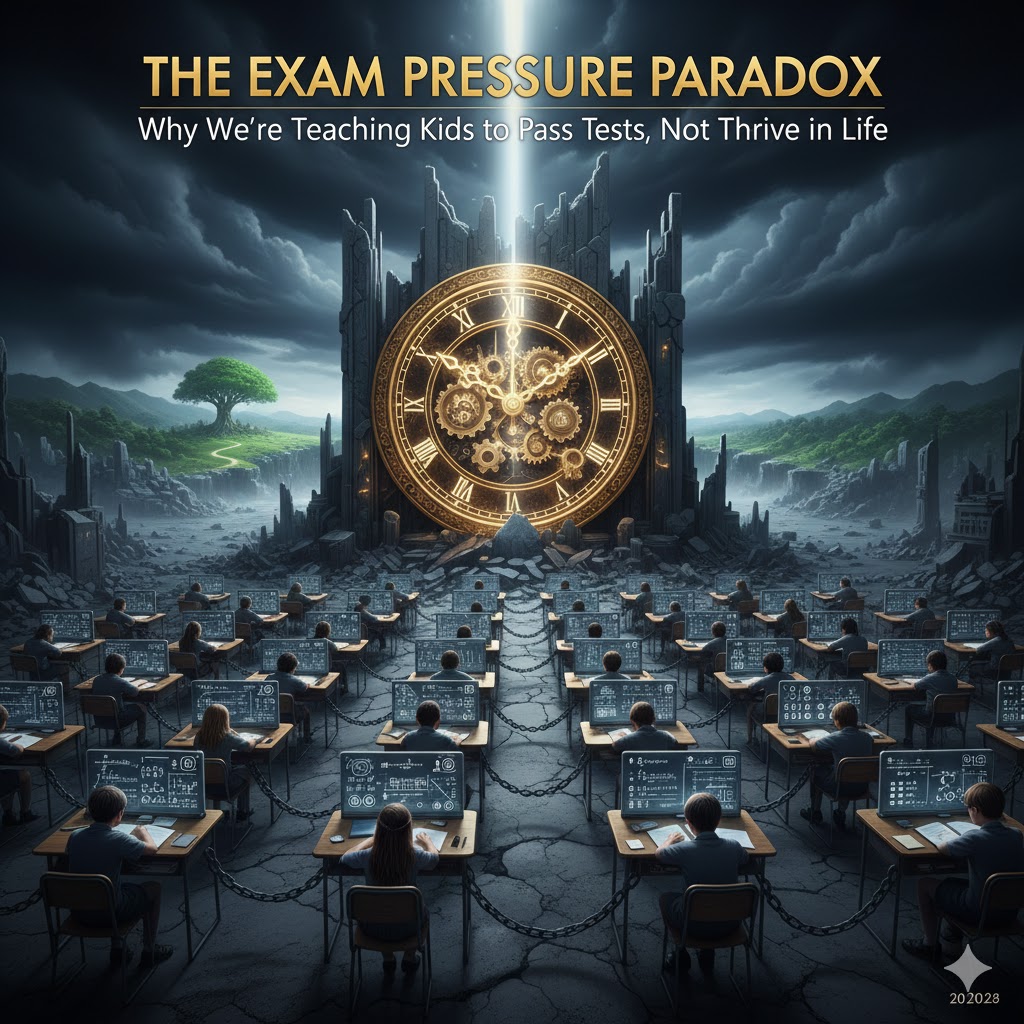
The Exam Pressure Paradox: Why We’re Teaching Kids to Pass Tests, Not Thrive in Life
I’ve seen it countless times in my 20+ years in education – the glazed-over eyes, the nervous fidgeting, the sheer terror that descends as exam season looms. We tell our children that exams are just a small part of their journey, a mere blip on the radar.
But the reality? For many, exams have become the be-all and end-all, the defining measure of their worth, and the sole focus of their education. This, my friends, is the exam pressure paradox. We’re unintentionally creating a system that prioritizes test-taking skills over genuine learning and a lifelong love for knowledge. I remember a bright young girl named Priya. She was a whirlwind of curiosity, constantly asking “why?” She devoured books, explored every corner of her world, and had a passion for science. But when the exams approached
Priya transformed. Her joy vanished, replaced by anxiety and a relentless focus on memorization. She’d stay up late, cramming facts, and losing sleep. In the end, she aced her exams. But at what cost? The sparkle in her eyes had dimmed, and her genuine interest in science had been overshadowed by the pressure to perform.
The Roots of the Problem: Why Exams Have Become So Central
The reasons behind the exam pressure paradox are complex, but several key factors contribute to its pervasiveness:
- The emphasis on standardized testing: Standardized tests offer a seemingly objective measure of student achievement. They provide data for schools, parents, and policymakers. However, these tests often prioritize rote memorization and test-taking strategies over critical thinking, creativity, and problem-solving skills.
- The competitive nature of education: In many societies, education is seen as a race, with students competing for limited spots in top universities and desirable jobs. This competition creates intense pressure to achieve high scores, fueling a culture of anxiety and stress.
- Parental and societal expectations: Parents often want the best for their children, and high exam scores are frequently seen as a key to future success. This, coupled with societal pressures and cultural norms, can create unrealistic expectations and intensify the pressure on students.
- Teacher accountability and school rankings: Teachers and schools are often evaluated based on student performance on standardized tests. This can lead to a narrow focus on test preparation, sacrificing a broader, more enriching curriculum.
The Hidden Costs: What We’re Losing in the Pursuit of High Scores
The relentless focus on exams has significant consequences for students’ well-being and their long-term development. Here are a few key areas where we see the negative impacts:
- Mental health: Exam pressure is a major contributor to anxiety, stress, and even depression in children and teenagers. The constant pressure to perform, the fear of failure, and the sense of inadequacy can take a heavy toll on their mental health.
- Intrinsic motivation: When learning is driven by external pressures (like exams) instead of internal interest, students lose their intrinsic motivation. They may become less curious, less engaged, and less likely to pursue knowledge for its own sake.
- Creativity and critical thinking: The emphasis on memorization and test-taking often stifles creativity and critical thinking skills. Students may be less likely to explore new ideas, challenge assumptions, or think outside the box.
- Overall well-being: The pressure to succeed in exams can lead to unhealthy habits, such as sleep deprivation, poor nutrition, and a lack of physical activity. This can negatively impact students’ physical and emotional health.
- A narrow view of success: Focusing solely on exam results can create a narrow definition of success. Students may come to believe that their worth is determined by their grades, leading to a diminished sense of self-esteem and a fear of failure.
Beyond the Score: How Learning Actually Happens
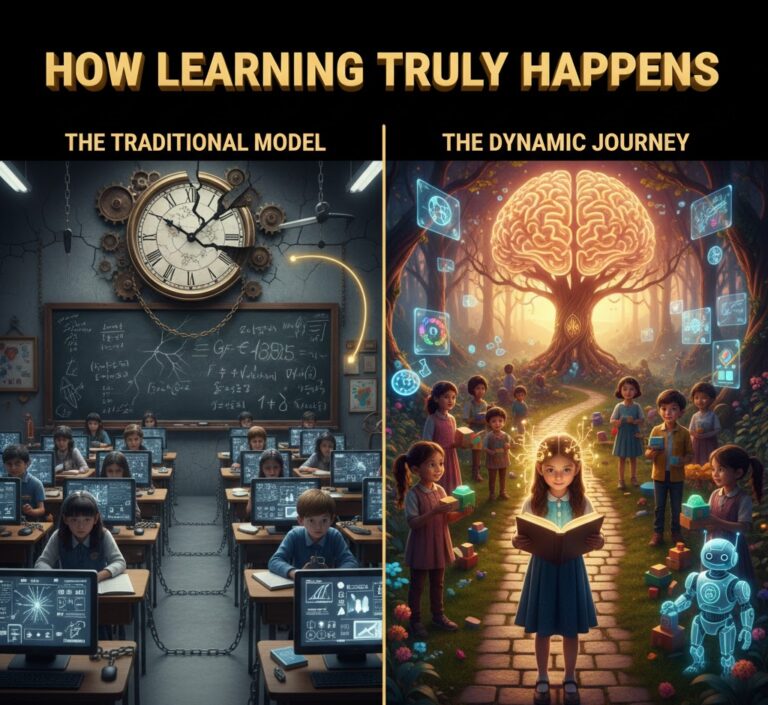
To break free from the exam pressure paradox, we need to understand how learning actually happens. Learning isn’t about passively absorbing information; it’s an active, dynamic process that involves:
- Curiosity and Exploration: Real learning starts with a genuine interest in a subject. When students are curious, they’re more likely to ask questions, explore ideas, and delve deeper into a topic.
- Active Engagement: Learning is not a spectator sport. It requires active participation, whether it’s through discussions, experiments, projects, or creative expression.
- Making Connections: Students learn best when they can connect new information to what they already know. This involves making connections between different concepts, identifying patterns, and applying knowledge to real-world situations.
- Practice and Application: Learning requires practice and application. This means using new knowledge in different contexts, solving problems, and receiving feedback.
- Reflection and Metacognition: Effective learners are reflective learners. They take time to think about their learning process, identify their strengths and weaknesses, and adjust their strategies accordingly.
- Feedback and Iteration: Learning is an iterative process. Feedback helps students understand what they’re doing well and where they need to improve. This feedback should then be used to revise and refine their work.
Rethinking Education: Practical Steps to Reduce Exam Pressure
Breaking the exam pressure paradox requires a multi-pronged approach that involves changes at the school, parent, and student levels. Here are some practical steps we can take:
- Redefine Success: Shift the focus from grades to the development of well-rounded individuals. This means valuing creativity, critical thinking, collaboration, and other essential skills, not just test scores.
- Promote a Growth Mindset: Encourage students to embrace challenges, learn from mistakes, and see effort as a path to mastery. Celebrate progress, not just achievement.
- Emphasize Real-World Learning: Connect classroom learning to real-world applications. Encourage students to participate in projects, internships, and other experiences that allow them to apply their knowledge and develop practical skills.
- Foster a Supportive Learning Environment: Create a classroom environment where students feel safe to take risks, ask questions, and make mistakes. Encourage collaboration and peer support.
- Encourage a Balanced Lifestyle: Promote healthy habits, such as regular exercise, adequate sleep, and a balanced diet. Encourage students to pursue their interests outside of academics.
- Parental Support: Parents can play a crucial role in reducing exam pressure. They should focus on supporting their child’s interests and well-being, rather than solely on academic achievement. Avoid comparing your child to others and celebrate their unique strengths.
- School Reforms: Schools need to move away from over-reliance on standardized testing and focus on creating a holistic learning experience. This could involve using alternative assessment methods, such as portfolios and projects, and providing opportunities for students to pursue their interests.
- Embrace Technology (Thoughtfully): Technology can be a powerful tool for enhancing learning and reducing exam pressure. It can provide personalized learning experiences, offer access to a wealth of resources, and facilitate collaboration. But we must be mindful of its potential drawbacks, such as screen time and distractions.
The Long-Term Impact: Careers, Mindset, and Personal Growth
The way we approach education has a profound impact on students’ future careers, their mindset, and their personal growth.
If we continue down the path of exam-focused education, we risk producing individuals who are:
- Risk-averse: Afraid to step outside the box and try new things, for fear of failure.
- Lacking in creativity: Their imagination and original thought gets stifled by the rigid structure.
- Unhappy and stressed: Always chasing the next grade or achievement.
- Poor communicators: Unable to articulate their ideas or collaborate effectively.
However, if we shift our focus to fostering a love of learning and developing essential skills, we can empower students to:
- Become lifelong learners: They will be eager to learn new things and adapt to the ever-changing world.
- Develop strong problem-solving skills: Able to think critically and come up with innovative solutions.
- Embrace challenges: They can see setbacks as opportunities for growth.
- Build fulfilling careers: Students will be able to pursue their passions and make a positive impact on the world.
This is where traditional education struggles, and where the future of learning must go. It must cultivate a mindset of curiosity, resilience, and a deep understanding of how to learn. This is what truly prepares students for a future where adaptability and a lifelong love of learning are the keys to success.
As I explain in my article, “The Great Stagnation Escape: How to Build a Future-Proof Career in 2026,” the ability to learn and adapt is more critical than ever in the rapidly evolving job market. This ability to continuously learn will be what sets your child apart.
Parents often focus on marks and miss the big picture. We, as educators and mentors, must guide them towards understanding the true value of education. It is not merely about achieving high scores on exams; it is about nurturing well-rounded, resilient individuals who are prepared to thrive in the complexities of life. This requires a fundamental shift in our thinking, our practices, and our priorities.
Myth-Busting: Debunking Common Education Myths
The education landscape is filled with misconceptions. Let’s bust some of the most persistent myths:
- Myth: High marks guarantee success.
- Reality: While good grades can open doors, success is more about skills, character, and adaptability.
- Myth: A degree is essential for a good career.
- Reality: Skills, experience, and the ability to learn continuously often matter more than the piece of paper.
- Myth: More study time equals better results.
- Reality: Effective study habits, such as active recall and spaced repetition, are often more important than the number of hours spent studying.
- Myth: Education is only for young people.
- Reality: Learning is a lifelong journey. Embrace the opportunity to learn something new at every stage of life.
The Future of Learning: What’s on the Horizon?
The future of learning is dynamic and promising. Here are some trends to watch:
- Personalized Learning: AI and technology will play a larger role in tailoring education to each student’s needs and interests.
- Project-Based Learning: Expect more emphasis on hands-on projects, real-world problem-solving, and collaborative learning experiences.
- Focus on Skills: The curriculum will prioritize the development of essential skills such as critical thinking, communication, creativity, and digital literacy.
- Lifelong Learning: Education will extend beyond the traditional classroom, with increased opportunities for online learning, micro-credentials, and continuous professional development.
As you can see, the future of education will be centered on adaptability, curiosity, and a deep understanding of how people learn. Complifest is a great resource to learn more about the latest innovations and techniques in education.
Frequently Asked Questions (FAQ)
Here are some frequently asked questions about exam pressure and education:
Q: How can I help my child manage exam stress?
A: Encourage healthy habits, such as regular exercise, adequate sleep, and a balanced diet. Talk openly about their anxieties and provide emotional support. Help them develop effective study strategies and a positive mindset.
Q: Are exams really necessary?
A: Exams can be useful for assessing knowledge and skills, but they should not be the sole focus of education. A balanced approach is needed, one that incorporates a variety of assessment methods.
Q: What can schools do to reduce exam pressure?
A: Schools can reduce exam pressure by shifting the focus from grades to a holistic learning experience. This means incorporating alternative assessment methods, promoting a growth mindset, and creating a supportive learning environment.
Q: How can I help my child develop a love of learning?
A: Encourage their curiosity, provide access to a variety of resources, and support their interests. Make learning fun and relevant to their lives. Praise effort and celebrate progress.
Q: Are there any alternatives to traditional schooling?
A: Yes, there are many alternatives, including homeschooling, unschooling, and alternative schools that focus on different learning approaches. Research different options to find what suits your child’s needs.
Q: How can I help my child prepare for the future job market?
A: Focus on developing their essential skills, such as problem-solving, communication, and digital literacy. Encourage them to explore their interests, gain practical experience, and develop a growth mindset. Consider career-linked education.
Q: What are some good study habits?
A: Effective study habits include active recall, spaced repetition, summarizing information, and practicing with past papers. Create a study schedule and stick to it.
Q: What is a growth mindset, and why is it important?
A: A growth mindset is the belief that abilities can be developed through dedication and hard work. It’s important because it encourages students to embrace challenges, learn from mistakes, and see effort as a path to mastery.