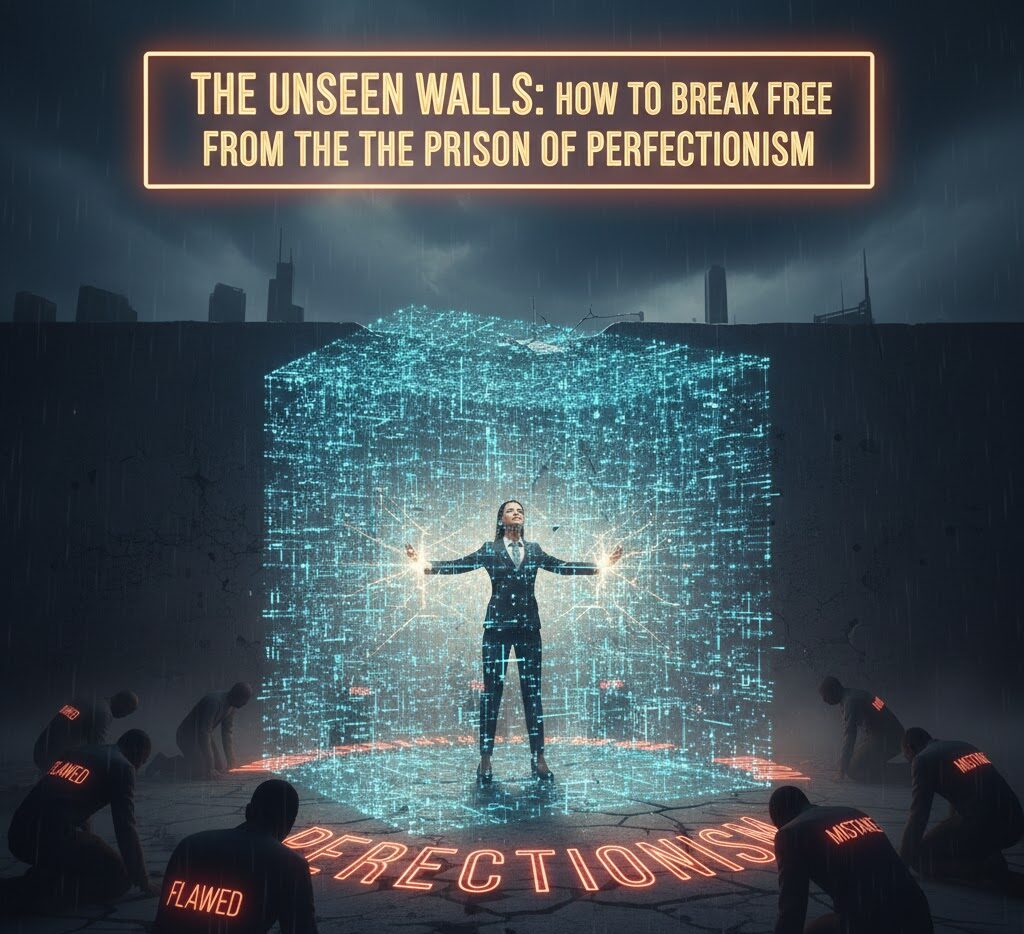
The Unseen Walls: How to Break Free From the Prison of Perfectionism
I know the feeling. The constant hum of self-criticism, the nagging voice that whispers, “Not good enough.” It’s a weight, isn’t it? A pressure that squeezes the joy out of everything, leaving you perpetually chasing an impossible ideal. This is about perfectionism, a prison many of us build ourselves, brick by painful brick. And I’m here to tell you, you don’t have to live there.
The Hidden Cost of “Always On”
We live in a world that practically demands perfection. Social media showcases highlight reels, filtered to an unrealistic sheen. Workplaces push for peak performance, often at the expense of well-being.
And somewhere along the way, we internalize this pressure. We start believing that our worth is tied to our accomplishments, our appearance, and how flawlessly we navigate life. This is where the unseen walls begin to rise. The fear of failure becomes paralyzing, and the need to control every outcome consumes us. This “always-on” mentality isn’t just exhausting; it’s a thief. It steals our time, our energy, and our capacity for genuine connection. It makes us miss the beauty in the imperfect, the learning in the mistakes, and the joy in the everyday moments. Many people work hard but avoid this inner step. They are so busy trying to achieve perfection that they never stop to examine why they feel the need to chase it in the first place.
Why Perfectionism Feels So Hard to Break
Let’s be honest: breaking free from perfectionism is not easy. It’s like trying to dismantle a belief system you’ve spent years building. Here’s why:
- Fear of Judgment: We worry about what others will think. Will they judge our flaws? Will we lose their respect? This fear often stems from childhood experiences, societal pressures, or past hurts.
- Self-Criticism as a Motivator: We’ve been conditioned to believe that self-criticism is necessary to succeed. We think, “If I’m not hard on myself, I won’t get anything done.” But this is a dangerous myth. Constant self-criticism breeds anxiety and burnout, ultimately hindering progress.
- Identity Tied to Achievement: Our sense of self becomes intertwined with our accomplishments. We believe that if we aren’t perfect, we aren’t worthy. This leaves us vulnerable to devastating self-doubt whenever we fall short.
- The Illusion of Control: Perfectionism is often about control. We feel that if we can control every detail, we can avoid failure. However, life is inherently unpredictable. Trying to control everything is a recipe for frustration and disappointment.
Growth often looks boring before it looks successful. It is a slow burn that requires self-compassion, not self-flagellation.
Common Mistakes on the Path to Imperfection
Many people set out to conquer perfectionism, but stumble along the way. Here are some common pitfalls to avoid:
- Expecting Overnight Change: You didn’t become a perfectionist overnight, and you won’t break free overnight either. This is a journey, not a destination. Celebrate small victories and be patient with yourself.
- Ignoring the Root Causes: Addressing the symptoms (the anxiety, the procrastination) without dealing with the underlying causes (fear of failure, low self-esteem) is like treating a fever without addressing the infection. Do some inner work.
- Replacing One Ideal with Another: Trading perfectionism for “effortlessness” is a trap. It’s still a standard, an expectation. The goal isn’t to be “perfectly imperfect”; it’s to embrace the full spectrum of your human experience.
- Isolating Yourself: Perfectionism thrives in isolation. Share your struggles with trusted friends, family, or a therapist. Vulnerability is a superpower.
Shifting Your Perspective: Practical Steps Towards Freedom
The journey out of the prison of perfectionism starts with a shift in perspective and a commitment to action. Here are some steps you can take today:
- Challenge Your Thoughts: When that critical voice pops up, ask yourself, “Is this thought helpful? Is it based on facts, or is it driven by fear?” Questioning your inner critic is the first step toward disarming it.
- Embrace Imperfection: Start small. Allow yourself to make mistakes. Choose one area of your life where you can practice letting go of control. Maybe it’s a creative project, a home improvement task, or a relationship. Embrace the imperfections.
- Practice Self-Compassion: Treat yourself with the same kindness and understanding you would offer a friend. When you stumble, acknowledge the mistake, learn from it, and move on.
- Set Realistic Goals: Break down large tasks into smaller, manageable steps. Celebrate each accomplishment, no matter how small. Focus on progress, not perfection.
- Reframe Failure: See failure as a learning opportunity, not a reflection of your worth. Ask yourself, “What can I learn from this? How can I do better next time?”
- Cultivate Self-Awareness: Pay attention to your triggers. What situations or thoughts tend to activate your perfectionistic tendencies? Once you know your triggers, you can develop strategies to manage them.
- Focus on the Process: Find joy in the journey, not just the outcome. Appreciate the effort, the learning, and the growth that comes from the process of doing, creating, and living.
The Ripple Effect: Long-Term Impact of Letting Go
Breaking free from perfectionism isn’t just about feeling less stressed; it transforms your life. It has a profound impact on your confidence, your relationships, and your overall sense of well-being.
- Increased Confidence: When you stop striving for an impossible ideal, you free up energy to pursue your passions and embrace new challenges. This builds genuine confidence, based on your inherent worth, not your accomplishments.
- Stronger Relationships: Authenticity replaces the masks you once wore to protect yourself. You become more open, vulnerable, and capable of genuine connection. Your relationships deepen, built on trust and acceptance.
- Greater Creativity: The fear of judgment stifles creativity. When you release the need for perfection, you unlock your creative potential. You become more willing to experiment, to take risks, and to express yourself authentically.
- Enhanced Resilience: Perfectionists often struggle to cope with setbacks. When you embrace imperfection, you become more resilient. You learn to bounce back from challenges, knowing that mistakes are inevitable and don’t define you.
- More Meaningful Choices: You start making choices aligned with your values, not your need to impress others. You prioritize experiences over achievements, and relationships over status.
This is where most people feel stuck. They know they want to change, but they don’t know where to start. Start here. Start now.
Modern Relevance: Navigating the 2026 Landscape
The pressures of perfectionism are amplified in today’s world. The constant connectivity, the relentless pursuit of success, and the dominance of social media all contribute to the problem. In 2026, the need to break free from these constraints is more critical than ever.
The rise of AI and automation is changing the job market, placing an even greater emphasis on skills like adaptability, emotional intelligence, and creativity. Perfectionism hinders these skills. It makes you rigid, risk-averse, and less able to embrace change.
Moreover, the focus on mental health is increasing. We are more aware of the detrimental effects of stress, anxiety, and burnout. Letting go of perfectionism is an act of self-care. It’s a way of prioritizing your well-being and protecting yourself from the pressures of modern life. This is why having self-awareness is going to be so important.
The Future of Emotional Intelligence and Adaptability
The ability to manage your emotions, build strong relationships, and adapt to change will be essential in the years to come. Letting go of perfectionism is a crucial step towards developing these skills.
As AI becomes more integrated into our lives, the importance of human connection will only increase. We will need to rely on our emotional intelligence to navigate complex social situations, build trust, and foster collaboration.
Adaptability is key to thriving in a rapidly changing world. Those who can embrace uncertainty, learn from their mistakes, and adjust their strategies will be best positioned for success. Perfectionism hinders this adaptability. It makes you resistant to change and afraid to take risks.
Therefore, breaking free from the prison of perfectionism is not just a personal journey; it is a vital step toward thriving in the future. It’s an investment in your well-being, your relationships, and your ability to navigate the complexities of life with grace and resilience.
FAQ: Your Questions Answered
Here are some frequently asked questions about perfectionism and how to overcome it:
- Is it possible to completely eliminate perfectionism? No, it’s not realistic to completely eliminate perfectionistic tendencies. The goal is to manage them, to prevent them from controlling your life and causing you distress.
- How do I stop comparing myself to others? Focus on your own journey. Celebrate your unique strengths and achievements. Limit your exposure to social media if it triggers comparison. Remember that you only see the curated highlights of other people’s lives.
- What if I’m afraid of failing? Acknowledge your fear, but don’t let it paralyze you. Remind yourself that failure is a part of life. View it as an opportunity to learn and grow. Practice taking small risks.
- How do I know if I’m a perfectionist? If you set unrealistically high standards for yourself, are highly critical of your mistakes, and spend excessive time on tasks, you may be a perfectionist. Reflect on your behavior and see if it aligns with the traits of perfectionism.
- Can therapy help with perfectionism? Yes, therapy can be very helpful. A therapist can help you identify the root causes of your perfectionism, challenge your negative thoughts, and develop coping strategies.
- How do I balance striving for excellence with accepting imperfection? Focus on progress, not perfection. Set realistic goals. Celebrate your efforts, not just your results. View mistakes as learning opportunities. The Unspoken Truths of Salary Negotiation: How to Get Paid What You’re Really Worth, shows the importance of balancing your wants with what’s realistic.
- What if I’m afraid of disappointing others? Remember that you can’t control how others feel. Focus on being true to yourself and acting in accordance with your values. Communicate your needs and boundaries clearly and kindly.
- How do I stay motivated when I’m feeling discouraged? Practice self-compassion. Remind yourself of your progress. Break tasks into smaller steps. Seek support from friends, family, or a therapist. Celebrate your accomplishments, no matter how small. Visit the Complifest homepage to explore ways to stay motivated!
Breaking free from the prison of perfectionism is a journey, not a destination. It requires self-awareness, self-compassion, and a willingness to embrace imperfection. But the rewards—increased confidence, stronger relationships, greater creativity, and a more fulfilling life—are worth the effort.