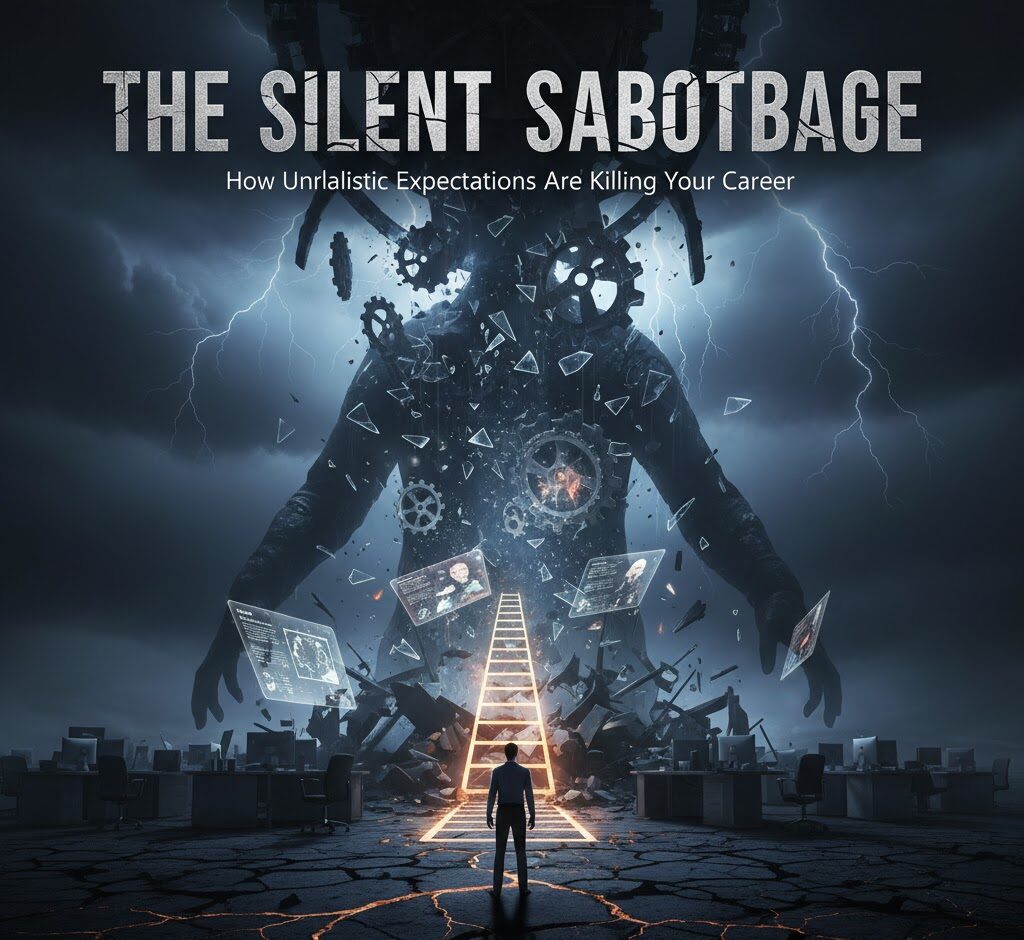
The Silent Sabotage: How Unrealistic Expectations Are Killing Your Career
Let’s be real. Most of us start our careers with a head full of dreams. We envision climbing the ladder, becoming the boss, maybe even changing the world. And that’s fantastic! But somewhere along the line, those dreams often bump into a harsh reality unrealistic expectations. This isn’t about being negative; it’s about being prepared for what’s actually out there, and how those expectations can silently derail even
the most talented professionals. This is where I come in. I’ve spent over two decades watching careers unfold, and I can tell you, the biggest single factor holding people back isn’t a lack of talent, it’s a gap between what they expect and what’s actually real.
The Trap of “Expected” Success
You see it all the time. Bright-eyed grads thinking they’ll be VP in five years. Young professionals expecting promotions every year, or a massive salary bump after a couple of years. The problem? The world doesn’t work that way. Promotions aren’t handed out like candy. Salary increases don’t automatically keep pace with inflation (or your lifestyle).
These expectations often come from a cocktail of sources: social media, where everyone seems to be crushing it; parents who push for the “best” and “biggest” (without knowing the practicalities of the workplace); and sometimes, the companies themselves, who paint a rosy picture to attract talent. The media, too, loves to amplify stories of overnight success, further fueling the fire.
What nobody tells you early in your career is that real career growth is a marathon, not a sprint. It’s about consistently delivering value, navigating office politics (yes, it exists, everywhere!), and developing a network of allies. It’s also about weathering the inevitable setbacks and disappointments. Those are the experiences that build real resilience.
This is where most professionals get stuck. They hit a speed bump, a rejection, a quiet year without a promotion, and they interpret it as failure. They get frustrated, they start job-hopping, or they lose motivation. They become bitter about “the system,” instead of learning how the system actually works. This is the silent sabotage at work.
The Hidden Costs of Unrealistic Expectations
The impact of unrealistic expectations goes beyond just a bruised ego. It can affect everything from your financial stability to your mental health. Here’s what you need to be aware of:
- Job Hopping: Constantly chasing the “next big thing” can make you look unreliable. Employers want to see loyalty and investment. Switching jobs too frequently prevents you from building deep relationships and a strong track record.
- Burnout: Expecting instant results can lead to overwork and exhaustion. You push too hard, too fast, and burn out before you’ve even had a chance to build a solid foundation.
- Missed Opportunities: Focusing on the “what ifs” and the perceived lack of progress blinds you to the opportunities right in front of you. You might dismiss a mentorship offer, a challenging project, or a chance to learn a new skill because it doesn’t fit your pre-set expectations.
- Damaged Relationships: Constant disappointment can make you negative, and that negativity poisons your relationships with colleagues, managers, and even your friends and family.
- Stunted Growth: If you’re constantly focused on what you *think* you deserve, you miss out on the valuable lessons that come from the grind. True growth comes from tackling challenges, learning from mistakes, and building a solid track record.
Rewriting the Script: Strategies for Realistic Career Success
So, how do you ditch the unrealistic expectations and start building a career that actually works? It’s about a fundamental shift in perspective. Here’s a practical guide, based on what I’ve seen work for countless professionals:
- Define Success on Your Terms: Forget the shiny corner office or the six-figure salary (at least for now). What does success actually mean to you? Is it work-life balance? Creative freedom? Making a positive impact? Write down what matters. Revisit it often. Your definition of success may change over time, and that’s okay.
- Build a Realistic Timeline: Research industry standards for promotions, salary increases, and career progression in your field. Talk to people who are a few steps ahead of you. What were their timelines? What were the challenges? What skills did they focus on? This isn’t about copying their path; it’s about getting a sense of what’s *possible* and what’s *probable*.
- Focus on the Fundamentals: Master your core skills. Be reliable. Be a problem-solver. Be someone your colleagues can trust. This might sound basic, but it’s the foundation upon which everything else is built.
- Embrace the Small Wins: Celebrate the little victories. Did you complete a challenging project? Did you learn a new skill? Did you get positive feedback from your boss? Acknowledging your progress, no matter how small, fuels your motivation and keeps you going.
- Develop a Growth Mindset: See setbacks as learning opportunities, not failures. Ask yourself: What can I learn from this? How can I do better next time? This is where the magic happens.
- Network Strategically: Build relationships with people at all levels of the organization and in your industry. Don’t just network when you need something. Be genuinely interested in others. Offer help. The more people you know and support, the more support you will get.
- Seek Out Mentorship: Find a mentor who can offer guidance and perspective. Look for someone who is where you want to be. They can help you navigate the unspoken rules of your industry and avoid common pitfalls.
- Be Patient, But Persistent: Real career growth takes time, so don’t get discouraged. Keep learning, keep growing, and keep putting in the work. And never stop evaluating your path. Remember that your career is a journey, not a destination.
Here are some of the most frequent mistakes I see people making, often because they’re operating with the wrong expectations:
- Expecting instant recognition: Hard work doesn’t automatically equal praise. You have to learn how to showcase your accomplishments and advocate for yourself (without being arrogant).
- Thinking your boss is your friend: They might be friendly, but your boss has a job to do. They’re not going to hand you promotions or raises out of friendship. Performance and results matter.
- Ignoring feedback: Constructive criticism is gold. It can highlight your blind spots and show you areas for improvement. Don’t take it personally. Use it.
- Underestimating the importance of soft skills: Technical skills are essential, but communication, teamwork, and emotional intelligence are what truly set people apart.
- Job-hopping without a clear plan: Each job change should build upon your previous experience and move you closer to your long-term goals. Random moves can signal a lack of focus.
- Failing to adapt: The workplace is constantly evolving. Be open to learning new skills and embracing change.
Debunking Common Career Myths
Let’s shatter some of the myths that feed into unrealistic expectations:
- Myth: Hard work alone guarantees success.
- Reality: Hard work is necessary, but not sufficient. You also need skills, strategy, and a bit of luck.
- Myth: Loyalty guarantees growth.
- Reality: Loyalty is appreciated, but companies are not always loyal back. You have to advocate for yourself and prove your value.
- Myth: Your boss is responsible for your career.
- Reality: You are ultimately responsible for your career. Your boss can guide you, but you need to take initiative.
- Myth: You have to love your job to be successful.
- Reality: You don’t have to love your job, but you do need to find ways to find meaning in it and stay motivated.
- Myth: The best employees always get promoted first.
- Reality: Sometimes promotions go to those who are most visible, or those who can navigate office politics effectively, not always to the “best” employees.
The Long-Term Impact: Income, Reputation, and Security
The choices you make early in your career have a profound impact on your long-term financial well-being, your professional reputation, and your overall career security. Realistic expectations allow you to:
- Build a Solid Financial Foundation: By understanding salary trends and setting realistic financial goals, you can make smarter financial decisions. This includes saving, investing, and planning for the future.
- Protect Your Reputation: A good reputation is your most valuable asset. Realistic expectations keep you grounded, helping you avoid bad decisions that could damage your standing.
- Increase Your Career Security: By developing in-demand skills, building a strong network, and constantly adapting to change, you create a career that is resilient to economic downturns and industry shifts.
- Reduce Stress and Improve Well-being: Managing expectations helps you avoid the disappointment, frustration, and burnout that can come from chasing unattainable goals. This is crucial for long-term health and happiness.
The Future of Work: A Realistic Outlook (2025–2026)
The workplace is changing rapidly. Remote work, the gig economy, and automation are reshaping the landscape. Here’s what you need to prepare for, and some of the key skills to develop in 2025–2026:
- Hybrid work models will continue to evolve: Companies are experimenting with different approaches. Be prepared to be flexible and adaptable.
- The skills gap will widen: Demand for tech skills and soft skills will continue to grow.
- Freelancing and the gig economy will expand: Be prepared to embrace these opportunities.
- Automation will change jobs: Many routine tasks will be automated. Focus on skills that can’t be easily automated, like critical thinking, creativity, and emotional intelligence.
Consider the rise of AI tools, too. They’re already impacting how work gets done. You need to develop proficiency in these tools. But more importantly, you need to cultivate human skills. AI can’t replace empathy, strategic thinking, and strong interpersonal skills.
The future of work favors those who are adaptable, lifelong learners, and have a clear understanding of their value proposition. Build your personal knowledge management system and stay informed of industry changes. You should also build a strong network of contacts at all levels of the organizations.
Remember, it’s not about being perfect; it’s about being prepared. It’s about being realistic about the challenges and the opportunities. And most importantly, it’s about building a career that you can sustain for the long haul. Remember, your career is a marathon, not a sprint. Take it one step at a time, and you’ll be far more likely to achieve lasting success.
Frequently Asked Questions (FAQs)
Here are some of the questions I often hear from professionals struggling with unrealistic expectations:
- How long should I realistically expect to stay at my first job?There’s no magic number, but most people stay in their first job for at least 2-3 years, ideally longer. This allows you to build a track record, develop skills, and see some kind of advancement. Constantly jumping ship can give the impression that you’re unreliable, or incapable of committing to something. However, the best time to leave your first job is when there is no chance of you advancing. That is also the time when you might learn the most, because there will be less of a reason for others to be guarded around you.
- How can I negotiate a salary increase if I feel I’m underpaid?Do your research! Know the market rate for your role and experience. Gather data to support your request. Focus on your accomplishments and the value you bring to the company. Practice your negotiation skills. Make sure you are also realistic. Understand the company’s financial state, and be prepared to leave.
- How do I deal with a boss who doesn’t appreciate my work?First, make sure you’re communicating your accomplishments clearly. If that doesn’t work, consider talking to HR. Sometimes, a change of department or a new job altogether is necessary. In all situations, however, make sure to document everything.
- How can I avoid burnout?Set boundaries. Prioritize your well-being. Take breaks. Learn to say “no” (nicely). Make time for activities outside of work. Recognize the signs of burnout early and address them.
- How important is a good work-life balance?Extremely important! It’s critical for your long-term health and well-being. Strive for a balance that allows you to thrive in all aspects of your life. This is especially true now. The job market is changing fast, and you must do everything you can to prepare yourself to be ready for the future, but do not sacrifice everything in the present for it. It’s a delicate balance, and you need to get used to doing both.
- How do I handle office politics?Be aware of the unspoken rules and power dynamics. Build relationships with people across departments. Communicate effectively and professionally. Choose your battles. Don’t participate in gossip or negativity. In the vast majority of cases, it is best to avoid office politics at all costs.
- What are the most important skills to develop for the future of work?Technical skills relevant to your field, but more importantly, soft skills like communication, critical thinking, problem-solving, adaptability, and emotional intelligence. Always be learning. The best thing you can do for your career is to build a foundation of general skills, because those can adapt to any particular field.
- What if I’m not sure what I want to do with my career?That’s okay! Many people don’t have a clear path early on. Experiment with different roles, industries, and projects. Seek out mentors. Stay curious. The best careers are usually built from a combination of skill, and interest. Focus on building skills that are useful, regardless of the role you’re in, and you will eventually find your place. Complifest can help you to get a clearer picture of your career path.