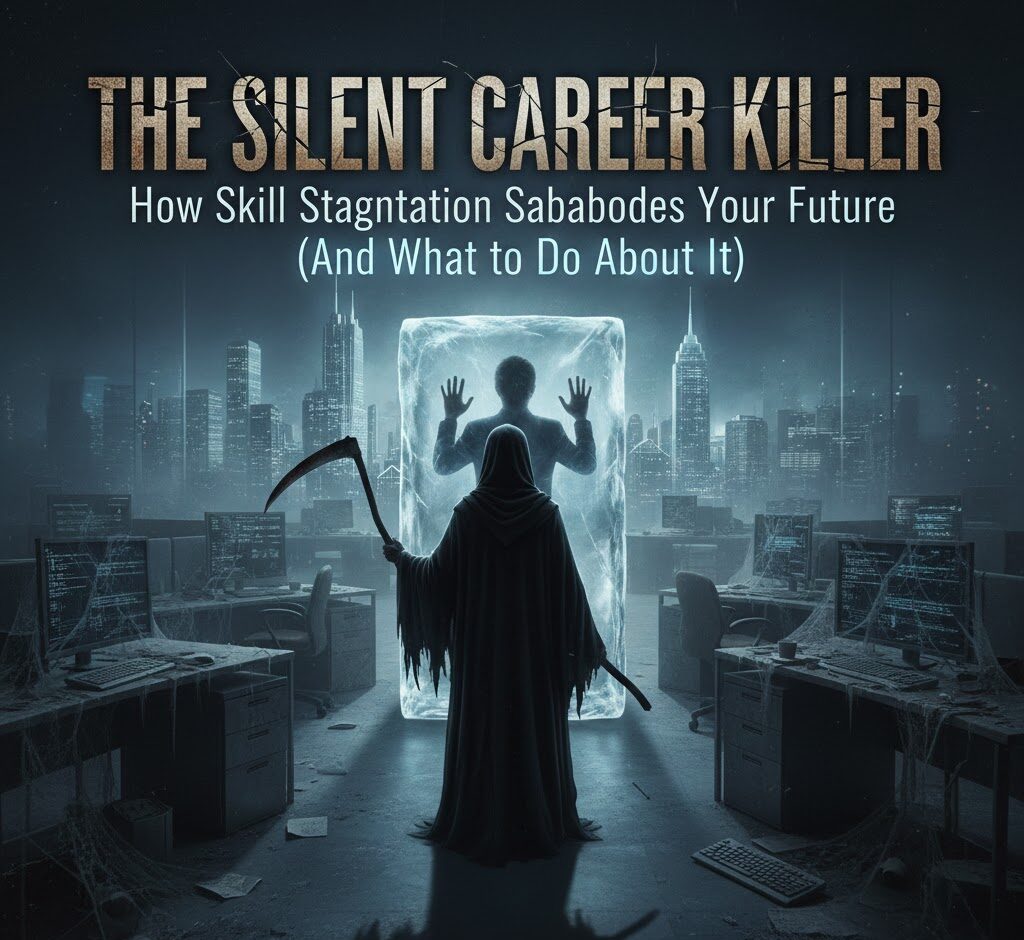
How Skill Stagnation Sabotages Your Future And What to Do About It
Let’s be real: most of us aren’t living our “dream” careers. We’re slogging through, hoping for that next promotion, that decent raise, or, you know, just to feel a little less…stuck. And what I’ve seen in two decades of working with people is this: It’s not the lack of “passion” or “grit” that kills careers. It’s something far more insidious: skill stagnation. It’s the silent career killer. This isn’t about being bad at your job. It’s about the slow, almost imperceptible decline in your relevance. It’s about falling behind while everyone else is moving forward. And it’s something that happens to even the most talented people if they’re not careful.
The Trap of the Comfort Zone
The biggest enemy of career growth isn’t a toxic boss or a bad economy. It’s the comfort zone. That cozy space where you’re good at what you do, you know the routine, and you can coast a bit. It feels safe, doesn’t it? But that safety is an illusion.
This is where most professionals get stuck. They get comfortable. They’re good at what they do, so they stop pushing themselves to learn new things. They stop seeking out challenges. They start relying on what they already know, and, slowly but surely, their skills begin to atrophy. They become less valuable, less marketable, and ultimately, less secure.
Think about it. The world is changing at warp speed. AI is reshaping industries. Automation is eliminating jobs. New technologies are emerging every day. If you’re not constantly updating your skills, you’re not just standing still; you’re falling behind. You’re becoming a dinosaur in a world that’s evolving at the speed of light.
The Unspoken Rules of Career Advancement
Here’s a truth nobody tells you early in your career: Hard work alone isn’t enough. Loyalty doesn’t guarantee promotions. And a good attitude won’t save you from obsolescence. What *actually* moves the needle in your career is your ability to learn, adapt, and acquire new skills.
It’s about becoming a T-shaped professional. This means having deep expertise in your core area (the vertical line of the “T”), but also a broad understanding of related fields and skills (the horizontal line of the “T”). The wider the top of your “T”, the more adaptable and valuable you become.
Here’s the thing: Companies aren’t looking for employees who can just do their job. They’re looking for employees who can solve problems, anticipate challenges, and contribute to the company’s future. And that requires a constant investment in your own professional development.
The Hidden Costs of Skill Stagnation
The impact of skill stagnation is rarely immediate. It’s a slow burn, a gradual erosion of your career prospects. But over time, the consequences can be devastating. Here’s what you’re really risking:
- Reduced Earning Potential: The most obvious cost. If your skills aren’t keeping pace with market demand, your salary will stagnate. Raises will be smaller, promotions will be less likely, and you’ll become less competitive in the job market. You might even find yourself being paid less than someone with more up-to-date skills.
- Limited Career Opportunities: When you stop learning, you limit your options. You become locked into your current role or industry. You miss out on new opportunities that require different skill sets. You become less attractive to potential employers, and you might even find yourself being overlooked for internal promotions.
- Increased Job Insecurity: In a rapidly changing world, the most secure professionals are those who are adaptable and resilient. If your skills are outdated, you become vulnerable to layoffs, downsizing, and outsourcing. You’re essentially putting all your eggs in one basket, and that basket is becoming increasingly fragile.
- Loss of Confidence and Motivation: When you stop learning, you also stop growing. You become less engaged in your work, less challenged, and less motivated. You start to feel like you’re going through the motions. This can lead to a downward spiral of negativity, burnout, and a general sense of being trapped.
- Damage to Your Reputation: Your professional reputation is one of your most valuable assets. If you’re known for being “stuck in your ways” or resistant to change, it will hurt you. People will perceive you as being less valuable, less reliable, and less able to handle future challenges.
How to Break Free From Skill Stagnation (and Thrive)
Okay, so skill stagnation is bad. But what can you *actually* do about it? Here are some practical strategies for staying ahead of the curve:
- Assess Your Current Skills: Be brutally honest with yourself. What are you good at? What are you not so good at? What skills are essential for your current role? What skills will be crucial for your future career goals? Take stock of where you stand.
- Identify Skill Gaps: Once you know where you stand, identify the gaps. What skills do you need to acquire to stay relevant and competitive? Research industry trends, talk to mentors and colleagues, and look at job postings for the roles you aspire to. What skills are they looking for?
- Create a Learning Plan: Don’t just drift. Create a structured plan for acquiring new skills. Set realistic goals, break down your learning into manageable chunks, and schedule time for learning each week. Treat your professional development like a project.
- Embrace Different Learning Methods: Don’t rely on just one way of learning. Explore a variety of options: online courses, workshops, seminars, books, podcasts, mentorships, and on-the-job training. Mix it up to keep things interesting.
- Seek Out Challenges: Don’t be afraid to step outside of your comfort zone. Volunteer for new projects, take on new responsibilities, and seek out opportunities to stretch your skills. This is how you grow. Consider it embracing the awkwardness.
- Build a Professional Network: Connect with people in your industry, attend industry events, and join professional organizations. Networking can provide access to new ideas, opportunities, and learning resources. It can also help you stay informed about industry trends.
- Get Feedback and Iterate: Ask for feedback from your manager, colleagues, and mentors. Use this feedback to identify areas for improvement and adjust your learning plan accordingly. Learning is a continuous process.
- Track Your Progress: Keep track of your accomplishments and celebrate your successes. This will help you stay motivated and build momentum. Recognize how far you’ve come.
The Future of Skills and the Workplace
Let’s look ahead. The future of work is being shaped by several key trends:
- The Rise of AI and Automation: AI and automation will continue to transform industries, creating new jobs and eliminating others. The ability to work *with* AI will be crucial.
- The Importance of Soft Skills: Technical skills will still be important, but soft skills – like communication, critical thinking, problem-solving, and emotional intelligence – will become even more valuable.
- The Gig Economy and Freelancing: The number of freelancers and independent contractors will continue to grow, offering more flexibility and autonomy.
- Remote and Hybrid Work: Remote and hybrid work models will become more common, requiring new skills for managing teams, collaborating virtually, and maintaining work-life balance.
- Lifelong Learning: The need for continuous learning will become even more critical. Professionals will need to constantly update their skills and adapt to new technologies.
The professionals who thrive in this future will be those who embrace change, are adaptable, and are committed to lifelong learning. They will be the ones who proactively seek out new skills, build strong networks, and embrace new ways of working.
Common Career Mistakes That Lead to Stagnation
It’s easy to fall into traps that slow down your professional growth. Here are some of the most common mistakes:
- Failing to Seek Feedback: You need to know where you stand. Regular feedback from managers and peers is critical.
- Avoiding Challenges: Growth happens when you push yourself. Playing it safe will keep you stuck.
- Ignoring Industry Trends: You have to stay informed. Know what’s happening in your field and how it affects your skills.
- Being Resistant to Change: Adaptability is key. The workplace is constantly evolving, and you must evolve with it.
- Not Investing in Yourself: Your skills are your most important asset. Invest time and money in your professional development.
- Relying on Past Success: What got you here won’t necessarily get you where you want to go. Don’t rest on your laurels.
- Neglecting Your Network: Your network is a valuable resource. Nurture your relationships and build new ones.
The Bottom Line: Staying Ahead of the Curve
The key to long-term career stability isn’t just about having a job. It’s about building a career. A career that’s resilient, adaptable, and future-proof. And the foundation of that career is your skills.
Skill stagnation isn’t inevitable. It’s a choice. By proactively investing in your professional development, you can break free from the trap, stay ahead of the curve, and build a career that thrives for years to come.
It’s about making a commitment to yourself, to your future. And the best time to start is now.
FAQ: Your Burning Questions About Skill Stagnation
Here are some of the questions I often get from professionals who are concerned about skill stagnation:
- How do I know if I’m experiencing skill stagnation? If you find yourself using the same skills day after day, not learning anything new, and feeling bored or unmotivated, that’s a red flag. If you haven’t taken a course or learned something significant in the last 6-12 months, you might be stagnating.
- What if my company doesn’t offer training or development opportunities? Take ownership of your development. There are tons of free and low-cost resources available online, such as free courses, tutorials, and articles. Look at platforms like Coursera, edX, and LinkedIn Learning.
- How can I find time for professional development when I’m already busy? Make it a priority. Even an hour or two a week can make a huge difference. Schedule time for learning in your calendar, just like you would any other important meeting or task.
- I’m in my 50s. Is it too late to learn new skills? Absolutely not! It’s never too late to learn. In fact, many people find that they learn even more effectively as they get older, due to their greater experience.
- What skills are most in demand right now? This depends on your industry and role, but generally speaking, skills in data analysis, AI, cloud computing, project management, and digital marketing are highly sought after. Soft skills like communication, leadership, and problem-solving are also crucial.
- How do I convince my boss to invest in my professional development? Frame it as a win-win. Explain how acquiring new skills will benefit both you and the company, by improving your performance, increasing your productivity, and contributing to the company’s success.
- What’s the best way to choose what skills to learn? Research your industry, identify in-demand skills, and align your learning with your career goals. Think about what will make you more valuable in your current role, and what skills will help you move into the roles you aspire to.
I hope this guide helps. Remember, you are in control of your career. Take charge, invest in your skills, and never stop learning. That’s how you build a future.
For more insights and strategies on building a fulfilling professional life, explore Complifest.