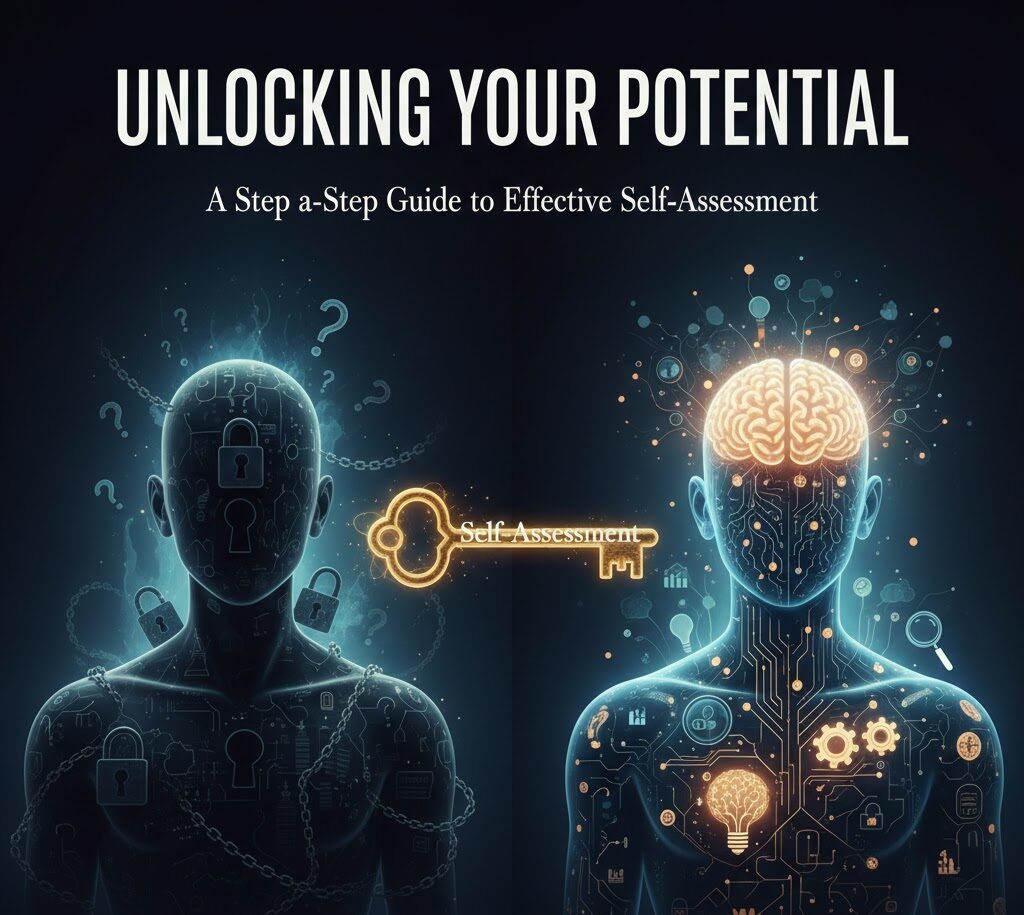
Unlocking Your Potential: A Step-by-Step Guide to Effective Self-Assessment
Ever feel like you’re stuck in a rut, not sure where you’re going, or what you’re even good at? You’re definitely not alone. I’ve been there. Countless times. For years, I felt like I was drifting, reacting to life instead of actively steering it. The turning point for me? Learning how to do a proper self-assessment.
 This isn’t about just listing your skills and calling it a day. It’s about diving deep, understanding your strengths and weaknesses, clarifying your values, and creating a roadmap for a more fulfilling life. Think of it as a personal GPS, guiding you toward your goals. In this guide, I’ll walk you through the exact steps I use, the mistakes to avoid, and the mindset you need to truly benefit from this powerful process.
Why Self-Assessment Matters (And Why You Should Care)
Before we jump into the “how,” let’s talk “why.” Why bother with self-assessment? Because knowing yourself is the key to… well, everything. It’s the foundation for making smart career choices, building strong relationships, improving your mental health, and even boosting your overall happiness. Think about it: how can you pursue a fulfilling career if you don’t know what you’re good at or what truly motivates you? How can you build strong relationships if you’re not aware of your communication style or the values that are important to you? Self-assessment provides the clarity you need to navigate life with purpose and intention. It empowers you to:
- Identify Your Strengths: Pinpoint what you excel at and leverage those talents.
- Recognize Your Weaknesses: Understand areas for growth and develop a plan to improve.
- Clarify Your Values: Define what’s important to you, guiding your decisions and actions.
- Set Realistic Goals: Create achievable goals aligned with your strengths and values.
- Boost Confidence: Gain a deeper understanding of yourself, leading to increased self-assurance.
- Make Better Decisions: Use self-awareness to make choices that align with your true self.
Over the years, I’ve seen countless people – friends, colleagues, even family – struggle because they lacked this foundational self-awareness. They took jobs that didn’t fit, stayed in relationships that drained them, and generally felt lost. Don’t let that be you. This guide will give you the tools and the framework you need to avoid those pitfalls.
Step 1: Digging Deep – Understanding Your Core Skills and Talents
This is where the rubber meets the road. This isn’t just about listing “good communication skills” on a resume. This is about getting *specific* and *honest*. We’re going to break down your skills into different categories and use a few proven methods to uncover your true talents. This is often where people get confused, so let’s get it right from the start.
A. Skill Inventory: The “What Can You Do?” List
Start by creating a simple list. Don’t overthink it at this stage. Just jot down everything you can do, no matter how big or small. Think about both hard skills (technical abilities) and soft skills (people skills). Here’s a basic framework to get you started:
- Technical Skills: Programming languages, software proficiency, data analysis, design, etc.
- Communication Skills: Writing, public speaking, active listening, negotiation, etc.
- Problem-Solving Skills: Critical thinking, analytical skills, decision-making, etc.
- Leadership Skills: Team management, delegation, motivation, etc.
- Creative Skills: Writing, art, music, design, etc.
- Organizational Skills: Time management, project management, planning, etc.
Pro Tip: Don’t just write “project management.” Write “project management – using Agile methodologies to deliver projects on time and within budget.” The more specific you are, the better.
B. The “What Do You *Enjoy* Doing?” Factor
This is where things get interesting. Your skills are only half the equation. What do you genuinely enjoy doing? What activities make you lose track of time? What tasks energize you? Think beyond work; consider hobbies, volunteer activities, and personal projects. Make a list of those things. This will reveal your passions, which are often linked to your natural talents.
Common Mistake: People often focus solely on what they *think* they should be good at, rather than what they actually *are* good at and *enjoy*. This is a recipe for burnout and dissatisfaction.
C. Seek Feedback: The “What Do Others See?” Perspective
We all have blind spots. Ask trusted friends, family members, mentors, or colleagues for their honest feedback. Ask them: “What do you think I’m good at?” “What are my strengths?” “What areas do you think I could improve?” This can be uncomfortable, but the insights you gain are invaluable. Be open to hearing constructive criticism. Don’t get defensive; listen, take notes, and thank them for their honesty.
Important note: Be mindful of who you ask. Choose people who know you well and who genuinely care about your growth. Avoid asking people who tend to be overly critical or negative.
Step 2: Identifying Your Values – The Guiding Principles
Values are the compass that guides your decisions. They’re the core beliefs that shape who you are and what you stand for. Knowing your values helps you make choices that align with your authentic self. Without understanding your values, you might find yourself feeling unfulfilled, even if you’ve achieved external success. I’ve seen it happen too often. Someone gets the big promotion, the fancy car, the dream house, but still feels empty inside. That’s often because their actions aren’t aligned with their values.
A. Create a Values List: The “What Matters Most” Exercise
Start by brainstorming a list of potential values. Here’s a starting point, but don’t limit yourself to this list. Add your own. Researching values lists online can be extremely helpful.
- Integrity: Honesty, ethical behavior, strong moral principles.
- Family: Prioritizing loved ones, nurturing relationships.
- Growth: Learning, self-improvement, continuous development.
- Creativity: Innovation, artistic expression, original thinking.
- Freedom: Independence, autonomy, choice.
- Service: Helping others, making a difference in the world.
- Financial Security: Stability, saving, responsible spending.
- Health: Physical and mental well-being, self-care.
- Adventure: New experiences, travel, exploration.
- Justice: Fairness, equality, standing up for what’s right.
- Community: Belonging, connection, contributing to a group.
B. Rank Your Values: The “Prioritize, Prioritize, Prioritize” Step
Now, narrow down your list to your top 5-7 core values. This is crucial. It forces you to prioritize. Which values are *non-negotiable*? Which ones are most important to you, the things you will not compromise on. Rank them in order of importance. This is usually where people get confused. They want all the values, but that isn’t possible.
C. Reflect on Your Actions: The “Are You Living Your Values?” Check
Look at your daily life. Are your actions aligned with your top values? Do your career choices, relationships, and hobbies reflect what’s truly important to you? If not, what changes can you make? This is where the real work begins. It’s about making conscious choices to live a life that reflects your values. For example, if “family” is one of your top values, are you spending enough quality time with your loved ones? If “growth” is important, are you actively learning and developing new skills? If “creativity” is essential, are you making time for creative pursuits?
One step people often rush through is the actual *doing*. Knowing your values is useless unless you use them to guide your actions. You have to *live* your values.
Step 3: Setting Goals and Creating a Plan of Action
Now that you know your skills, and values, it’s time to set goals. This is where you translate self-awareness into action. Goals give you direction, provide motivation, and help you track your progress. Think of it as creating a personalized, customized roadmap.
A. SMART Goals: The “Make it Measurable” Method
Use the SMART framework to set your goals. SMART stands for:
- Specific: Clearly define what you want to achieve. Instead of “I want to be healthier,” say “I want to run a 5K.”
- Measurable: How will you track your progress? How will you know when you’ve achieved your goal? “I will run for 30 minutes, three times a week.”
- Achievable: Set goals that are realistic and attainable. Start small and gradually increase the difficulty.
- Relevant: Make sure your goals align with your values and overall vision.
- Time-Bound: Set a deadline. “I will run a 5K in three months.”
If you do this incorrectly, it creates problems later. Make sure the goals are both realistic, and important to you.
B. Break Down Your Goals: The “Small Steps” Strategy
Break down your larger goals into smaller, manageable steps. This makes the process less overwhelming and provides a sense of accomplishment as you progress. For example, if your goal is to write a book, break it down into steps like: research the topic, create an outline, write a chapter per week, and edit each chapter.
C. Create an Action Plan: The “What, When, and How” Blueprint
Develop a detailed action plan. This is your roadmap to achieving your goals. For each step, determine:
- What actions you need to take.
- When you will take those actions. (Schedule them in your calendar!)
- How you will measure your progress.
This is where you need to get disciplined. If you’re serious about achieving your goals, you have to be ready to put in the work. Consistency is key.
Step 4: Regular Review and Adaptation
Self-assessment isn’t a one-time thing. It’s an ongoing process. You need to review your progress regularly and make adjustments as needed. Life changes. Your priorities change. You learn and grow. Your self-assessment should evolve with you.
A. Schedule Regular Reviews: The “Check-In” Ritual
Set a schedule for reviewing your progress. I recommend a quarterly review (every three months) at a minimum. Some people find monthly or even weekly reviews helpful, especially when working on a specific project or goal. Make it a non-negotiable appointment with yourself. Put it in your calendar. Treat it like an important meeting.
B. Assess Your Progress: The “What’s Working and What’s Not” Analysis
During your review, assess your progress towards your goals. Are you on track? Have you made any significant achievements? Are there any roadblocks or challenges you’re facing? Be honest with yourself. Don’t sugarcoat anything. Use this as an opportunity to celebrate your successes and to identify areas where you need to make adjustments.
C. Make Adjustments: The “Pivot and Adapt” Approach
Based on your review, make adjustments to your goals, your action plan, or even your values (if necessary). Life rarely goes according to plan. Be flexible and adaptable. Don’t be afraid to change course if something isn’t working. The goal is to move forward, not to rigidly adhere to a plan that’s no longer serving you.
Future-Proof Tip: Embrace lifelong learning. The world is constantly changing. New skills, technologies, and opportunities are emerging all the time. Commit to continuous learning. Read books, take courses, attend workshops, and stay curious. This will not only help you achieve your goals but also keep you relevant in an ever-evolving world.
Tools and Resources That Can Help
Here are some tools and resources I’ve personally found helpful throughout my self-assessment journey. This isn’t an exhaustive list, but it’s a great starting point.
Online Personality Tests
Tests like the Myers-Briggs Type Indicator (MBTI) or the Enneagram can provide valuable insights into your personality traits, strengths, and weaknesses. Be cautious, though. These tests are just starting points. Don’t let them define you. They’re a tool for self-discovery, not a definitive answer.
Online Skill Assessments
Websites like Coursera, LinkedIn Learning, and Udemy offer a variety of skill assessments. These can help you identify your skill gaps and develop a plan to improve them. Many offer free trials or introductory courses.
Goal-Setting Apps and Tools
Apps like Trello, Asana, and Todoist can help you organize your goals, track your progress, and stay on track. Choose the one that best fits your workflow and preferences. There are a lot of options out there!
Books and Podcasts
There are countless books and podcasts on self-assessment, personal development, and goal setting. Some of my favorites include: “The 7 Habits of Highly Effective People” by Stephen Covey and “Mindset: The New Psychology of Success” by Carol Dweck.
Common Mistakes to Avoid
I’ve made these mistakes myself, so trust me, I know how easy it is to fall into these traps. Here’s a quick rundown of common pitfalls to avoid:
- Being Too Harsh: Don’t beat yourself up. Self-assessment is about growth, not self-criticism.
- Being Too Vague: Get specific! Generic goals and skills won’t get you anywhere.
- Ignoring Feedback: Don’t dismiss feedback from others. It’s a valuable source of information.
- Setting Unrealistic Goals: Be ambitious, but be realistic. Set yourself up for success.
- Giving Up Too Soon: Self-assessment is a journey, not a destination. Keep going!
- Treating it as a One-Time Task: Review and adapt regularly. It’s an ongoing process.
Frequently Asked Questions (FAQ)
Here are some of the most common questions people have about self-assessment:
Q: How long does self-assessment take?
A: It depends. The initial assessment can take a few days or weeks, depending on how deeply you want to dive. The regular reviews should take an hour or two each quarter.
Q: What if I don’t know my values?
A: That’s okay! Start by exploring different values. Read books, listen to podcasts, and reflect on your past experiences. The more you learn about yourself, the clearer your values will become.
Q: How do I deal with negative feedback?
A: It can be tough, but try to remain open-minded. Listen carefully, ask clarifying questions, and thank the person for their honesty. Use the feedback as an opportunity for growth.
Q: What if I don’t have any skills?
A: Everyone has skills! Think about what you enjoy doing, what you’re good at, and what you’ve learned over the years. Even if you don’t have formal training, you likely have valuable skills you can leverage.
Q: Is self-assessment only for people with a career?
A: Absolutely not! Self-assessment is beneficial for everyone, regardless of their career. It’s about understanding yourself and living a more fulfilling life, which is something we all want.
Q: Can self-assessment help me find a new career?
A: Yes! By identifying your skills, values, and interests, you can gain clarity about your career aspirations and identify potential career paths that align with your true self.
Q: What if I feel overwhelmed by the process?
A: Start small. Break the process down into manageable steps. Don’t try to do everything at once. Focus on one step at a time. Be patient with yourself, and celebrate your progress.
Conclusion
Self-assessment is a powerful tool for self-discovery and personal growth. It’s not a quick fix, but a journey. By understanding your strengths, weaknesses, values, and goals, you can create a more fulfilling and meaningful life. Don’t wait for the “perfect” time to start. Start today. Take the first step, and begin unlocking your true potential.
Now go out there and take control of your life. You’ve got this!